Best Compression Sleeve for Knee Stiffness: An Analytical Review of Clinical Support and Functionality
Knee stiffness is a frequent clinical complaint often associated with age-related wear, past trauma, or recurring inflammation. For many individuals, compression sleeves serve as a primary intervention for managing discomfort and enhancing joint awareness 1. By applying consistent pressure, these garments aim to improve blood circulation, minimize inflammatory responses, and offer a sense of stability that can bolster confidence during daily physical activities 1, 6. Understanding the mechanics behind these tools is essential for determining their appropriate application in a broader health management strategy.
The Clinical Efficacy of Compression for Joint Stiffness
Orthopedic experts emphasize that compression sleeves function primarily through proprioception and blood flow modulation. Proprioception refers to the body's ability to sense its position in space; by stimulating the skin and underlying tissues, a well-fitted sleeve can improve this awareness, potentially reducing the feeling of instability that accompanies stiffness 6. Furthermore, clinical meta-analyses have highlighted that for conditions like osteoarthritis, mechanical support through bracing is often cited as a highly effective, low-cost therapeutic intervention for symptom relief, ranking favorably among various conservative treatments 11.
It is important to note that while these devices are effective for managing symptoms, they are not structural cures for cartilage degradation or severe ligamentous instability 6. Their primary benefit lies in the reduction of edema-swelling around the joint-and the provision of warmth, which can help mitigate the sensation of stiffness during movement 6, 12. When used alongside guided physical therapy and active recovery, they act as a support system to maintain mobility rather than a replacement for active joint rehabilitation 6.
Key Design Features and Materials
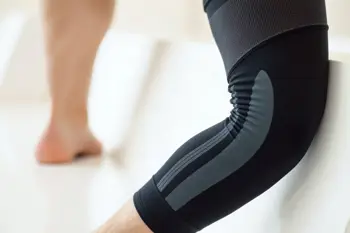
The construction of a compression sleeve determines its effectiveness and user comfort. High-tech microfiber and breathable knit blends, often incorporating nylon, rubber, and spandex, are prioritized to ensure moisture-wicking and long-term durability 2, 3. Modern iterations often utilize 3D-knitting techniques to provide anatomical shaping, which ensures the sleeve contours naturally to the joint without bunching or restricting flexion 4. Seamless designs are also frequently preferred to minimize the risk of skin irritation during extended wear 2.
For individuals requiring more than basic compression, specific structural additions are commonly available. Silicone-dotted gripping zones are often integrated into the cuffs to prevent migration during exercise, ensuring the compression remains targeted 2, 7. Additionally, some designs feature integrated lateral rods or ergonomic silicone patella pads designed to guide the kneecap, providing a blend of compression and mechanical stabilization that is often recommended for those with combined stiffness and joint tracking issues 4, 7.
Understanding Compression Levels and Sizing
Compression is typically measured in millimeters of mercury (mmHg), with medical-grade options often ranging from 15 to 30 mmHg 2, 4. Selecting the correct compression level is a balance between providing enough support to influence joint function and ensuring circulation is not restricted. If a sleeve is too tight, it may exacerbate discomfort or lead to vascular issues, particularly in individuals with pre-existing circulation concerns 3, 14.
Sizing must be calculated by measuring the circumference of the leg at specific intervals, typically above and below the knee joint, as indicated by manufacturer guidelines 8. Because sizing varies significantly by brand, users are cautioned against assuming a universal fit. Proper engagement with a size guide is critical, as the efficacy of any compression garment is entirely dependent on it being correctly sized for the individual's anatomy 3.
Market Trends: Copper and Specialized Infusions
The market for compression sleeves frequently features products infused with copper or other metallic elements, which are often marketed as providing additional benefits for stiffness and inflammation 3, 5. While these products are popular for their aesthetic and odor-reducing properties, clinical evidence supporting the specific therapeutic advantage of copper-infused fibers remains limited compared to the established benefits of standard medical-grade compression materials 12, 17. Consumers are generally advised to prioritize the quality of the compression and the fit of the fabric over marketing claims regarding material infusions 17.
When to Consult a Professional
While compression sleeves are widely available, they should not be viewed as a standalone solution for unexplained or acute pain. If knee stiffness is accompanied by significant swelling, loss of range of motion, or an inability to bear weight, a clinical evaluation is necessary to rule out structural injuries or inflammatory conditions that require specific medical intervention 6. Physicians often recommend sleeves as an adjunct to a comprehensive care plan, which may also include strengthening exercises, weight management, and activity modification 11.
Maintenance and Longevity of Support
To ensure the longevity of a compression sleeve, adherence to care instructions is essential. Most high-quality sleeves require machine washing on a delicate cycle, often inside out, to prevent damage to silicone grips or structural fibers 3. The use of harsh detergents, bleach, or fabric softeners is typically discouraged, as these chemicals can degrade the elastic properties of the knit fabric, rendering the compression ineffective over time 3. Regularly inspecting the garment for thinning areas or loss of elasticity is advised, as even the best-constructed sleeve will eventually lose its restorative pressure and require replacement 5.
Sources
- Health.com: The 7 Best Knee Compression Sleeves of 2026
- Bauerfeind: Sports Compression Knee Support Technology
- Copper Fit: Elite Knee Sleeve Product Specifications
- CEP Running: Max Support Compression Knee Sleeve Features
- Arthritis Knee Pain Centers: 6 Best Knee Compression Sleeves for Arthritis
- Orthopedic Institute of NJ: Compression Sleeves for Knee Pain Analysis
- Vive Health: Stabilizing Knee Compression Sleeve Data
- FlexiMedix: Clinical Considerations for Knee Compression
- Kyvell: Ultra Knee Elite Medical-Grade Compression Specs
- Bauerfeind: GenuTrain Product Information
- Prevention.com: Study on Arthritis Treatment and Knee Braces
- Verywell Health: Best Practices for Managing Knee Stiffness
- Sports Illustrated: Review of Knee Supports with Stays
- Cleveland Clinic: Precautions for Compression Gear Use
- Shock Doctor: Heat Retention and Support for Joints
- Runner's World: Material Comparison for Compression Gear
- Forbes Health: Evaluation of Copper-Infused Knee Braces
Authored by MyTrendSpot team