Police auction pickup trucks on sale: A 2026 guide to public bidding, inspection and ownership costs
Key facts
- Government auctions may include retired fleet pickups, impounded vehicles, seized property and trucks with incomplete histories. 1
- Reported buyer premiums range from 0% to 16.5%, depending on the auction platform and sale terms. 2
- A 2026 Ram 1500 starts around $41,575, while published five-year pickup ownership estimates range from $42,500 to $92,500. 3 4
- Government auction vehicles are commonly sold as-is, making inspection, title review and repair budgeting essential. 5 6
Police auction pickup trucks can refer to retired department vehicles, county work trucks, impounded vehicles or property seized through legal proceedings. Although the phrase “on sale” sounds like a fixed retail event, public auctions work through competitive bidding, with the final amount determined by participation, vehicle condition and the seller’s terms. The practical question is not simply whether a truck has a low winning bid, but whether its total cost remains reasonable after fees, transport, repairs, registration and future maintenance.
What police and government auctions actually include
Police auctions are not one nationwide marketplace. City police departments, county sheriff’s offices, state agencies, federal departments, impound contractors and auction companies can each use different schedules, registration rules and payment deadlines. Government auction inventories may include retired sedans, SUVs, vans, motorcycles, work trucks and specialty equipment. A 2026 overview describes agencies replacing vehicles because of age, mileage or fleet rotation, while law-enforcement sales may involve unclaimed, impounded or seized property. 1
The reason a pickup entered an auction affects the risk profile. A retired municipal truck may have identifiable service use and agency markings, but could also have extensive idling, equipment removed or hard commercial use. An impounded truck may have missing keys, personal-property restrictions or an unknown maintenance history. A seized vehicle may have remained in storage during legal proceedings, creating battery, tire, fluid and title concerns. These categories should not be treated as mechanically equivalent. 5 7
How the public bidding process works
The usual process begins with identifying a public auction serving the relevant state, county or metropolitan area, then checking whether attendance is online, in person or both. Terms normally specify the lot number, viewing period, payment deadline, pickup window, accepted payment methods, title status and buyer charges. Government auction guidance emphasizes that the selling agency or contracted auctioneer sets the rules, so a procedure used by one county may not apply to another. 1 8
Registration generally precedes bidding, and some sales require identity verification or a deposit under the posted terms. After a winning bid, the buyer may have only a few days to complete payment and a limited collection period. Published guidance reports payment deadlines of roughly three to five days and pickup windows commonly ranging from five to 15 days, although individual terms control. 2 Failure to collect a truck can create storage, towing or administrative costs.
Fees, titles and the real purchase calculation
The winning bid is only one part of the transaction. A buyer’s premium may be added as a percentage of the bid, and reported auction premiums range from 0% to 16.5% across platforms and sales. 2 Other possible costs include sales or use taxes, title processing, registration, inspection, transport, storage, replacement keys and document services. A truck that requires a long-distance tow can have a materially different total cost from one collected locally.
Title status deserves particular attention before bidding. Government and police sales can involve clean titles, delayed documents, salvage designations, liens resolved through administrative procedures or paperwork that requires additional state review. Registration rules vary by state, and some vehicles may require an inspection before becoming road legal. Auction descriptions should be treated as a starting point rather than a mechanical warranty or confirmation that every document is immediately transferable. 1 6
Mechanical inspection and fleet-use risks
Inspection access varies, but any permitted viewing should cover the frame, bed, cab mounts, doors, glass, lights, tires, brakes, fluid leaks and signs of accident repair. The engine should be checked for cold-start behavior, smoke, warning lights, overheating and abnormal noise. Four-wheel-drive systems, transmission engagement, differential noise, suspension movement and evidence of towing should receive particular attention on pickups. Missing keys, dead batteries and non-running vehicles increase uncertainty and transport costs.
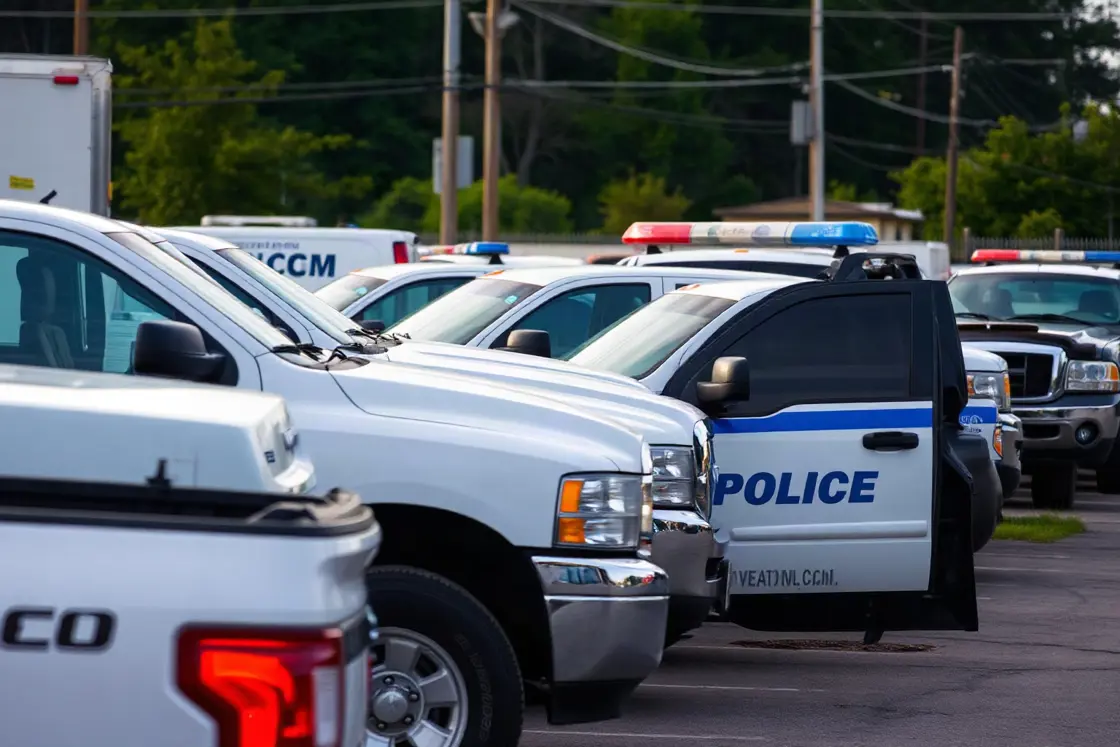
Fleet trucks can show wear patterns that differ from personal vehicles. Long idle periods may affect cooling, batteries and emissions components, while repeated short trips, heavy payloads, towing and rough worksites can stress brakes, suspension, driveline parts and body panels. Seized or stored vehicles can add another set of risks because service records may be incomplete and storage conditions may be unknown. Published police-auction guidance describes as-is sales, rare refunds and potentially complicated title situations. 5 6
Comparing auction trucks with ordinary used pickups
An auction truck differs from a late-model used pickup bought from a private seller or dealer mainly in the balance between information and control. A private seller may provide ownership context and service invoices, but inspection quality varies. A dealer transaction may offer a more standardized vehicle history process and, depending on the vehicle and jurisdiction, some consumer protections. An auction vehicle can have a lower or higher final total depending on competition, fees, repairs and transport, so the bid alone is not a meaningful comparison.
| Comparison point | Public auction truck | Ordinary used-pickup purchase |
|---|---|---|
| Price structure | Competitive bid plus applicable fees and taxes | Advertised or negotiated market price plus normal transaction costs |
| Condition information | May be limited, especially for seized or impounded vehicles | Usually more opportunity for records, inspection and seller questions |
| Warranty position | Often sold as-is | Depends on seller, age, certification and local law |
| Paperwork | Title timing and inspection requirements can vary | Transfer procedures are usually more familiar |
Ownership costs and current pickup benchmarks
Ownership costs extend beyond the auction transaction. A 2026 cost guide estimates five-year pickup ownership at roughly $42,500 to $92,500, combining purchase, depreciation, fuel, maintenance, insurance, registration and related costs. 4 Another estimate places typical pickup operating costs at about $0.32 to $0.95 per mile, with fuel, depreciation, maintenance, insurance and registration all contributing. 9 Actual results depend on mileage, drivetrain, loading, location, driver history and repair needs.
New-truck specifications provide a useful reference point when judging an older fleet pickup. The 2026 Ram 1500 starts around $41,575, and listed trims include Tradesman, Express, Warlock, Big Horn, Laramie, Rebel, RHO, Limited, Limited Longhorn and Tungsten. The base version is reported with a 305-horsepower 3.6-liter V6, while higher versions use different powertrains and equipment levels. 3 This benchmark helps separate a genuinely usable older truck from one whose repairs approach the cost of a newer alternative.
A practical decision framework before bidding
A disciplined assessment starts with a maximum all-in figure rather than a maximum bid. That figure should include the buyer premium, tax, title and registration, transport, immediate maintenance and a reserve for unknown repairs. The vehicle history, VIN documentation, title brand, odometer consistency, keys, warning lights and inspection access should be recorded before bidding. If the auction does not permit a meaningful inspection, the uncertainty should be reflected in the financial calculation rather than assumed away.
- Confirm the seller, auction rules, payment deadline and pickup period.
- Separate retired fleet, impounded, seized and salvage-title vehicles.
- Check the VIN, title status, odometer, service records and recall information where available.
- Estimate transport, tires, brakes, fluids, battery, registration and inspection costs.
- Compare the projected total with ordinary used pickups of similar age, mileage and equipment.
The strongest candidate is not necessarily the truck with the lowest winning bid. It is the vehicle whose documented history, mechanical condition, legal status and projected ownership costs remain acceptable after every known charge is included. Because auction terms differ by agency and location, regulatory requirements and final title procedures should be confirmed with the relevant state motor-vehicle authority and the auction administrator before any binding bid.
Sources
- Online Government Auctions: How Buying Works – Government Auctions Blog: https://www.governmentauctions.org/blog/2026/07/29/online-government-auctions-how-buying-works/
- How Government Auctions Work in 2026 (No Dealer License Needed) | BidProwl: https://bidprowl.com/guides/how-government-auctions-work
- Real 10-Year Ownership Costs For 10 New Pickup Trucks: https://www.topspeed.com/pickup-trucks-ten-year-ownership-cost/
- Lowest Cost of Ownership Truck 2026 – Cost Insider: https://costinsider.com/lowest-cost-ownership-truck/
- Police Auctions: How to Buy Without Guesswork – Government Auctions Blog: https://www.governmentauctions.org/blog/2026/08/03/police-auctions-how-to-buy/
- Police Auctions: How They Work and How to Buy - LegalClarity: https://legalclarity.org/police-auctions-how-they-work-and-how-to-buy/
- Government Seized Auto Auctions: How to Find and Bid - LegalClarity: https://legalclarity.org/government-seized-auto-auctions-how-to-find-and-bid/
- How Government Auctions Work Before You Bid – Government Auctions Blog: https://www.governmentauctions.org/blog/2026/09/18/how-government-auctions-work/
- Cost Per Mile for Driving a Pickup Truck 2026 – Cost Insider: https://costinsider.com/cost-per-mile-driving-pickup-truck/
Authored by MyTrendSpot team