Early symptoms of thyroid imbalance in women: A clinical guide to signs, testing, and risk factors
Constant fatigue or feeling cold when everyone else is comfortable can be frustrating, and these changes may raise questions about thyroid function. An underactive thyroid can slow energy use, digestion, mood, and other body processes, while an overactive thyroid can accelerate heart rate, metabolism, and nervous-system activity. Symptoms often develop gradually, so a pattern of persistent changes is more informative than one isolated complaint. 1
How thyroid imbalance affects the body
The thyroid is a small, butterfly-shaped gland at the front of the neck. Its hormones help regulate how the body uses energy and affect nearly every organ, including the heart. Hypothyroidism occurs when hormone production is too low, causing many body functions to slow. Hyperthyroidism occurs when production is too high, causing several functions to speed up. 2 3
Women experience thyroid disorders more often than men, and autoimmune Hashimoto’s disease is a major cause of hypothyroidism in areas with adequate iodine intake. NIDDK reports that Hashimoto’s disease is four to ten times more common in women than men and often develops during adulthood, although it can occur at other ages. 2
Early signs of an underactive thyroid
Fatigue is one of the most frequently reported early symptoms of hypothyroidism. Other common clues include increased sensitivity to cold, unexplained weight gain or difficulty losing weight, constipation, dry skin, brittle nails, hair loss, muscle aches, joint stiffness, and a slower sense of physical or mental activity. UnityPoint Health reports that approximately 83% of patients identify fatigue as their most prominent symptom. 1
Cognitive and emotional changes can also appear. Brain fog, difficulty concentrating, memory problems, low mood, or depression may occur as thyroid hormone levels decline. These symptoms are not specific to thyroid disease, however, and can also accompany sleep problems, stress, anemia, depression, or other medical conditions. Persistent symptoms occurring in combination deserve clinical assessment rather than self-diagnosis. 1 4
- Cold intolerance that is unusual for the surrounding environment
- Constipation or noticeably slower digestion
- Dry skin, brittle nails, or increased hair shedding
- Fatigue that continues despite adequate rest
- Muscle aches, stiffness, or joint discomfort
Early signs of an overactive thyroid
Hyperthyroidism can produce the opposite pattern. Possible early symptoms include unintentional weight loss, increased appetite, heat intolerance, sweating, nervousness, anxiety, irritability, and a rapid or forceful heartbeat. Because excess thyroid hormone speeds up body functions, some women may feel restless or unusually “revved up” rather than slowed down. 3
Changes in sleep, muscle strength, and menstrual patterns may accompany these symptoms. Hyperthyroidism is more common in women and may be associated with family history, other autoimmune or endocrine conditions, recent pregnancy, iodine-containing medicines, or high iodine intake. These factors do not establish a diagnosis, but they can help clinicians assess risk. 3
| Pattern | Underactive thyroid | Overactive thyroid |
|---|---|---|
| Temperature | Cold intolerance | Heat intolerance or sweating |
| Weight | Gain or difficulty losing weight | Unintentional loss, sometimes with increased appetite |
| Energy | Fatigue and slowed activity | Restlessness or increased activity |
| Heart and mood | Low mood or slowed thinking | Racing heartbeat, anxiety, or irritability |
Menstrual, reproductive, and appearance changes
Thyroid hormones interact with systems involved in reproductive health. Hypothyroidism may be associated with heavy, irregular, or missed periods, while hyperthyroidism may contribute to lighter or irregular cycles. Changes in menstrual timing or flow are therefore relevant when they occur alongside fatigue, temperature intolerance, weight changes, or heart symptoms. 2 6
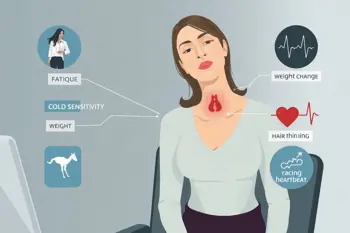
Hair thinning, hair loss, dry skin, brittle nails, and puffiness can be visible physical clues, although each has many possible causes. Hashimoto’s disease often develops slowly, and the first noticeable sign can sometimes be swelling at the front of the neck, called a goiter. Muscle aches, stiffness, and joint pain are also reported as thyroid hormone levels decline. 2 4
Why symptoms are easy to overlook
Thyroid symptoms frequently overlap with everyday hormonal changes and other conditions. Fatigue, mood shifts, brain fog, hair thinning, and weight changes can occur with perimenopause, stress, sleep disruption, anemia, or depression. Perimenopause is more commonly associated with changing cycles, hot flashes, and night sweats, while thyroid disorders more often produce a broader shift in energy, metabolism, or temperature tolerance. 5 7
Age can also affect how thyroid imbalance appears. In older adults, cognitive changes and low energy may be subtle rather than dramatic. Hashimoto’s disease may remain unnoticed during its early stages because hormone decline is gradual. A single symptom rarely identifies the cause, so the duration, combination, progression, medical history, family history, and medication history all matter during evaluation. 1 2
Testing, diagnosis, and when to seek care
Clinicians diagnose thyroid disorders through a medical history, physical examination, and thyroid function testing. TSH and free T4 are commonly used to evaluate suspected hypothyroidism, while additional tests may help identify autoimmune disease or other causes. Merck Manual describes primary hypothyroidism as typically involving low thyroid hormone levels and increased TSH, although interpretation depends on the clinical context. 6
Medical evaluation is particularly appropriate when symptoms persist, several symptoms occur together, menstrual changes continue, a neck swelling develops, or symptoms interfere with daily life. Chest pain, severe swelling, confusion, or trouble breathing are red flags requiring urgent medical attention. Thyroid conditions are treatable, but treatment depends on the confirmed cause and whether hormone levels are too low or too high. 7
- Record changes in energy, weight, temperature tolerance, digestion, mood, and menstrual cycles.
- Note family history of thyroid disease or autoimmune conditions.
- Tell the clinician about pregnancy, recent pregnancy, neck surgery, radiation, and iodine-containing medicines.
- Do not assume that symptoms alone confirm hypothyroidism or hyperthyroidism.
Sources
- UnityPoint Health, “11 Early Warning Signs of Thyroid Problems in Women”
- National Institute of Diabetes and Digestive and Kidney Diseases, “Hashimoto’s Disease”
- National Institute of Diabetes and Digestive and Kidney Diseases, “Hyperthyroidism”
- Penn Medicine, “Hashimoto’s Disease: Symptoms and Causes”
- Park Avenue Endocrinology, “Perimenopause or Thyroid Problem?”
- Merck Manual Professional Edition, “Hypothyroidism”
- Ubie Doctor’s Note, “Underactive Thyroid Symptoms in Women 30-45”
Authored by MyTrendSpot team