Signs you may have folliculitis: A Clinical Guide to Recognizing Inflamed Hair Follicles
Signs you may have folliculitis often begin with small, pimple-like bumps centered on hair follicles. The spots may itch, feel tender, contain pus, or develop after shaving, waxing, sweating, or friction from clothing. Folliculitis means that one or more hair follicles have become inflamed, irritated, or infected, and it can occur anywhere hair grows. 1
Small bumps around individual hairs
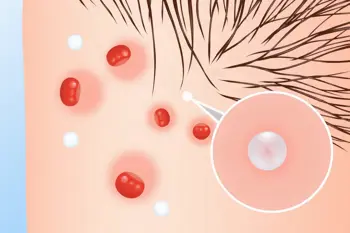
One of the clearest visual signs is a cluster of small red bumps surrounding hair follicles. Some bumps have white or yellow centers, while others remain red and swollen. The distribution can help distinguish folliculitis from unrelated rashes because the inflammation is linked to hair-bearing skin. Commonly affected areas include the neck, face, scalp, chest, back, buttocks, thighs, groin, and genital region. 1
Folliculitis may resemble acne, but the lesions are specifically associated with hair follicles rather than only clogged pores. Pustules can break open and crust over, particularly when the affected skin is rubbed or scratched. A rash, mild swelling, or scattered irritated spots may also occur, depending on the depth and cause of the inflammation. 3
Itching, tenderness, burning, or pain
Sensory symptoms are another important sign. Mild folliculitis may cause itching, irritation, burning, or slight pain, while inflamed spots can feel tender when touched. The symptoms may be localized to a small group of follicles or affect a broader area. Itching is especially common when the skin has been exposed to sweat, friction, or an organism such as bacteria or yeast. 4
More pronounced pain, swelling, or a deep lump may indicate inflammation extending beyond the most superficial part of the follicle. Folliculitis is generally a superficial condition, but deeper infections can resemble small abscesses or boils. Large, painful, or progressively swollen lesions should not be assumed to be ordinary razor bumps because a healthcare professional may need to identify the depth and cause. 2
Pus-filled spots and crusting
Pus-filled bumps or blisters are common signs, particularly in bacterial folliculitis. The fluid may appear white or yellow at the center of a red lesion. These spots can remain intact, drain, or form a crust as they heal. The Canadian Dermatology Association describes clusters of pimple-like bumps, pus-filled bumps, and blisters as characteristic symptoms associated with inflamed follicles. 1
The presence of pus does not identify the cause by itself. Bacterial, fungal, viral, and other forms of follicle inflammation can produce similar-looking lesions, and irritation from ingrown hairs may also mimic infection. Diagnosis is usually based on an examination of the skin, although laboratory testing of material from a lesion may help identify a responsible bacterium or fungus when the cause is uncertain. 3
Triggers that support the pattern
Folliculitis often follows damage, blockage, or repeated irritation of hair follicles. Shaving, waxing, tight clothing, perspiration, rubbing, and occlusion can make follicle inflammation more likely. Shaving-related cases may be called razor bumps or barber's itch, while inflammation caused by curved hairs growing back into the skin is known as pseudofolliculitis barbae. 1
A warm, damp environment can provide another clue. Hot-tub folliculitis, commonly associated with Pseudomonas bacteria, may develop between six hours and five days after exposure to inadequately treated water. The torso and buttocks, especially areas covered by a swimsuit, are typical locations. A recurring pattern after shaving, sweating, friction, or hot-tub exposure can support suspicion, but it cannot confirm the diagnosis. 4
How folliculitis may differ from similar conditions
Acne, ingrown hairs, heat-related irritation, and other infections can look similar to folliculitis. Folliculitis is more suggestive when bumps are uniform, centered on individual hairs, itchy, or concentrated in areas affected by shaving and friction. Pseudofolliculitis occurs when stiff or curly hairs curve back into the skin, creating inflammation without necessarily being caused by an infectious organism. 4
The appearance alone may not establish whether bacteria, fungi, viruses, or irritation are responsible. Fungal folliculitis and bacterial folliculitis can require different treatments, so using an unsuitable treatment may fail to address the underlying cause. Persistent, recurrent, spreading, or unusual lesions warrant clinical evaluation rather than relying only on visual comparison with acne or razor bumps. 2
When medical assessment is appropriate
Daily cleansing and a warm, moist compress may help relieve tenderness in a mild localized case. Avoiding further shaving, reducing friction, and keeping the affected area clean are consistent with commonly described supportive measures. The Canadian Dermatology Association advises medical review if the condition worsens or does not resolve within three days, while Penn Medicine recommends contacting a healthcare provider when symptoms recur, worsen, or last longer than two or three days. 1
Medical assessment is particularly important when lesions are deep, very painful, spreading, frequently recurring, or associated with a larger swollen mass. A clinician can examine the distribution and appearance, determine whether testing is needed, and distinguish folliculitis from an abscess or another skin disorder. Treatment may involve a topical or oral antibiotic, an antifungal medicine, or another approach based on the identified cause. 3
Sources
- 1. Canadian Dermatology Association, Folliculitis: https://dermatology.ca/public-patients/diseases-conditions/hair-conditions/folliculitis/
- 2. MSD Manual Consumer Version, Folliculitis and Skin Abscesses: https://www.msdmanuals.com/home/infections/bacterial-skin-infections/folliculitis-and-skin-abscesses
- 3. Penn Medicine, Folliculitis: https://www.pennmedicine.org/conditions/folliculitis
- 4. Merck Manual Professional Edition, Folliculitis: https://www.merckmanuals.com/professional/infectious-diseases/bacterial-skin-infections/folliculitis
Authored by MyTrendSpot team