Understand meniscus tear treatment options: An evidence-based clinical overview
Understanding meniscus tear treatment options starts with distinguishing a painful injury from an MRI finding that may not be causing symptoms. Treatment can range from protection and rehabilitation to arthroscopic surgery, and the appropriate path depends on the tear pattern, location, symptoms, age, activity level, and presence of arthritis. 1
What a meniscus tear is and how it presents
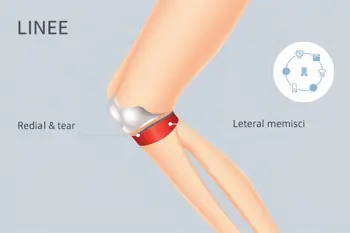
Each knee contains two menisci, the medial meniscus on the inside and the lateral meniscus on the outside. These cartilage structures sit between the femur and tibia, absorb impact, distribute load, and contribute to knee stability. Younger people commonly sustain tears during twisting sports movements, while older adults may develop degenerative tears after minor movements or gradual wear. 1
Symptoms vary with the severity and configuration of the injury. Reported signs include a popping sensation, knee pain, swelling that may begin hours after injury, clicking, tenderness, instability, catching, locking, and difficulty fully bending or straightening the knee. A locked knee, particularly an inability to fully extend it, may indicate that a fragment is mechanically obstructing movement and warrants clinical assessment. 17
Initial treatment and symptom control
Early management commonly focuses on protecting the knee and reducing irritation. The RICE approach, consisting of rest, ice, compression, and elevation, is widely described for initial symptom management. Merck Manual also identifies protection, rest, ice, compression, and elevation as standard treatment for soft-tissue knee injuries, with immobilization or surgery considered for severe injuries. 29
Non-steroidal anti-inflammatory drugs such as ibuprofen are commonly used to manage acute pain and inflammation, although medication suitability depends on a person’s health history and other medicines. Initial care does not repair every tear, but it can reduce swelling and discomfort while the knee is assessed. Persistent instability, recurrent swelling, catching, or restricted motion should be reviewed rather than managed indefinitely through self-care. 101
Physiotherapy and non-surgical rehabilitation
Physiotherapy is a central non-surgical option. Rehabilitation typically aims to strengthen muscles surrounding the knee, improve movement, and increase joint stability. Exercise therapy is particularly important for degenerative meniscal tears, for which high-level evidence summarized in a recent review found exercise therapy to be as effective as arthroscopic partial meniscectomy in both short-term and long-term outcomes. 3
A non-surgical approach may be appropriate when symptoms are manageable and the knee is not mechanically locked. The decision is not based on an MRI report alone because meniscal changes can appear in people without symptoms, especially with age. Functional limitations, examination findings, the injury history, and response to rehabilitation are therefore important. Rehabilitation also requires ongoing participation and gradual progression rather than a single treatment session. 78
When meniscus repair may be considered
Meniscal repair involves stitching torn tissue together, usually through arthroscopic surgery. Preserving the meniscus has become a stronger treatment priority because the structure helps protect the knee’s load-bearing surfaces. Repair is generally more suitable for younger, active individuals and tears near the outer peripheral region, where blood supply is better and healing potential is greater. 45
Tear location is commonly described using vascular zones. The red zone has a relatively good blood supply and greater potential for healing, while the white zone has poor blood supply and is less likely to heal after repair. Eligibility also depends on the tear’s pattern, tissue quality, associated ligament injuries, arthritis, symptoms, and functional goals. Repair often requires a longer rehabilitation period with gradually restored range of motion and weight-bearing. 538
Partial meniscectomy and other procedures
Partial meniscectomy, also called trimming, removes the damaged portion of the meniscus while leaving as much healthy tissue as possible. It may be considered when a torn fragment is not repairable and symptoms continue despite appropriate non-surgical care. Arthroscopy is the minimally invasive technique commonly used for both meniscal repair and removal, but surgery still carries recovery demands and does not make every MRI-detected tear clinically important. 46
For degenerative tears, surgery may provide faster relief for selected patients, but evidence does not show a consistent long-term advantage over structured exercise therapy. Removing meniscal tissue can reduce the knee’s natural cushioning, which is why contemporary practice emphasizes preservation where feasible. The possible benefits, risks, rehabilitation requirements, and likelihood of symptom improvement should be weighed against the alternative of continued exercise-based care. 34
Injections, diagnosis, and treatment decisions
Corticosteroid injections may reduce inflammation and symptoms inside the joint, but they do not restore the torn cartilage. Platelet-rich plasma, hyaluronic acid, corticosteroids, and extracorporeal shockwave therapy have been examined as additional treatments, yet evidence for these approaches remains mixed. PRP is still being studied as a biologic adjunct intended to support healing, so it should not be presented as an established replacement for diagnosis or rehabilitation. 36
Diagnosis is based on clinical history and physical examination, sometimes supplemented by MRI. The scan can help identify tear characteristics and distinguish conditions, but treatment selection must account for symptoms and examination findings. Medical review is particularly important when the knee locks, repeatedly gives way, cannot fully move, or remains painful and swollen. The overall objective is individualized rehabilitation and, when required, tissue-preserving surgery rather than automatic intervention. 237
Sources
- Bupa UK, Meniscus tear: Symptoms, causes and treatment, https://www.bupa.co.uk/health-information/knee-pain/meniscal-tear
- Merck Manual Professional Edition, Knee Sprains and Meniscal Injuries, https://www.merckmanuals.com/professional/injuries-poisoning/sprains-and-other-soft-tissue-injuries/knee-sprains-and-meniscal-injuries
- Chiriac et al., Contemporary Management of Meniscal Tears: From Diagnosis and Surgery to Rehabilitation Strategies, https://doi.org/10.12680/balneo.2026.947
- de Paula et al., Update on Meniscal Injury Treatment, https://pmc.ncbi.nlm.nih.gov/articles/PMC12638198/
- Johns Hopkins Medicine, Meniscus Tears, https://www.hopkinsmedicine.org/health/conditions-and-diseases/meniscus-tears
- National Institutes of Health, PRP and meniscal treatment research, https://www.ncbi.nlm.nih.gov/pmc/articles/PMC6404764/
- Search MSK Doctors, Meniscus tear: which specialist to see and whether surgery is needed, https://search.mskdoctors.com/doctors/sophie-harris/articles/meniscus-tear-which-specialist-to-see-and-whether-surgery-is-needed
- Stanford Health Care, Meniscus Tear, https://stanfordhealthcare.org/medical-conditions/bones-joints-and-muscles/meniscus-tear.html
- Mayo Clinic, Meniscus tear: Diagnosis and treatment, https://www.mayoclinic.org/diseases-conditions/meniscus-tear/diagnosis-treatment/drc-20355685
- WebMD, Meniscus tear injury, https://www.webmd.com/pain-management/knee-pain/meniscus-tear-injury
Authored by MyTrendSpot team