Home treatments for chronic neck pain: An evidence-based guide to self-care and safety
Home treatments for chronic neck pain commonly focus on gentle movement, exercise, posture, heat or cold, sleep support, and short-term symptom relief. These approaches may help mechanical or nonspecific pain, but persistent symptoms require attention to possible nerve, joint, disc, spinal, or systemic causes.
How chronic neck pain is assessed
Neck pain can arise from muscles, nerves, vertebrae, joints, discs, ligaments, or tendons. Routine strain is often associated with prolonged computer work, looking down at a phone, emotional stress, repetitive movement, or an awkward sleeping position, while arthritis, disc problems, injuries, and nerve involvement can produce more persistent or radiating symptoms. Harvard Health describes muscle aching, spasms, and tender trigger points among common patterns of neck discomfort. 1
- Record pain at rest and during movement on a 0 to 10 scale.
- Note the position, activity, or time of day that aggravates symptoms.
- Identify whether pain travels into the shoulder, arm, or hand.
- Do not assume that every chronic symptom is a simple muscle strain.
Gentle movement and home exercise
Maintaining comfortable movement is generally preferred to prolonged bed rest or rigid immobilization. Gentle neck rotation, side bending, chin tucks, and light stretching can be performed within a tolerable range, but forceful stretching or exercises that increase arm symptoms should be stopped. A Scientific Reports clinical trial involving 65 people with nonspecific neck pain found that a four-week home exercise program was associated with reduced disability and improved muscular endurance compared with an information-only control group. 8
- Move slowly and avoid bouncing or jerking.
- Use a pain-free or low-irritation range rather than forcing full motion.
- Include regular walking or other tolerated physical activity.
- Progress strengthening gradually, especially for deep neck and upper-back muscles.
Heat, cold, and soft-tissue measures
Temperature therapy can be matched to the symptom pattern. Cold may be useful after a recent flare or overload, while heat may ease stiffness, guarding, and muscular tightness. MedlinePlus describes ice followed by heat, gentle stretching, and avoiding prolonged inactivity as home measures for neck pain. A cloth barrier should protect the skin, and heating pads should not be used while sleeping because prolonged exposure can irritate or injure skin. 9
| Measure | Potential role | Safety point |
|---|---|---|
| Cold pack | May calm symptoms after a flare | Limit exposure and protect the skin |
| Warm compress or shower | May reduce stiffness and muscle spasm | Stop if heat worsens pain or causes skin irritation |
| Gentle massage | May soothe tense shoulder and neck muscles | Avoid aggressive pressure over painful or neurologic areas |
Posture, workstation, and daily load
Ergonomic changes address repeated mechanical strain rather than providing a single corrective treatment. A monitor positioned near eye level, a screen directly in front of the body, relaxed shoulders, elbows close to the body, and feet supported on the floor can reduce sustained awkward positioning. Phone and tablet use should avoid prolonged downward looking. Johns Hopkins Medicine identifies posture improvement, exercise, ergonomic changes, and physical therapy as common nonsurgical approaches for neck pain. 5
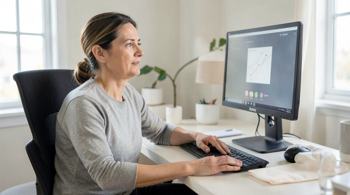
- Take regular movement breaks during desk or driving tasks.
- Bring a phone closer to eye level instead of bending the neck for long periods.
- Keep frequently used equipment within comfortable reach.
- Change positions rather than trying to hold one ideal posture all day.
Sleep support and medication considerations
A neutral sleeping position may limit overnight strain. A supportive pillow can help keep the neck aligned, while stomach sleeping may maintain prolonged rotation and aggravate symptoms. Acetaminophen or nonsteroidal anti-inflammatory drugs may provide short-term relief when appropriate, but NSAIDs carry gastrointestinal, kidney, cardiovascular, and bleeding risks. The FDA advises using the lowest effective NSAID dose for the shortest necessary duration, with label directions or clinician guidance taking priority. 10
- Review NSAID precautions when there is a history of ulcers, kidney disease, cardiovascular disease, or bleeding concerns.
- Check labels carefully to avoid duplicating active ingredients.
- Do not use medication as a substitute for evaluating persistent or worsening pain.
- Ask a clinician or pharmacist about medication suitability during pregnancy or with other medicines.
When home treatment is not enough
Chronic pain that persists, worsens, or interferes with work, sleep, movement, or daily activities should be medically assessed rather than managed indefinitely at home. Mayo Clinic lists persistent pain, pain radiating into the arms or legs, weakness, numbness, and severe headache as reasons to seek medical care. Urgent assessment is especially important after significant trauma or when symptoms suggest spinal cord, nerve, infection-related, or systemic disease. 3
- Seek urgent care for new or progressive weakness, numbness, or loss of fine motor control.
- Obtain prompt evaluation for trouble walking, loss of coordination, or bowel or bladder changes.
- Seek care for fever, unexplained weight loss, severe headache, or pain after trauma.
- Consult a clinician before home exercise when there is known cervical radiculopathy, prior cervical fusion, rheumatoid arthritis, osteoporosis, or cancer history.
Exercise-based care can produce small to moderate improvements in pain and function, although evidence varies by exercise type and study quality. A Cochrane review supports exercise as a useful option for chronic neck pain while noting limitations and variation in the available research. Physical therapy may add individualized mobility, strengthening, body-mechanics training, and self-management education when symptoms do not respond adequately to basic home measures. 7
Sources
- Harvard Health, How to soothe a sore neck
- Valor Spine, How to Relieve Cervical Neck Pain at Home
- Mayo Clinic, When to See a Doctor for Neck Pain
- Acibadem Hospitals Group, Relief of Stiff Neck
- Johns Hopkins Medicine, Neck Pain
- American Physical Therapy Association, Neck Pain
- Cochrane, Exercise for Chronic Neck Pain
- Scientific Reports, Effects of Home Exercise Program on Nonspecific Neck Pain
- MedlinePlus, Neck Pain
- U.S. Food and Drug Administration, Nonsteroidal Anti-inflammatory Drugs
Authored by MyTrendSpot team