Police auction pickup trucks on sale: Operational Dynamics, Administrative Requirements, and Fleet Transition Analysis
Overview of Public Agency Fleet Dispersals and Sales Channels
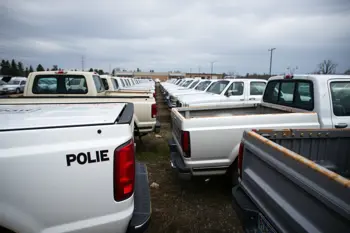
Municipalities, county sheriff offices, and federal entities regularly place retired police auction pickup trucks on sale to manage public inventory and reallocate budget assets 1. These fleet vehicles, along with confiscated property, are typically routed through authorized digital marketplaces or localized in-person public events 1. State and local agencies routinely utilize platforms such as GovDeals and Public Surplus to list decommissioned utility assets for public bidding 2 3. Federal agencies also host regular GSA Auctions to sell government-owned utility trucks 1.
The diversity of vehicles offered at these public events ranges from half-ton transport trucks to heavy-duty flatbeds. For example, Louisa County in Virginia organized a no-reserve online auction featuring various utility assets, including Ford F-150 pickup trucks and Chevrolet Tahoe SUVs 4. Similarly, the Winsted Lester Prairie Police Department in Minnesota conducted an auction for a 2007 Dodge Ram 2500 pickup truck 5. These events allow buyers and contractors to inspect and bid directly on retired fleet units.
Understanding Vehicle Condition and the As-Is Auction Model
A primary characteristic of purchasing vehicles through municipal dispersals is the strict adherence to the "as-is" auction model 1. Many vehicles in municipal storage yards may not be in running condition. For instance, the Freer Police Department in Texas auctioned a 2007 Chevrolet Silverado with a branded rebuild salvage title that was documented as unable to start and possessed no keys 6. Similarly, at the Chemung County Sheriff's Office sale in New York, a retired 2018 Chevrolet Silverado 1500 and a 2017 Chevrolet Silverado 1500 were noted to need jump starts while suffering from slipping transmissions 7 8.
Furthermore, buyers must expect that retired law enforcement units will have all emergency equipment, lightbars, and departmental decals removed prior to the transfer of ownership 9. This process frequently leaves visible mounting holes and scratches on the vehicle's exterior 8 9. While some units remain in fair mechanical condition, others are designated as parts-only vehicles due to high engine idle hours or severe powertrain wear 10. Physical inspection during preview hours is highly recommended.
Administrative Rules, Fees, and Title Transfer Compliance
Bidders participating in police and municipal auctions must comply with strict registration protocols and fee structures. At the Kansas City Tow Lot auction, all transactions are subject to a twenty-five dollar administrative fee per lot alongside a ten percent buyer's premium 11. In other formats, such as the Powell Auction and Realty police seizure events, the buyer's premium can rise to fifteen percent 10. Bidding platforms may also require significant refundable deposits before allowing users to place bids; for example, the Kansas City Tow Lot implemented a three hundred dollar bidding deposit starting in early 2026 11.
Title transfer procedures are strictly governed by state transportation laws. In Texas, successful bidders are issued a Law Enforcement Auction Sales Receipt, officially known as Form VTR-71-1 6. Residents must present this document to their County Tax Assessor to settle tax, title, and registration fees before a title is generated 6. Out-of-state bidders are not eligible to receive a Texas title directly and must consult their home state's department of motor vehicles regarding bonded title protocols 6.
Logistics of Vehicle Removal and Towing Requirements
The logistics of removing an auctioned vehicle from municipal impound lots require careful planning. Most municipal auto pounds, such as the City of Dallas Auto Pound, enforce regulations that prohibit any auction vehicle from being driven directly off the lot 12. Buyers are legally required to arrange for a licensed wrecker to tow the purchased vehicle from the premises 12. Pickup timelines are narrow, with Dallas requiring complete removal by midnight of the day following the auction 12.
Failure to remove vehicles within the designated timeline results in immediate financial penalties or forfeiture of the asset. The Kansas City Tow Lot charges a thirty dollar per day storage fee for late pickups, requiring all vehicles to be removed by the Saturday following the sale 11. Since many vehicles do not come with ignition keys, buyers must coordinate with towing services or bring recovery equipment, such as trailers and winches, during removal hours.
Inventory Categories and Heavy Duty Classifications
The variety of truck inventory distributed through public channels highlights the different histories of these utility units. Retired emergency response pickup trucks often feature heavy-duty alternator systems, upgraded cooling packages, and pre-wired auxiliary electrical grids 9. In contrast, asset forfeiture auctions feature civilian vehicles seized during operations. For example, the Oceana County Sheriff's Department in Michigan structured bidding for a confiscated 2015 Ford F-350 dually equipped with a 6.7-liter diesel engine and 160,000 miles to fund equipment upgrades 13.
| Vehicle Model | Sponsoring Agency | Reported Mileage | Documented Mechanical Condition |
|---|---|---|---|
| 2018 Ford F-150 Responder | Franklin County Sheriff, ME | Not Listed | Sold via Municibid for $6,100 14 |
| 2015 Ford F-350 Dually | Oceana County Sheriff, MI | 160,000 Miles | 6.7L Diesel engine, seized asset 13 |
| 2017 Chevy Silverado 1500 | Chemung County Sheriff, NY | 149,346 Miles | Needs jump start, transmission slips 8 |
| 2021 Chevy Silverado 3500HD | Cheektowaga Fleet, NY | 113,517 Miles | Runs and drives, single owner fleet 15 |
Operational Risks and Market Friction for Bidders
Participating in government surplus bidding introduces distinct market friction points that require thorough risk assessment. The lack of historically verified service logs for confiscated or abandoned vehicles means bidders operate with minimal information 11. At municipal impound auctions, organizers openly state that bidders will not know if the vehicle runs until after purchase, and most vehicles do not possess keys 11. These operational uncertainties are magnified by the fact that all sales are final, with no refunds or warranties offered 12.
To mitigate these inherent risks, professional buyers prioritize in-person preview days, which are routinely scheduled prior to the closing of the bids. For example, Suffolk County Police Department in New York schedules dedicated preview days at their Westhampton impound yard before bidding opens 16. Bidders use these inspection windows to verify vehicle identification numbers, inspect body panels for rust, and evaluate fluid conditions. Proper preparation, clear understanding of local transport regulations, and realistic repair budgeting remain critical components.
Sources
- USAGov: Government Vehicle Auctions (usa.gov)
- GovDeals Online Surplus Marketplace
- Public Surplus Auction Platform
- Louisa County, Virginia Board of Supervisors Press Release
- Winsted Lester Prairie Police Department Forfeited Vehicle Notice
- Global Auction Guide: Freer Police Department Online Auction
- Global Auction Guide: Chemung County Sheriff 2018 Chevy Silverado
- Global Auction Guide: Chemung County Sheriff 2017 Chevy Silverado
- Global Auction Guide: Township of Brick PD Police Vehicle Auction
- Powell Auction & Realty Police Seizure & Equipment Event
- Kansas City Tow Lot Auction Platform
- City of Dallas Auto Pound Abandoned Vehicle Auctions Guidelines
- MLive: Oceana County Sheriff Seized Asset Auction
- Municibid Government Surplus Automotive Auctions
- RTI Auctions: July NetAuction Event
- Suffolk County Police Department Impound Auction Report
Authored by MyTrendSpot team