Police Auction Heavy Machinery on Sale: Market Overview, Platforms, and Buyer Guidance
Police and government agencies across the United States regularly conduct online auctions to liquidate seized heavy machinery and construction equipment obtained through criminal investigations, asset forfeiture proceedings, and surplus asset management. These auctions represent a significant channel for buyers seeking heavy equipment at substantially reduced costs compared to traditional commercial markets.
Understanding Police and Government Heavy Machinery Auctions
Law enforcement agencies accumulate heavy machinery through multiple pathways, including seizure from criminal enterprises, civil asset forfeiture related to drug trafficking and organized crime, and equipment no longer needed by state transportation and public works departments. 1 These assets must be liquidated efficiently to recover funds for governmental operations while freeing storage resources. The Pennsylvania Department of Transportation, for example, recently conducted a statewide online auction featuring approximately 350 fleet and heavy equipment assets through GovDeals, marking a significant single-event liquidation effort. 2 Similarly, police departments nationwide regularly advertise equipment auctions through dedicated platforms and county sheriff websites to reach qualified buyers.
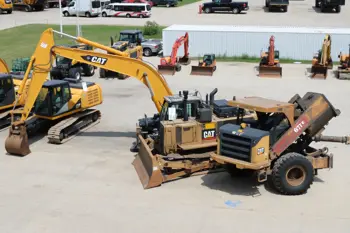
The scale and frequency of these auctions reflect ongoing law enforcement asset management needs. Recent documented sales include police seizure equipment auctions scheduled for specific dates, such as the November 22, 2025 equipment and tool auction conducted by Powell Auction and Realty featuring online-only bidding at 7 p.m. EST. 3 These auctions typically include diverse machinery categories, from haul trucks and dozers to hydraulic excavators and specialized construction equipment. The Norfolk Police Towing Auction, scheduled for February 5, 2026, was expected to include 89 or more cars, trucks, vans, and motorcycles from various manufacturers. 4
Major Online Auction Platforms and Their Reach
GovDeals.com operates as the largest online marketplace for surplus government and educational assets in the United States, connecting federal, state, and local agencies with nationwide audiences of registered buyers. 5 The platform's infrastructure allows efficient management of assets from multiple locations while expanding visibility beyond traditional in-person sales boundaries. Interested bidders can view detailed asset information, place bids remotely, and participate in auction processes without the limitations associated with conventional auctions. The platform's registration system requires users to create accounts and complete free registration before browsing, inspecting by appointment, and placing bids through the secure auction interface.
Beyond GovDeals, multiple platforms facilitate police and government heavy equipment auctions across North America. Powell Auction and Realty manages police seizure auctions with both online and in-person components, offering preview periods and equipment building inspections at specific locations. 6 State-specific platforms include Illinois's iBid system, which lists agricultural equipment, construction equipment, and industrial machinery from state surplus inventories. 7 Virginia's Department of General Services conducts live auctions in partnership with auction houses across the Commonwealth alongside online sales via GovDeals, allowing buyers to browse items 24/7 while filtering by location and county. 8 GSA Auctions serves as the official General Services Administration platform for federal surplus property, including heavy machinery and construction equipment.
Pricing Structures and Value Propositions
Heavy machinery at police and government auctions is typically priced 30 to 70 percent below standard market values due to bulk liquidation requirements and the need for rapid asset conversion. 9 This significant discount reflects the agencies' primary objective of efficient liquidation rather than maximizing per-unit revenue. However, buyers must factor additional costs beyond hammer prices. Buyers premiums are standard across platforms, ranging from 8.8 percent for purchases exceeding $5,000 to 16.5 percent for smaller purchases at certain auction houses. 10 Sales tax applies to all items in most auctions, with exemptions available only for buyers presenting valid farm or resell certificates prior to checkout. 11 Transportation and shipping represent additional buyer responsibilities, as most auction terms specify no shipping services provided by the auctioneer.
The financial structure of these auctions reflects transparent cost allocation to buyers. A 15 percent buyers premium appears standard across multiple platforms, combined with mandatory sales tax on auction proceeds. 12 For vehicle and titled equipment, title transfer timelines typically extend 10 to 14 days after auction completion, with mail delivery available upon buyer request during equipment pickup. Credit and debit card payments often incur additional 3 percent convenience fees, while major equipment purchases frequently require cash, cashier's check, or wire transfer only. Understanding these layered costs is essential for calculating true acquisition expenses when comparing police auction purchases to retail equipment markets.
Registration, Payment Terms, and Buyer Eligibility
Prospective buyers must complete platform-specific registration processes before accessing auction catalogs or placing bids on heavy machinery. Most platforms require users to establish accounts, verify contact information, and confirm payment methods as prerequisites for auction participation. GovDeals requires free account creation and completion of registration forms, while some auctions mandate in-person preview appointments scheduled through police departments or auction management offices. 13 Payment obligations typically require full settlement within 24 to 48 hours of winning bids, with specific terms varying by auction and auctioneer. Some auctions stipulate that failure to pay within the required timeframe results in relisting of the equipment and potential bid cancellation.
Eligibility for certain auction categories may be restricted to specific buyer types. Government entity auctions conducted by agencies like Virginia's Department of General Services offer dedicated events for state agencies, local governments, and other eligible public bodies, with separate schedules and terms compared to public auctions. 14 Public auctions remain open to any registered individual or business buyer, though registration requirements and background checks vary by jurisdiction. Some platforms require buyers to acknowledge terms of sale, including condition disclaimers, as-is and where-is purchase standards, and inspection responsibilities before bidding eligibility is confirmed.
Inspection Protocols and Condition Assessment
Heavy machinery sold at police auctions is offered on an as-is, where-is basis with no warranties or guarantees regarding mechanical condition, operational status, or component integrity. 15 Buyers bear full responsibility for conducting due diligence before placing bids. Most auction platforms offer scheduled preview periods, such as Friday preview windows from 12 p.m. to 4 p.m. EST at equipment buildings, where prospective buyers can physically examine machinery, assess component condition, and evaluate operational capacity. 16 Some auctions accommodate appointment-only inspections to manage facility access and ensure safety compliance during equipment viewing.
Documentation available during preview periods typically includes detailed lot photographs, mechanical specifications, operational hours, and noted deficiencies or repairs needed. For example, vehicle listings may specify salvage title status, missing components, or mechanical issues such as inoperative brakes. 17 Buyers are strongly encouraged to obtain independent vehicle history reports through services like CARFAX or AutoCheck before committing to bids, though these services charge fees and operate independently of auction organizations. Equipment condition assessments should include fuel type verification, tire or track condition, hydraulic system functionality, and any visible corrosion or damage. Failing to conduct thorough inspections increases risk of acquiring equipment with hidden mechanical problems, repair needs, or safety hazards.
Transportation, Pickup Logistics, and Regulatory Considerations
Buyers of heavy machinery from police auctions must arrange their own transportation and storage, as auction houses do not provide shipping or delivery services for equipment. 18 Pickup timelines are typically constrained to specific windows, such as Monday pickup from 9 a.m. to 4 p.m. EST following Saturday auctions, with equipment remaining at the auctioneer's facility only during this designated period. 19 Equipment must be moved from auction premises within 90 days of purchase unless formal extensions are granted by property owners, creating logistical pressure for buyers to arrange transportation quickly. This constraint is particularly significant for large machinery like Caterpillar haul trucks, dozers, or hydraulic excavators that require specialized heavy-equipment transport services.
Regulatory compliance represents an additional consideration for equipment purchases involving titles or licensing requirements. Equipment with titles requires vehicle registration transfers, which agencies typically complete 10 to 14 days post-auction, with buyers notified when documents are ready for pickup at auction offices. 20 Some jurisdictions require equipment to be transported off-site by licensed heavy-haul carriers and may impose restrictions on machinery operation during transport on public roads. Buyers should verify local transportation regulations, obtain appropriate permits, and confirm carrier insurance coverage before finalizing purchases of large machinery.
Risk Factors and Operational Realities
Heavy machinery purchased at police auctions carries inherent risks related to unknown mechanical history, deferred maintenance, and potential hidden defects that may not be apparent during preview inspections. Equipment seized from criminal operations may have been subjected to severe use, inadequate maintenance, or storage in challenging environmental conditions that compromise component longevity. Some machinery may have missing original components, aftermarket replacements of questionable quality, or modifications that affect operational safety or efficiency. Buyers should anticipate potential repair and restoration costs that may partially or fully offset initial purchase discounts, particularly for equipment from older model years or uncertain provenance.
Market volatility and auction competition also influence effective acquisition costs. Bidding competition among multiple qualified buyers can drive hammer prices upward, reducing the anticipated discount advantage. Seasonal fluctuations in buyer participation affect pricing within specific equipment categories, with construction season auctions potentially attracting more competitive bidding than off-season sales. Buyers must establish maximum bid limits before auction events to maintain purchase discipline and avoid acquiring equipment at prices that eliminate cost-advantage benefits.
Sources
- Powell Auction and Realty - Police Seizure Equipment and Tool Auctions
- Pennsylvania Department of Transportation (PennDOT) and GovDeals Statewide Online Auction Event
- Powell Auction and Realty November 22, 2025 Police Seizure Equipment Auction
- Auction757 - Norfolk Police Towing Auction February 5, 2026
- GovDeals.com Heavy Equipment and Construction Category
- Powell Auction and Realty Equipment Auction Operations and Terms
- State of Illinois iBid Online Auction Platform
- Virginia Department of General Services - Surplus Public Auctions
- General LLM Research Data on Police Auction Heavy Machinery Pricing
- Powell Auction and Realty Buyers Premium and Fee Structure
- Powell Auction and Realty Sales Tax and Certificate Requirements
- Jackson Township Public Notice - Police and Fire GovDeals Auctions
- GovDeals Platform Registration and Bidding Requirements
- Virginia Department of General Services Government Entity Auctions
- Auction Terminology and As-Is Where-Is Purchase Standards
- Powell Auction and Realty Preview and Inspection Scheduling
- Auction757 and Jackson Township Vehicle Condition Disclosure Standards
- Powell Auction and Realty Equipment Transportation and Pickup Terms
- Powell Auction and Realty Pickup Scheduling and Timeline Requirements
- Powell Auction and Realty Title Transfer and Document Delivery Timeline
Authored by MyTrendSpot team