Accessible home modifications cost guide: A professional report on 2026 market pricing
Planning for long-term home accessibility requires a realistic assessment of project expenses, which often vary based on structural requirements, material selection, and local labor markets 1. In 2026, homeowners increasingly seek to modify their existing environments to support aging in place, with research indicating that 75% of adults over the age of 50 prefer to remain in their current homes 4. This guide provides a detailed analysis of market-derived pricing points, establishing clear expectations for project budgets while highlighting the critical differences between low-complexity safety upgrades and high-complexity structural renovations 19.
Understanding the Tiers of Home Accessibility
Home accessibility projects are generally categorized by their scope and the level of structural intervention required. Low-complexity modifications, such as the installation of grab bars, lever-style door handles, and non-slip flooring, deliver significant safety improvements at a modest cost, often functioning as the primary line of defense against fall risks 29. These projects typically involve basic hardware mounting and surface treatments, making them highly efficient in terms of safety return on investment 48.
Mid-complexity and high-complexity modifications involve greater structural changes, such as widening doorways to accommodate wheelchair clearance, installing stair lifts, or performing full bathroom conversions 29. These tasks often require professional consultation to ensure compliance with building codes and to manage the complexities of plumbing, electrical, and subfloor integration 69. Understanding these distinctions is essential for homeowners attempting to build a realistic project scope that aligns with their specific mobility needs and budget constraints 89.
Bathroom Safety and Modification Economics
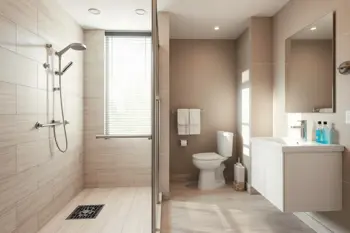
The bathroom remains the most frequent site of home-related injuries, making it the primary focus for accessibility retrofitting 5. Installation of a set of three to four grab bars generally costs between $150 and $400, including professional labor 23. Experts emphasize that these items should be anchored into studs or solid blocking to ensure structural integrity, as suction-cup alternatives may pose safety risks 35. A comfort-height toilet installation typically ranges from $300 to $1,000, providing an essential ergonomic upgrade for users with limited mobility 24.
| Modification | Estimated Cost Range (2026) |
|---|---|
| Grab bars (set of 3-4) | $150 - $400 |
| Comfort-height toilet | $300 - $1,000 |
| Walk-in shower conversion | $6,000 - $22,000 |
| Walk-in tub | $4,000 - $34,950 |
| Full accessible bathroom remodel | $6,100 - $50,000 |
More substantial projects, such as a walk-in shower conversion or a full bathroom remodel, represent significant financial commitments. A curbless shower conversion involves specialized labor for drainage and waterproofing, with costs spanning from $6,000 to $22,000 depending on the complexity of the design 14. Full-scale remodels designed for complete ADA accessibility can reach upwards of $50,000, reflecting the extensive plumbing, tile work, and layout adjustments necessary to ensure long-term functionality 13.
Mobility and Access: Ramps and Lifts
Providing safe exterior and interior access is a critical component of universal design. Wheelchair ramp installations range from $1,000 to $20,000, with final pricing dictated by the ramp length, the rise height, and the materials utilized, such as modular aluminum versus permanent concrete or wood 123. Straight-rail stair lifts generally cost between $2,200 and $8,500, while more complex curved-rail or outdoor configurations often exceed $9,000 to $15,000 due to customized engineering requirements 34.
Interior access, such as widening doorways to 36 inches for wheelchair clearance, generally costs between $500 and $1,500 per door 2. These modifications involve physical changes to doorframes and, potentially, the surrounding walls, which may impact electrical or framing elements 26. Evaluating these costs requires a clear understanding of the home’s layout, as the necessity for structural alterations can significantly fluctuate based on the age and construction style of the residence 69.
Whole-Home Retrofitting Strategies
Comprehensive whole-home retrofits are designed to integrate accessibility features into every room, often as part of a single coordinated project 3. Costs for these projects typically range from $18,000 to $120,000, depending on the extent of the modifications and the size of the home 34. While these projects represent a substantial investment, they often offer long-term financial benefits when compared to the monthly costs associated with assisted living or nursing facility care 5.
Strategic planning allows homeowners to bundle modifications, which can reduce labor costs compared to executing projects in isolation 4. For example, installing blocking for grab bars during a planned bathroom gutting is substantially more efficient than retrofitting those same walls later 4. Homeowners should conduct a formal home assessment with a certified aging-in-place professional to identify the most impactful changes before committing to large-scale, whole-home modifications 7.
Financial Assistance and Funding Considerations
While most residential accessibility projects are financed privately, various resources may help offset costs for eligible individuals. The Department of Veterans Affairs offers HISA grants to assist with necessary structural improvements, and some Medicaid Home and Community-Based Services (HCBS) waivers may cover specific modifications for qualifying low-income or disability-related scenarios 34. Original Medicare generally does not provide coverage for home modifications, making independent financial planning a central component of any aging-in-place strategy 4.
Tax considerations may also play a role, as certain medically necessary home improvements can potentially qualify for tax deductions depending on individual financial circumstances and IRS regulations 10. It is advisable to consult with a qualified tax professional to evaluate whether planned accessibility upgrades meet the criteria for medical expense deductions under current tax codes 10. Keeping detailed records of all expenses, including contractor labor and materials, is essential for any future tax-related inquiries 4.
Risk Assessment and Regulatory Oversight
Homeowners must be aware that accessibility modifications carry inherent risks related to construction quality and regulatory compliance. Engaging unlicensed contractors or attempting complex structural changes without appropriate permits can lead to sub-standard results or future safety hazards 6. Ensuring that all work is completed by professionals who are familiar with ADA guidelines and local building codes is necessary for maintaining the long-term utility and safety of the home 79.
Furthermore, accessibility upgrades do not always provide a direct financial return on investment at the point of property resale, particularly for highly specialized installations like home elevators 4. Decisions should be driven by current living needs rather than future resale value 4. Maintaining a clear view of the potential long-term friction points, such as ongoing maintenance for mechanical lifts, is an essential part of an objective evaluation of these home improvement projects 46.
Sources
- ADAhomeFinder (2026), ADA Home Modification Costs.
- BuildCalc Pro (2026), Home Accessibility Remodel Cost Guide.
- AgeProofPros (2026), Aging-in-Place Modification Costs.
- Cost to Renovate (2026), Aging-in-Place Renovation Costs.
- BuildCalc Pro (2026), Complete Guide to Aging-in-Place Home Modifications.
- KOLMO (2026), ADA Accessibility Cost Calculator.
- Critchfield Construction (2026), Real Costs of Accessible Remodels.
- Effective Agents (2026), Aging in Place vs. Selling: Home Modification Costs & ROI.
- Ziptapes (2026), Aging-in-Place Home Modification Costs Guide.
- RenoHouse (2026), Accessibility Renovation Cost Toronto: Real CAD Pricing.
Authored by MyTrendSpot team