Best hospitals for Head and Neck Cancer Treatment: A Research-Based Comparison of Specialized Programs
Best hospitals for Head and Neck Cancer Treatment are generally distinguished by coordinated teams, experience with complex tumors, reconstructive capability, access to clinical research, and treatment planning tailored to the cancer site and stage. The programs reviewed here include major centers in the United States, Canada, and internationally, but no single hospital is appropriate for every diagnosis.
How specialized head and neck programs are evaluated
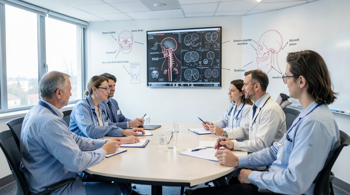
Head and neck cancer care commonly involves surgical oncology, radiation oncology, medical oncology, pathology, imaging, speech and swallowing specialists, nutrition professionals, and rehabilitation services. Multidisciplinary review is important because cancers of the mouth, throat, larynx, salivary glands, sinuses, thyroid, skin, and skull base can require different combinations of surgery, radiation, chemotherapy, immunotherapy, or targeted treatment. The American Cancer Society states that treatment depends substantially on tumor location and stage. 14
Program scope is another comparison factor. Sunnybrook Health Sciences Centre describes itself as Canada’s third-largest head and neck program and treats cancers involving the oral cavity, salivary glands, larynx, pharynx, sinuses, eye, skin, and other head and neck areas. Its multidisciplinary clinic allows patients to meet multiple specialists during one coordinated visit, while its program includes minimally invasive surgery, reconstruction, ultrasound, and clinical research. 1
Leading U.S. cancer centers and dedicated services
Several major U.S. institutions maintain dedicated head and neck services. Memorial Sloan Kettering Cancer Center lists expertise in mouth, nasal cavity and sinus, salivary gland, throat, thyroid, and tongue cancers, with medical, surgical, and radiation oncologists working as a coordinated treatment team. The National Cancer Institute explains that NCI-Designated Cancer Centers combine specialized cancer care with research and clinical-trial activity. 2 11
Other frequently evaluated programs include MD Anderson, Mayo Clinic, Johns Hopkins, UCLA, Mass General Brigham, UCSF, Cleveland Clinic, Penn Medicine, and Stanford Health Care. The supplied institutional information describes specialized diagnostic and treatment services across these centers, including surgery, radiation, systemic therapy, supportive care, and clinical trials. U.S. News cancer rankings can provide a broad comparison point, but rankings do not replace review of site-specific expertise, case complexity, outcomes, or trial availability. 12 13
Memorial Sloan Kettering and reconstruction expertise
Memorial Sloan Kettering’s reconstruction program addresses functional and appearance-related effects of head and neck cancer treatment. Its surgeons and plastic and reconstructive surgeons work together on reconstruction for oral, tongue, throat, thyroid, salivary gland, sinus, skull base, and skin cancers. The program describes procedures that may rebuild the mouth and face, including creation and implantation of a new jaw when clinically appropriate. 3
The center reports restoring blood flow to nearly all tissue flaps, with a stated success rate of about 99 percent. Such figures are program-reported information and should be interpreted in relation to the patient’s diagnosis, prior radiation, general health, anatomy, and procedure. Reconstruction is not merely cosmetic: treatment planning may address speech, swallowing, airway function, dental rehabilitation, nutrition, and long-term quality of life. 3
Specialist expertise for complex or rare tumors
Rare anatomical sites may require narrower expertise than general head and neck treatment. Johns Hopkins profile information identifies a practice focused on sinonasal and skull base cancers, including open and endoscopic surgery, neck dissection, and clinical research for rare tumors. This type of specialization can be relevant when disease affects the nasal cavity, paranasal sinuses, orbit, skull base, or nearby critical structures. 10
Mass General Brigham’s Daniel Faden is described as a board-certified head and neck surgical oncologist with training in complex cancer surgery, cranial base surgery, minimally invasive techniques, and transoral procedures. His research includes blood-based tests and HPV-related cancer care. Penn Medicine’s Karthik Rajasekaran is identified as a head and neck oncologic and microvascular reconstructive surgeon with expertise in transoral robotic surgery, skull base approaches, and advanced reconstruction. 7 8
Programs with broad surgical and clinical-trial capacity
UPMC’s Matthew Spector is described as specializing in oral cavity, laryngeal, oropharyngeal, sinonasal, salivary gland, and skin malignancies, along with transoral robotic surgery, local and regional flaps, and microvascular reconstruction. His profile also lists clinical-trial interests. These capabilities illustrate why hospital comparisons should examine the exact procedures performed by the relevant team rather than relying only on a hospital’s overall reputation. 9
OU Health Stephenson Cancer Center is Oklahoma’s only NCI-Designated Cancer Center, according to its institutional information, and describes a multidisciplinary program covering common and rare cancers. Listed conditions include salivary gland tumors, oral cavity cancer, throat cancer, thyroid cancer, sinonasal disease, melanoma, Merkel cell carcinoma, and several uncommon tumor types. Its stated treatment range includes surgery, chemotherapy, and radiation therapy, with plans tailored to individual circumstances. 4
International options and practical decision criteria
International programs also present different models of care. Acibadem’s head and neck surgery information describes operations involving the mouth, throat, larynx, sinuses, salivary glands, and neck lymph nodes, with possible neck dissection and immediate reconstruction. It gives general procedure estimates of two to eight hours, hospital stays of three to ten nights, and recovery of four to eight weeks, while emphasizing that the information is educational rather than individualized medical advice. 5
Arodya’s India-focused overview identifies Tata Memorial, Apollo, and Max among leading centers and describes free-flap reconstruction, endoscopic approaches, organ-preserving laryngeal surgery, and combined chemoradiation. Its article also reports an estimated surgical cost range of USD 5,000 to USD 15,000, but such figures are not universal quotations and may exclude staging, complications, rehabilitation, travel, or follow-up. Patients should verify diagnosis, eligibility, accreditation, treatment ownership, continuity of care, and access to relevant trials before comparing institutions. 6
Sources
- Sunnybrook Health Sciences Centre, Head and Neck Cancer Care
- Memorial Sloan Kettering Cancer Center, Head and Neck Cancer Doctors and Experts
- Memorial Sloan Kettering Cancer Center, Head and Neck Cancer Reconstruction Program
- OU Health Stephenson Cancer Center, Head and Neck Cancers
- Acibadem, Head and Neck Cancer Surgery
- Arodya, Head and Neck Oncosurgery in India
- Mass General Brigham, Daniel L. Faden, MD
- Penn Medicine, Karthik Rajasekaran, MD
- UPMC, Matthew E. Spector, MD
- Johns Hopkins Medicine, Nyall R. London Jr., MD, PhD
- National Cancer Institute, Cancer Centers
- U.S. News and World Report, Best Hospitals for Cancer
- MD Anderson Cancer Center, Head and Neck Cancer
- American Cancer Society, Treating Oral Cavity and Oropharyngeal Cancer
Authored by MyTrendSpot team