Receive Your Same-Day Implant Restoration: Clinical Context and Patient Guidance
What Same-Day Implant Restoration Means
Same-day implant restoration generally describes a protocol in which an implant is placed and a temporary crown, bridge, or fixed arch restoration is attached during the same appointment. The approach is also called immediate loading or teeth in a day. The restoration provided on the procedure date is commonly provisional, while the final crown, bridge, or denture is fitted after the implant has healed and integrated with the jawbone. 1
Traditional implant treatment often separates surgery from restoration because bone must grow around and bond with the implant. The National Institute of Dental and Craniofacial Research describes this integration as a necessary part of implant therapy, while NHS guidance notes that treatment may take several months before the replacement tooth is attached. Same-day care therefore changes the timing of the temporary restoration, not necessarily the total biological healing period. 3 5
Temporary Versus Permanent Teeth
A same-day restoration is designed to provide appearance and controlled function during healing. It may be a temporary crown for one missing tooth, a bridge supported by implants, or a fixed provisional arch for extensive tooth loss. The permanent restoration is typically created after tissues stabilize and osseointegration is confirmed. The exact design depends on the number and location of missing teeth, the bite, available bone, and the intended long-term prosthesis. 2 9
Immediate loading does not mean that the implant is biologically complete on the day of surgery. Primary stability must support the provisional restoration while the surrounding bone heals. Clinical sources identify strong initial fixation, adequate bone, healthy oral tissues, and suitable overall health as important considerations. If those conditions are not present, staged implant placement or delayed restoration may be clinically more appropriate. 7 10
How Eligibility Is Evaluated
Assessment usually begins with a medical and dental history, an examination of the teeth and gums, and diagnostic imaging. The American Dental Association identifies clinical evaluation and imaging as parts of implant planning, while three-dimensional imaging can help assess bone volume, nerve pathways, sinus anatomy, and the proposed position of the restoration. Bite forces and the ability to clean around the future implant are also relevant to treatment planning. 4
Potential barriers include active gum disease, insufficient bone, uncontrolled medical conditions, smoking, poor oral hygiene, and other factors that can interfere with healing or maintenance. The American Academy of Periodontology notes that bone or tissue grafting may be recommended in selected cases. A patient may therefore qualify for implants generally but not for immediate loading without preliminary treatment or a modified surgical plan. 8 11
What the Procedure May Involve
For a single tooth, treatment can involve removing a non-restorable tooth, preparing the site, placing the implant, attaching an abutment, and securing a temporary crown. For broader tooth loss, several implants may support a temporary bridge or denture. Cleveland Clinic describes the implant, abutment, and crown or other restoration as distinct components. The sequence varies according to anatomy, infection status, bone support, and the planned prosthetic design. 2
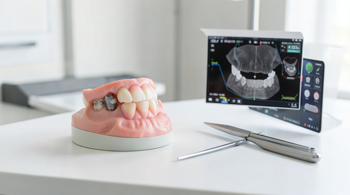
Digital planning may combine cone beam imaging, digital impressions, and computer-aided design to coordinate implant position with the intended tooth shape. Some practices use in-house or laboratory fabrication for provisional restorations, but the technology does not remove the need for clinical judgment. Extractions, grafting, implant placement, provisional attachment, and later permanent restoration may occur at separate stages when safety or healing requires it. 4 8
Risks and Treatment Limitations
Implant therapy carries possible complications, including infection, damage to nearby structures, nerve symptoms, sinus complications, implant failure, and loosening of the restoration. The U.S. Food and Drug Administration identifies dental implants as medical devices and describes these risks in its patient information. Immediate loading can also place functional demands on implants before complete integration, so chewing instructions and bite adjustments may be necessary during healing. 6
A same-day appointment is not a guarantee of a permanent tooth on the procedure date, and it is not suitable for every clinical situation. Active infection, inadequate bone, unfavorable bite forces, medical concerns, or difficulty maintaining oral hygiene can change the recommended timeline. Bone grafting or other preparatory care may be needed before implant placement, extending treatment beyond the initial restoration appointment. 7 8 10
Healing, Cleaning, and Long-Term Maintenance
After placement, the implant must integrate with the jawbone before the final restoration is completed. During this period, clinicians may recommend a soft-food period, restrictions on heavy biting, follow-up examinations, and adjustments to the temporary restoration. The provisional device is intended to protect the treatment plan and provide function, but it may not have the same materials, contours, or long-term durability as the final crown, bridge, or denture. 1 3
Daily cleaning and professional maintenance remain necessary because inflammation around an implant can damage supporting tissues. Guidance from implant organizations emphasizes healthy gums, consistent oral hygiene, and the ability to maintain care as important parts of candidacy and long-term success. Patients reviewing a treatment plan should clarify the provisional period, expected follow-up schedule, cleaning tools, dietary restrictions, warning symptoms, and the conditions required before the final restoration is delivered. 7 12
Sources
- Mayo Clinic, Dental Implants
- Cleveland Clinic, Dental Implants
- National Institute of Dental and Craniofacial Research, Dental Implants
- American Dental Association, Implants
- NHS, Dental Implants
- U.S. Food and Drug Administration, Dental Implants
- American Academy of Implant Dentistry, Dental Implants
- American Academy of Periodontology, Dental Implants
- MedlinePlus, Dental Implants
- MSD Manual, Dental Implants
- Harvard Health Publishing, Dental Implants: What You Need to Know
- WebMD, Dental Implants
Authored by MyTrendSpot team