Home remedies for managing back pain: Evidence-based guidance and safety considerations
Home remedies for managing back pain can include staying gently active, applying cold or heat, adjusting sleep posture, and using carefully selected over-the-counter medicines. Most uncomplicated episodes improve over days or weeks, but persistent, severe, or neurologic symptoms require medical assessment rather than continued self-treatment. 1
What back pain may indicate
Back pain commonly follows muscle or tendon strain after lifting, twisting, bending, or strenuous activity. Other cases involve pressure on a spinal nerve caused by narrowing of the spinal canal, a shifted vertebra, or a bulging, herniated, or degenerating disk. Pain may remain localized or travel into the buttocks or leg, a pattern often described as radiculopathy. 2
Short-term low back pain is often called nonspecific because a single structural cause cannot be identified. It commonly improves within several days or weeks, while pain lasting longer than 12 weeks or repeatedly returning is considered chronic and deserves a more structured evaluation. Harvard Health reports that approximately four out of five Americans experience back pain at some point. 1
Cold and heat therapy
Cold packs may be useful during the early phase of a fresh strain, particularly when the area feels irritated or swollen. Scripps Health advises ice during the first 48 hours for an acute episode, while broader guidance also recognizes cold as a temporary pain-numbing measure. Ice should be wrapped in cloth rather than placed directly against skin, and treatment should stop if skin becomes painful or unusually numb. 3
Heat may be more comfortable after the initial phase or when muscle tightness and stiffness dominate. A heating pad, warm bath, or other superficial heat can relax tense muscles and make movement easier, although relief is generally temporary. Neither temperature treatment establishes the cause of pain, and persistent symptoms should not be masked indefinitely with repeated applications. 6
Movement instead of prolonged bed rest
Gentle activity is a central part of home care. Short walks, frequent position changes, and light movement within tolerable limits can help prevent stiffness and reduce the loss of confidence that may follow a painful episode. Guidance summarized by NCBI identifies staying active and doing targeted exercises among the more effective self-management measures for low back pain. 4
Relative rest can still be appropriate: heavy lifting, deep bending, twisting, and strenuous exercise may be reduced while symptoms are intense. However, prolonged bed rest is discouraged because it can worsen stiffness and delay a gradual return to ordinary activity. Movement should not be forced through sharply increasing pain, spreading numbness, or new weakness. 6
Gentle stretching and strengthening
Light stretching may reduce stiffness when performed slowly and without bouncing. The appropriate direction of movement differs by person and by the source of pain, so a stretch that feels relieving for one individual may aggravate another. Cedars-Sinai emphasizes that exercise remains important and that back pain should not automatically result in complete inactivity. 2
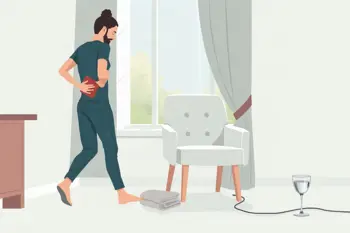
As symptoms settle, gradual strengthening can support tolerance for walking, lifting, and daily tasks. Examples discussed in the research material include pelvic tilts and the bird-dog exercise, which are intended to build trunk control. These exercises should be stopped if they increase leg pain, numbness, or weakness, and recurring or chronic pain may require an individualized physical-therapy plan. 7
Sleep, sitting, and daily ergonomics
Sleep positioning can reduce strain for some people. Side sleepers may place a pillow between the knees, while back sleepers may place one under the knees to reduce pressure on the lower back. These positions are comfort measures rather than treatments for the underlying cause, and a painful position should not be maintained simply because it is commonly recommended. 6
Desk habits can also influence symptoms. Adjusting chair height, keeping the screen at a suitable level, and changing position periodically may limit unnecessary strain during computer work. Poor posture, prolonged sitting, limited activity, stress-related muscle tension, and incorrectly performed lifting are identified as common contributors to mild back discomfort. 8
Over-the-counter medicines and their limits
Nonsteroidal anti-inflammatory drugs, including ibuprofen or naproxen, may reduce pain and inflammation for some people when used according to label directions. Acetaminophen is also mentioned as a pain-relief option in Harvard Health material. Medication choice depends on personal health factors, existing medicines, and possible side effects, so label precautions and clinician or pharmacist guidance matter. 5
Medication is generally considered an addition to movement and exercise rather than a replacement for active treatment. NCBI notes that painkillers should not be used over a long period because of associated risks. People with medical conditions, medication interactions, or uncertainty about safe dosing should seek professional advice instead of extending self-treatment. 4
When home care is not appropriate
Emergency assessment is warranted for loss of bladder or bowel control, numbness in the groin or saddle area, or rapidly worsening weakness or numbness spreading down one or both legs. These symptoms may signal significant pressure on spinal nerves and are not appropriate for observation at home. 3
Urgent evaluation is also appropriate after major trauma or when back pain occurs with fever, chills, unexplained weight loss, or progressive neurologic changes. Pain that lasts longer than 12 weeks, repeatedly returns, or substantially limits ordinary tasks should be evaluated to support an accurate diagnosis and targeted plan. Harvard Health notes that assessment may include a physical examination and, when indicated, imaging, blood tests, or nerve testing. 1
Sources
- Harvard Health, “Create a plan to relieve your back pain”
- Cedars-Sinai, “The Best Stretches and Exercises for Lower Back Pain”
- Scripps Health, “What to Do When You Throw Your Back Out”
- NCBI Bookshelf, “Low back pain: Medication for the treatment of chronic back pain”
- Harvard Health, “Managing chronic back pain”
- Nolla Health, “Lower Back Pain Relief: What Works & When to Worry”
- Mindful Movement Physical Therapies, “How to Treat Back Pain at Home”
- Passion Health Primary Care, “13 Home Remedies for Mild Back Pain”
Authored by MyTrendSpot team