Compare septic repair costs by area: A Comprehensive Regional Price Guide
Regional Cost Differences for Septic System Repairs
When property owners seek to compare septic repair costs by area, they discover that geographic location dictates a substantial portion of the final invoice. Market reports highlight a broad spectrum of expenses depending heavily on local economic factors, municipal codes, and regional disposal fees. In 2026, standard septic system repair averages range widely, with small-scale tasks starting at approximately $150 to $200, while high-end restorations can reach or exceed $15,000 1. These geographic variations mean that a homeowner in one state might pay a fraction of what another homeowner pays for the exact same repair.
Regional labor markets and regulatory requirements establish distinct pricing tiers across the country. For instance, the West Coast and Northeast represent the most expensive territories due to high cost-of-living indicators and strict environmental compliance protocols. A detailed analysis of estimated repair pricing across geographic sectors demonstrates these distinct variations, allowing consumers to anticipate costs before consulting local professional plumbers:
| Geographic Region | Estimated Cost Range | Key Pricing Drivers |
|---|---|---|
| Northeast | $200 to $18,000 | Strict local regulations, high disposal rates, and labor costs 1 |
| Southeast | $130 to $12,000 | Higher contractor density and overall lower cost of living 1 |
| Midwest | $135 to $13,000 | Moderate regional labor rates with seasonal price fluctuations 1 |
| Southwest | $145 to $14,000 | Lower rates in rural areas balanced by regional travel costs 1 |
| West Coast | $200 to $20,000 | State environmental regulations adding $100 to $200 per project 1 |
Breakdown of Common Component Repairs
The overall cost of septic system repair is largely determined by which specific component fails rather than the system as a whole 2. Minor component fixes, such as replacing a damaged baffle or cleaning a clogged effluent filter, represent the lower end of the pricing spectrum. For example, replacing a damaged inlet or outlet baffle typically ranges from $200 to $600, while installing a new tank lid or riser averages between $150 and $500 3. These repairs are essential for keeping solids inside the tank and preventing downstream blockages from destroying the absorption field.
Mid-range and major repairs involve mechanical, electrical, or structural components that require specialized diagnostic equipment and excavation. The following table highlights standard average prices for typical repair jobs in 2026, which vary by component depth and overall site accessibility:
| Septic Component | Average Cost Range | Diagnostic and Labor Scope |
|---|---|---|
| Septic Pump Replacement | $800 to $1,800 | Involves electrical calibration and structural seals 3 |
| Distribution Box Replacement | $800 to $2,500 | Requires leveling and flow adjustment to lines 3 |
| Tank Crack or Leak Repair | $1,000 to $3,500 | Utilizes specialized sealants to prevent soil contamination 3 |
| Line Repair or Replacement | $1,000 to $5,000 | Involves trenching, pipe alignment, and backfilling 4 |
Soil Conditions and Geographical Cost Factors
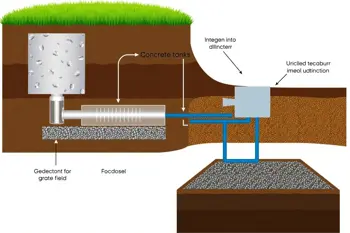
Soil permeability and local geological structures play a critical role in determining repair complexity and overall design requirements 5. In regions characterized by sandy soil, wastewater filters easily, allowing standard gravity-fed systems to function efficiently with basic, less expensive drain field configurations 5. Conversely, areas dominated by heavy clay or rocky formations impede water absorption, which often forces contractors to implement engineered solutions 5. These soil variations explain why identical systems cost vastly different amounts to fix depending on local topography.
These engineered systems, such as mound systems, aerobic treatment units, or sand filters, require specialized components and extensive soil manipulation. While a standard gravity-fed system installation might range from $3,000 to $7,000, specialized mound systems often cost between $10,000 and $25,000 to design and construct 6. When these complex systems require remediation or extension, the surrounding soil must be thoroughly evaluated via percolation tests, which add to the overall project budget depending on regional engineering demands 5.
Comparing Key State-Level Expenditures
Examining state-specific metrics reveals how local labor indices and state regulations shift the cost curve. In Texas, city-by-city comparisons for standard septic projects demonstrate moderate variations, with the statewide median hovering around $4,752 7. Cities like Lubbock and Brownsville feature multipliers around 0.79, resulting in average project costs of $4,682, whereas Austin features a 0.99 multiplier, bringing the typical baseline to $4,857 7. These urban-to-rural cost disparities are driven primarily by competitive contractor density and travel distances.
In Colorado, the statewide median cost for standard septic system projects sits slightly higher at $4,865 8. In localized Denver-specific tracking, the typical septic repair range spans from $800 to $3,000, with an average of approximately $1,600 9. Meanwhile, looking at specialized service rates in Iowa, a septic specialist's hourly rate ranges from $92 to $144, with major cities like Des Moines recording significantly higher average repair costs compared to rural towns 10. In California, where environmental regulations are exceptionally stringent, a simple sewer line repair alone can range from $2,457 in Fresno to $2,694 in San Jose 11.
Regulatory Compliance, Permits, and Inspections
Navigating local regulatory frameworks is a mandatory aspect of any major septic repair. Most municipalities require formal building permits and engineering reviews before contractors can begin physical excavation or line replacement. Standard permit and inspection fees typically add $100 to $2,000 to the total cost, depending on local county policies and whether a comprehensive design evaluation is required 12. In regions with delicate aquifers or high water tables, local environmental protection boards enforce rigorous design standards that prevent basic repair approaches.
Furthermore, professional inspections are necessary to diagnose failures accurately and certify completed work. A standard septic inspection averages between $100 and $500, which includes visual checks and water testing 5. Some areas mandate camera inspections or dye testing to verify structural integrity before issuing repair approvals. Failing to secure the appropriate permits can lead to severe fines, potential code violations during property transfers, and the eventual requirement to excavate and redo uncertified work.
Preventive Maintenance vs. Emergency Failures
The difference between maintaining a septic system and ignoring it often translates to a massive financial gap. Routine maintenance, specifically pumping the tank every three to five years, averages $300 to $600 nationally 6. This simple service removes accumulated sludge and scum, preventing solids from escaping the tank. When homeowners skip this regular pumping, solids migrate into the drain field, leading to severe clogging and eventual failure 2.
Once a drain field fails completely, the recovery options are highly invasive and financially demanding. Homeowners face drain field repairs ranging from $2,000 to $10,000, or a complete replacement that can easily reach $5,000 to $20,000 5 6. Comparing a minor pumping charge every few years against an emergency reconstruction highlights the stark economic reality of on-site wastewater management 1 2. Regular professional monitoring remains the primary tool for extending system longevity and avoiding sudden system collapse.
Sources
- SepticTankHub
- The Septic Guide
- CompareSeptic
- HomeGuide
- Ecostify
- HomeCostLab
- HomeCostCalc Texas
- HomeCostCalc Colorado
- Affordable Septic Pumping Colorado
- MasterFinder Iowa
- HomeCostCalc California
- Selector Kurlon
Authored by MyTrendSpot team