Military Surplus Generator Auctions: A Guide to Sourcing Industrial Power Equipment
Key facts
- Government surplus sales prioritize military and government agencies before items are made available to the public for competitive bidding 1.
- Military generators are typically sold on an as-is, where-is basis, meaning buyers assume full responsibility for inspection and transportation costs 2 3.
- Popular military-grade models like the MEP-802A and MEP-803A are often found in surplus auctions, frequently featuring ruggedized designs for extreme environments 4 5.
- Third-party auction platforms may offer inspection programs, such as IronClad Assurance, which provide detailed reports on equipment condition to aid buyer decision-making 6.
Military surplus generator auctions represent a secondary market for power equipment retired from U.S. government service. These machines are engineered to satisfy rigorous military specifications, commonly referred to as MIL-SPEC, ensuring durability and performance in environments ranging from intense heat to arctic conditions 7 8. When the Department of Defense no longer requires these assets, they are processed through the Defense Logistics Agency’s disposition system. Before reaching the public, equipment is offered to military units, other federal agencies, and qualified state or local organizations, meaning only excess inventory eventually enters the commercial auction circuit 1.
The Mechanics of Government Surplus Auctions
The procurement process for military generators involves navigating various government-authorized platforms. While the Defense Logistics Agency manages the overall disposal of surplus property, the physical listing and bidding process is frequently handled by third-party auction brokers 1 9. These platforms provide the infrastructure for individuals and businesses to register, view inventory details, and participate in competitive bidding. Some platforms focus specifically on heavy equipment and military assets, while others handle a broader range of general surplus property 6 10.
Buyers should distinguish between listings that include third-party inspection reports and those sold strictly on an as-is, where-is basis. Inspection-backed programs, such as those that provide detailed condition summaries, can mitigate some risks associated with used hardware by offering remedies if the item significantly deviates from the reported condition 6. Regardless of the platform, the final bid is typically considered a binding commitment. Participants must account for the buyer’s premium, taxes, and the logistics of removing heavy equipment from government or storage facilities, which often require specialized trailers and handling equipment 2 6.
Common Models and Power Ratings
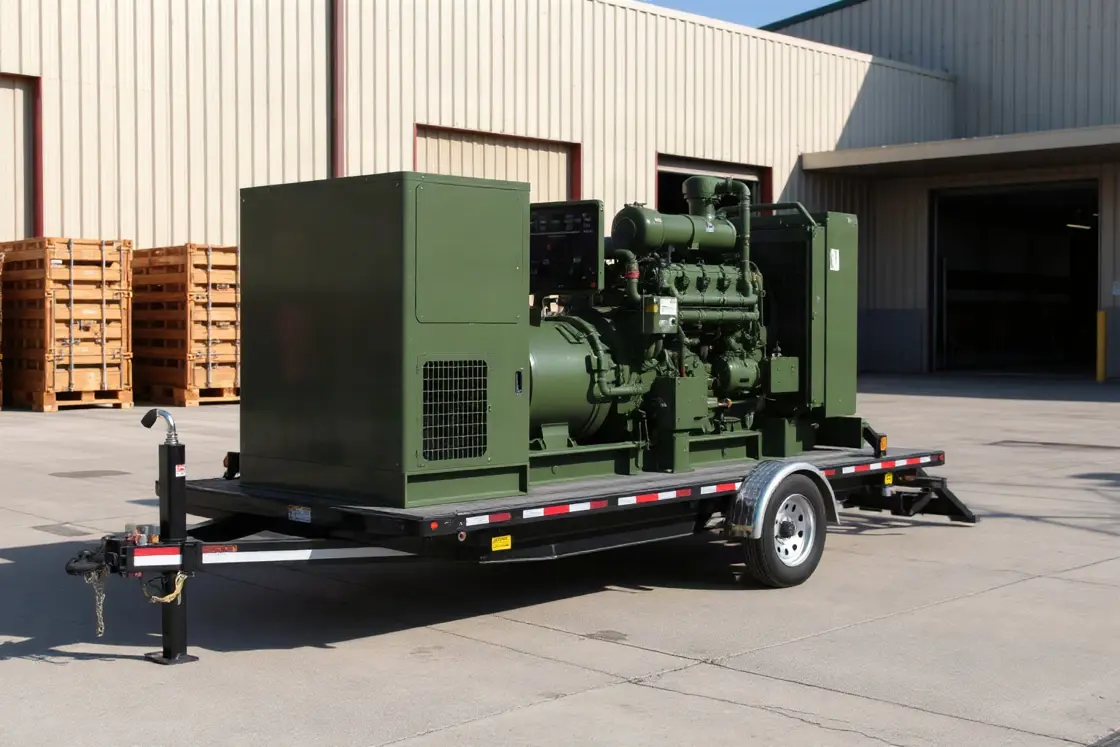
The inventory at these auctions commonly features tactical quiet generators and various diesel-powered units designed for portability and rugged field use. Frequently encountered models include the Fermont MEP-802A, a 5kW unit, and the MEP-803A, a 10kW generator 4 5. These machines are typically self-contained, often skid-mounted or integrated onto towable trailer chassis, and feature versatile voltage selector switches that allow for output configurations such as 120/240V single-phase or 120/208V three-phase power 11 4 5.
Because these generators are designed for military operational needs, they often utilize diesel engines, which are preferred for safety and fuel logistical efficiency in the field. When browsing current market inventory, buyers may see older units such as the MEP-003A alongside more modern iterations. These units are built to withstand abuse that would typically exceed the operational capacity of standard commercial power equipment, though their maintenance history can vary widely depending on their previous deployment environment 3 5 8.
Evaluating Condition and Service History
Determining the actual service life of a military generator is a primary challenge for potential buyers. While units often come with hour meters, these indicators reflect only the operational time recorded by the device, not the frequency of maintenance or the conditions under which it was operated. Some units may have been stored for extended periods, while others may have been used continuously in demanding conditions 2 3. Buyers should look for technical manuals and records if available, as these documents provide critical insight into the expected performance and specialized component requirements of specific models 5.
Inspection before bidding is highly advised whenever possible. If an in-person inspection is not feasible, potential bidders should rely heavily on the provided photographic evidence and any detailed condition reports available through the auction house. Items marked as parts-only or scrap often indicate that the unit has significant mechanical faults and is not suitable for immediate power generation without extensive refurbishing. Understanding that these generators are often sold as-is means the buyer is responsible for all diagnostic and repair costs post-purchase 6 9 3.
Logistical Challenges and Transport Requirements
The weight and dimensions of military generators present significant logistical considerations. A 10kW model, for instance, can weigh over 1,000 pounds even when dry, and transporting it requires appropriate equipment, such as heavy-duty trailers or flatbed trucks 11. Buyers are almost always responsible for loading and transporting the unit from the site of the auction, which may be located at a military installation or a remote storage yard. This process often involves coordinating with professional freight companies that have experience dealing with industrial machinery 2 3.
Furthermore, military-grade generators may utilize specialized connectors or heavy-duty trailer hitches that are not standard in the civilian sector. Before the auction concludes, buyers should ensure they have the logistical capacity to retrieve the unit or a contract with a third-party carrier capable of moving oversized or specialized loads. Failure to arrange timely pickup can lead to storage fees or default penalties, which are clearly outlined in the terms and conditions of government surplus contracts 2 6 10.
Operational Considerations for Civilian Use
Integrating a military surplus generator into a residential or commercial setting requires attention to technical differences. These generators often output power in configurations designed for military field equipment, which may require modification or professional electrical installation to function with standard civilian appliances or transfer switches. Furthermore, the noise levels of older, non-quiet models can be significant, potentially requiring the installation of custom sound-dampening structures if the unit is to be used in residential areas 7 5.
Accessing replacement parts is another factor to consider. While many models are produced by well-known industrial engine manufacturers, some specific components may be unique to the military application and difficult to source through standard retail channels. Savvy buyers often purchase bulk lots or parts-only machines alongside operational units to ensure a supply of interchangeable components for future repairs. Ultimately, the value of a military surplus generator depends on the buyer's ability to manage maintenance, fuel, and the technical requirements of operating military-grade hardware in a civilian context 2 3 8.
Sources
- How DoD Sales Work: Surplus, Foreign Military, and Contracts - LegalClarity: https://legalclarity.org/how-dod-sales-work-surplus-foreign-military-and-contracts/
- How Federal Surplus Property Auctions Work – Government Auctions Blog: https://www.governmentauctions.org/blog/2026/08/08/federal-surplus-property-auctions/
- 1980 Military Generator In Wilson Tx Item G5507 Sold Purple Wave – Mosquera: https://mosqueras.com/1980-military-generator-in-wilson-tx-item-g5507-sold-purple-wave/
- Surplus 2010 Fermont Mep 803A 10Kw Generator Set In Chambersburg – Mosquera: https://mosqueras.com/surplus-2010-fermont-mep-803a-10kw-generator-set-in-chambersburg/
- Army 5Kw Generator – Mosquera: https://mosqueras.com/army-5kw-generator/
- GovPlanet FAQ (2026): Buying Heavy Equipment & Military Surplus | GovAuctions.app: https://govauctions.app/guides/govplanet-faq
- Understanding the Costs of Military Generators - wondermapped.com: https://wondermapped.com/en/articles/understanding-the-costs-of-military-generators
- Military Surplus Generators: Diesel & Generator Sets - ShanHua: https://shanhuachina.com/blog/military-surplus-diesel-generator/
- How Do Government Aircraft Auctions Work? - LegalClarity: https://legalclarity.org/how-do-government-aircraft-auctions-work/
- General Services Administration Auction: 2026 Bidding Guide: https://www.gsascheduleservices.com/blog/general-services-administration-auction-2026-bidding-guide/
- Military Surplus Generator 10Kw – Mosquera: https://mosqueras.com/military-surplus-generator-10kw/
Authored by MyTrendSpot team