Ways to manage tension headaches at home: Evidence-based relief and safety guidance
Ways to manage tension headaches at home include resting in a quiet setting, trying heat or cold, gently massaging tense muscles, using relaxation techniques, and taking appropriate over-the-counter medicine when suitable. Tension headaches commonly involve pressure or aching in the head, scalp, or neck and are often associated with muscle tension, stress, anxiety, fatigue, or prolonged strain. 1
Recognizing a tension headache
A tension-type headache is commonly described as dull, steady pressure or a tightening sensation on both sides of the head. The discomfort may involve the forehead, temples, scalp, back of the head, neck, jaw, or shoulders. Unlike many migraines, tension headaches are generally not pulsating and are not typically accompanied by nausea or worsening pain during routine physical activity. 8
Episodes may be occasional or recurring, and reported duration can range from about 30 minutes to several days. Because other conditions can also cause head pain, a changing pattern, unusually severe symptoms, or uncertainty about the diagnosis should not be managed solely with home care. A healthcare professional may use a physical and neurological examination to assess the headache type and possible causes. 2
Measures that may ease pain during an episode
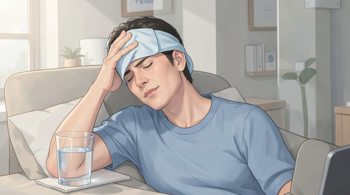
Resting in a quiet room can reduce exposure to noise and activity while the pain settles. A cool cloth on the forehead, a warm shower, or a hot or cold application to the forehead, temples, or neck may help some people. Cold can numb discomfort, while heat may relax tense muscles. Any cold pack should be wrapped in a cloth rather than placed directly on the skin. 1
Gentle self-massage may relieve tightness in the scalp, temples, neck, base of the skull, jaw, and shoulders. Light circular pressure is preferable to forceful manipulation, particularly if an area is painful. Gentle neck and shoulder movement can also address muscle tension, while prolonged stretching or any movement that increases pain should be stopped. Massage, heat, and posture improvement are recognized self-care approaches for tension-type headache symptoms. 8
Hydration, meals, sleep, and daily routines
Regular hydration, consistent meals, and adequate sleep are practical parts of headache management because dehydration, skipped meals, fatigue, and disrupted sleep can contribute to episodes. Regular routines may also make it easier to identify which circumstances precede pain. Alcohol and smoking can be headache-related factors, and MedlinePlus specifically advises avoiding them when managing tension headaches. 1
Screen and desk habits can add strain to the head, neck, and shoulders. Keeping the head and neck in a neutral position, lowering raised shoulders, and taking breaks from prolonged screen use may reduce muscle loading and eye strain. A headache diary can record the day, timing, pain description, activities, sleep, meals, fluids, stress, and possible triggers, helping identify repeat patterns for discussion with a clinician. 10
Relaxation and muscle-tension strategies
Stress and anxiety can contribute to the muscle contractions associated with tension headaches. Relaxation methods may include slow deep breathing, meditation, yoga, or biofeedback. These approaches are intended to reduce stress responses and encourage relaxation rather than provide a guaranteed way to stop every episode. Regular practice may be more useful than trying a technique only after pain has become intense. 6
Posture correction and gentle physical activity can complement relaxation work. Slouching, an awkward sleeping position, and long periods at a computer may keep the neck and shoulder muscles contracted. Stretching, massage, exercise, and stress reduction are commonly included in self-care recommendations, but vigorous activity is not appropriate if it worsens symptoms or if the headache has unusual features. 9
Over-the-counter pain medicine and medication risks
Nonprescription options that may relieve tension-headache pain include acetaminophen, aspirin, ibuprofen, and naproxen. These medicines should be used according to the product label and any instructions from a healthcare professional. Aspirin, ibuprofen, and naproxen can irritate the stomach. People with medical conditions, medication interactions, pregnancy concerns, or uncertainty about safe dosing should obtain individualized advice before using them. 1
Frequent reliance on pain relievers can produce medication-overuse, also called rebound, headaches. MedlinePlus warns that using pain medicine more than three days a week on a regular basis can lead to recurring headaches. Acetaminophen also carries liver-damage risk when the total daily amount exceeds 4,000 milligrams, and combining it with substantial alcohol intake increases that risk. U.S. Food and Drug Administration guidance emphasizes following dosing instructions and warnings. 1 5
When home treatment is not enough
Medical advice is appropriate when headaches are frequent, worsening, severe, changing in character, or interfering substantially with daily activities. Repeated self-treatment can conceal another headache disorder and can increase the risk of medication-overuse headache. A diary that documents frequency, duration, location, intensity, associated symptoms, medicines, and triggers can provide useful information during an assessment. 10
Urgent medical evaluation is needed for a sudden, severe headache or head pain accompanied by weakness, confusion, fainting, fever, a stiff neck, vision changes, or speech problems. These warning signs may indicate a condition requiring prompt assessment rather than home management. Johns Hopkins Medicine identifies sudden severe headaches and neurological symptoms as reasons to seek medical attention. 7
Sources
- MedlinePlus, “Managing tension headaches at home,” https://medlineplus.gov/ency/patientinstructions/000421.htm
- Mayo Clinic, “Tension headache: Diagnosis and treatment,” https://www.mayoclinic.org/diseases-conditions/tension-headache/diagnosis-treatment/drc-20353982
- Cleveland Clinic, “Tension headache self-care,” https://health.clevelandclinic.org/how-to-get-rid-of-a-headache
- NHS, “Tension headaches,” https://www.nhs.uk/conditions/tension-headaches/
- U.S. Food and Drug Administration, “Use over-the-counter pain relievers safely,” https://www.fda.gov/drugs/special-features/use-over-counter-pain-relievers-safely
- American Migraine Foundation, “Tension-type headache,” https://americanmigrainefoundation.org/resource-library/tension-type-headache/
- Johns Hopkins Medicine, “Headache,” https://www.hopkinsmedicine.org/health/conditions-and-diseases/headache
- Harvard Health Publishing, “Tension headache,” https://www.health.harvard.edu/pain/tension-headache-a-to-z
- Mount Sinai, “Tension headache,” https://www.mountsinai.org/health-library/diseases-conditions/tension-headache
- Healthdirect Australia, “Tension headache,” https://www.healthdirect.gov.au/tension-headache
Authored by MyTrendSpot team