Public Auctions of Seized Equipment: A Guide to Official Processes and Participation Requirements
Key facts
- Government agencies, including the U.S. Marshals Service and the GSA, conduct auctions for seized and surplus property 1 2.
- Items are typically sold as-is, meaning buyers assume all risks regarding the condition and functionality of the equipment 3 4.
- Legitimate government auctions are announced through official agency websites or established contracting partners rather than unsolicited advertisements 5.
- Winning bidders are often responsible for additional costs, such as buyer premiums, sales tax, storage fees, and removal or transportation expenses 6 7.
Public auctions of seized equipment are organized by government entities to dispose of assets that have been forfeited due to criminal investigations, tax violations, or abandonment at ports of entry 1 8 5. These events, managed by agencies such as the U.S. Marshals Service or the Department of the Treasury, are designed to convert seized and surplus goods into funds that return value to the government or affected agencies 1 3 4. While these auctions are generally open to the public, participation is governed by strict rules, legal frameworks, and procedural requirements that differ from standard retail transactions.
Understanding the Nature of Seized Equipment Auctions
The term "seized" refers to property taken into government custody, often through civil or criminal forfeiture processes 5. It is important to distinguish between "seized" property, which is held as part of an ongoing legal action, and "surplus" property, which is equipment the government no longer requires for its operations 9 3. Both categories may appear at public auctions, but their legal status determines how they are handled. Agencies have a responsibility to taxpayers to secure fair market value for these items, making them competitive, rather than discount, sales 3.
Government-run auctions use various formats, including online bidding, in-person events, or mail-in bids 1. Some agencies manage the entire process internally, while others contract professional auction houses to handle the logistics of photography, cataloging, and collection 1 2. Buyers should verify the authority behind any auction notice, as official sales are always listed on government domains or through clearly identified, authorized contractors rather than through unverified secondary links or social media advertisements 5.
Types of Equipment and Inspection
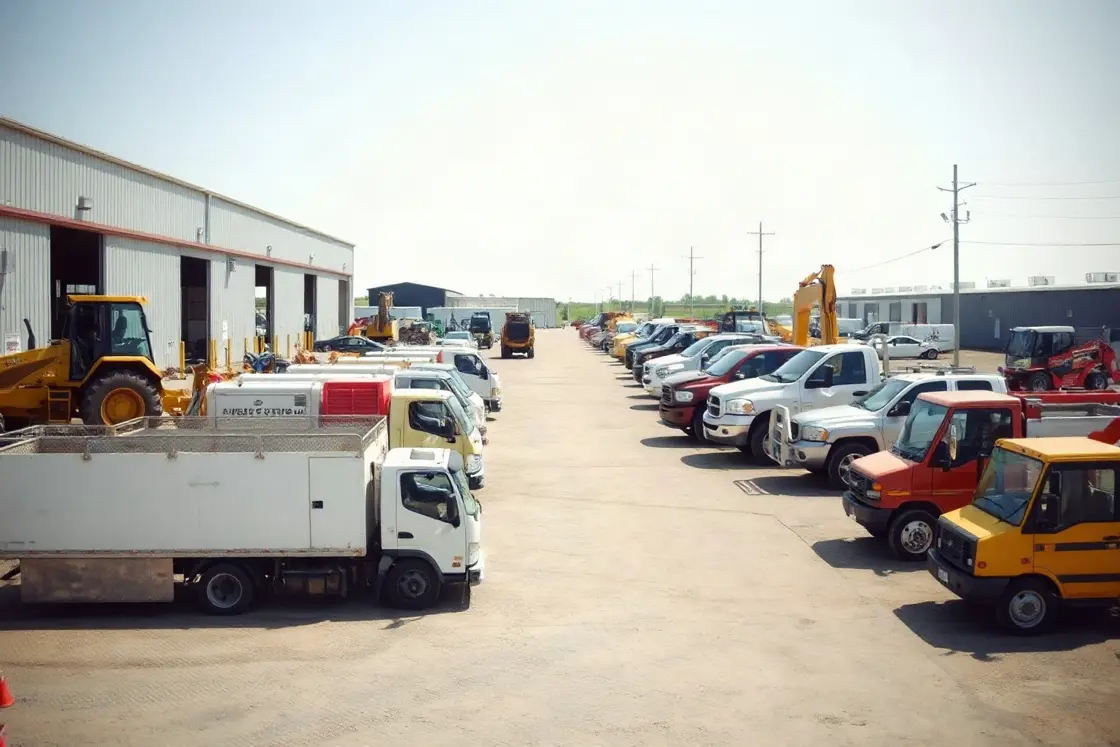
Equipment auctioned by the government ranges from office machinery and laboratory equipment to heavy construction vehicles, agricultural tractors, and marine vessels 1 3 6. The scope of items depends entirely on the inventory seized or deemed surplus by the specific agency holding the sale 8. Because this equipment often has a long history of professional use or may have been neglected during seizure, the government generally provides limited or no warranties regarding its performance or condition 3 4.
Inspection is a critical part of the process. While official agencies may provide descriptions or photos, these should be viewed as general guidance rather than a complete assessment 3 4. Whenever possible, potential bidders should take advantage of public viewing periods to examine the machinery, check serial numbers, and assess for hidden damage or missing components. If a physical inspection is not possible, bidders must weigh the potential for repair costs, as successful bids are binding and items are rarely eligible for return after the sale concludes 4 6.
Registration, Bidding, and Buyer Responsibilities
Participation requires formal registration, which often includes verifying identity and providing contact details 9. Some auctions may require an upfront deposit or a pre-authorization of payment methods to ensure bidder legitimacy 8. Once registered, bidders must monitor the auction platform for changes, such as revised closing times or updated lot descriptions. Bidding occurs within specific time frames, and in many cases, auction houses employ a "buyer's premium," which is a percentage fee added to the final hammer price, alongside applicable sales tax 6 7.
Payment terms are rigid and usually require specific methods such as wire transfers, government checks, or designated digital payment systems 9 6. Using credit cards is often restricted, especially for high-value items like vehicles or heavy equipment, and a limit per transaction may be applied 9 7. Failure to pay within the allotted time frame can result in the forfeiture of a deposit or exclusion from future auctions. Furthermore, the buyer is almost always responsible for all costs related to loading, transport, and, if applicable, specialized licensing or environmental handling of the purchased item 4 6.
Identifying and Avoiding Misleading Offers
The prevalence of seized property auctions has led to the emergence of third-party sites that may attempt to mimic official government portals. These unofficial sites often use deceptive language to suggest exclusive access or low-cost deals, which are inconsistent with the government's mandate to achieve fair market returns 3 5. Legitimate auctions will always clarify the name of the administering agency and provide detailed terms and conditions, often referencing specific legal forms or government sales regulations 9 5.
To avoid potential issues, buyers should verify any auction notice by navigating directly to official government department websites or the official sites of government-contracted auctioneers 3 5. If a website requests payment through unconventional means, offers "guaranteed" items without a clear auction process, or lacks transparent contact information for the auctioneer, it is advisable to proceed with caution. Official government sources such as USAGov provide directories and guidance on identifying the correct platforms for searching seized and surplus assets 1 2.
Risks Associated with Purchased Assets
Buying seized equipment carries inherent risks that differ significantly from purchasing new or even standard used items. Because equipment is sold on an as-is basis, buyers accept all known and unknown defects 4. This can include mechanical failure, missing maintenance records, or the need for significant repairs that are not immediately visible during a brief inspection 2 3. Furthermore, equipment used in commercial or industrial settings may require specific safety certifications or environmental permits to operate, which the buyer must secure independently 4.
Logistical challenges also present a major factor in the total cost of ownership. Removal deadlines are typically short, and failure to collect equipment within the specified window may result in storage fees or the loss of the item entirely 6 7. Buyers should also factor in the cost of professional transport, especially for heavy machinery, as the government does not typically provide shipping services. Calculating these "hidden" costs-transport, taxes, premiums, repairs, and storage-is essential before placing a bid, as the final expenditure often exceeds the initial auction price 6 7.
Sources
- Government auctions of seized and surplus property: https://www.usa.gov/auctions-and-sales
- Government vehicle auctions | USAGov: https://www.usa.gov/car-auctions
- For citizens seeking surplus property: https://www.gsa.gov/buy-through-us/government-property-for-sale-or-lease/office-of-personal-property-management/for-citizens-seeking-surplus-property
- DNR schedules August, September online auctions for confiscated fishing, hunting equipment : Aug 20, 2026 | News release | Minnesota DNR: https://www.dnr.state.mn.us/news/2026/08/20/dnr-schedules-august-september-online-auctions-confiscated-fishing-hunting-equipment
- Are Seized Property Auctions Legitimate or a Scam? - LegalClarity: https://legalclarity.org/are-seized-property-auctions-legitimate-or-a-scam/
- POLICE SEIZURE & CONSIGNMENT AUCTION- 8.29.2026- LOTS START CLOSING AT 7:00PM- ONLINE ONLY!! - Powell Auction & Realty: https://www.powellauction.com/events/police-seizure-and-equipment-auction-8-29-26/
- POLICE SEIZURE & EQUIPMENT AUCTION- 5.30.2026- LOTS START CLOSING AT 7:00PM- ONLINE ONLY!! - Powell Auction & Realty: https://www.powellauction.com/events/police-seizure-and-equipment-auction-may-30-2026/
- Online Government Auctions Seized & Unclaimed Assets: https://cwsmarketing.com/
- How to purchase surplus property: https://www.gsa.gov/buy-through-us/government-property-for-sale-or-lease/office-of-personal-property-management/for-citizens-seeking-surplus-property/how-to-purchase-surplus-property
Authored by MyTrendSpot team