Police impound garden equipment for auction: A documented guide to custody, notice, and disposal
Police impound garden equipment for auction is a process that can involve lawn mowers, chainsaws, leaf blowers, pressure washers, tractors, and other landscaping tools. Documented cases show that equipment may first be held as suspected stolen property, while other items proceed toward disposal only after ownership cannot be established or legal notice periods have expired. 1 4
How garden equipment enters police custody
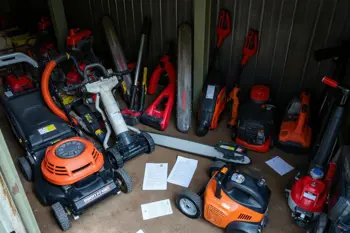
Garden equipment reaches police custody through several distinct routes. Avon and Somerset Police reported finding nine chainsaws, a hot water jet washer, and a lawn mower in an insecure garage in Shirehampton, Bristol, after officers attended an unrelated incident. The items were seized because they were suspected to be stolen, and the force appealed for owners before any disposal decision. 1 Recovered machinery can therefore remain evidence or an ownership-recovery subject rather than immediately becoming auction inventory.
Other documented routes include confiscation under proceeds-of-crime powers, property handed in as lost and never claimed, and items retained after court proceedings. Essex Police uses separate auction arrangements depending on how property came into its possession, with unidentifiable power tools and bicycles handled through Chapel and Chapel auctioneers, while certain proceeds-of-crime property is directed to Wilsons Auctions. 2 The legal origin of an item affects the notice, title, and disposal procedure.
Ownership checks come before disposal
Police agencies generally attempt to identify owners before recovered machinery can be treated as unclaimed property. In the Bristol case, potential owners were told they might need photographs, receipts, or serial numbers to demonstrate ownership. 1 A Finnish police notice similarly stated that owners or other people claiming ownership had six months to contact the Helsinki Police Department regarding a Makita leaf blower, circular saw, and drill before the property could transfer to the state. 4
The ownership stage can produce difficult outcomes when records are incomplete. A New Zealand couple whose work tools had been stolen later identified some of them in an auction listing more than two years after the theft. The reported loss involved approximately $50,000 of tools, and the couple ultimately recovered a tool belt through the auction process rather than through an early police return. 6 The case illustrates why serial numbers, business markings, photographs, insurance records, and prompt reporting can matter.
Notice periods and legal authority
Unclaimed property cannot be treated as ordinary surplus simply because it has remained in storage. Jackson Police Department sought court permission to sell, convert, or destroy bicycles, tools, and other property held for three years, while publishing notice to give possible owners an opportunity to claim the items. 3 The listed property included power tools and more than 30 bicycles, with a combined estimated value of about $7,090.
Finnish notices demonstrate another formal model. The Oulu Police Department stated that a Husqvarna lawn mower, DeWalt cordless chainsaw, framing nail guns, drills, circular saw, batteries, and other property would become state property after six months if no ownership demand was lodged. 9 Such notices identify the incident number, the property, the responsible police department, and the deadline, allowing ownership claims to be assessed before disposal.
Where auctions and notices appear
Police and municipal agencies may use specialist auction houses, government auction platforms, or public notices rather than a single national marketplace. Research information identifies PropertyRoom, GovDeals, and Public Surplus as platforms associated with law-enforcement or government property, while local departments may publish notices independently. 7 8 Seller identity remains important because a police-held item, municipal surplus item, and ordinary commercial consignment can have different legal histories.
A documented Powell Auction event in Knoxville, Tennessee, listed police seizure and equipment categories including lawn and landscaping equipment, farm machinery, tractors, trailers, tools, generators, and heavy equipment. The event was online only, included a scheduled preview, and stated a 15 percent buyer premium plus sales tax. 5 These terms show why an auction notice should be read as a set of legal and logistical conditions, not merely an item description.
Condition, inspection, and collection risks
Police-held garden equipment is commonly presented without the service history associated with dealer inventory. Research information describes many such sales as “as-is,” meaning the agency generally does not warrant the mechanical condition of lawn mowers, blowers, trimmers, or power tools. 8 For combustion equipment, unknown fuel condition, battery age, missing keys, damaged guards, and unavailable maintenance records can affect whether an item is usable.
Collection responsibilities can also materially change the outcome. The Powell event specified a separate pickup date and location, third-party shipping availability, taxes, and payment restrictions for vehicles. 5 Garden equipment may require a trailer, loading assistance, fuel-safe transport, or specialist handling, depending on its size and condition. Research information identifies transportation and logistics costs as responsibilities commonly assigned to winning bidders. 8
How to assess an auction notice
A responsible review begins with provenance rather than appearance. The notice should identify the selling agency or auctioneer, explain whether the property is seized, recovered, abandoned, or unclaimed, and state whether ownership claims remain possible. Incident references and published deadlines are especially significant in police notices, as shown by the Helsinki and Oulu announcements. 4 9 An attractive photograph does not establish clear title, operating condition, or completeness.
Important questions include whether inspection is permitted, whether the equipment starts, which attachments are included, and what taxes, premiums, collection deadlines, and transport rules apply. The documented Tennessee event provided preview and pickup windows, while the Jackson case shows that public notice and court authorization can precede disposal. 5 3 The central risk is that an apparently usable machine may carry uncertain history, require repairs, or remain subject to a valid ownership claim until the legal process is complete.
Sources
- Avon and Somerset Police, “Appeal to reunite owners with seized machinery”
- Essex Live, “The legal way to buy Essex criminals' stolen goods”
- Jackson Hole News&Guide, “Jackson Police Department auction unclaimed property”
- Police of Finland, “Announcement 30.7.2026”
- Powell Auction & Realty, “Police Seizure & Consignment Auction”
- Otago Daily Times, “Couple forced to buy their stolen tools back from police auction”
- Frugal Info, “Police Impound Tractors: Auction Opportunities”
- mytips.com, “A Comprehensive Guide to Police Impound Power Tools”
- Police of Finland, “Public notification POL-2026-122465”
Authored by MyTrendSpot team