Early symptoms of enlarged prostate you should know: A Clinical Overview
Early symptoms of enlarged prostate you should know often begin as small changes in urination, including a weaker stream, difficulty starting, increased frequency, urgency, or waking during the night. These symptoms are commonly associated with benign prostatic hyperplasia, or BPH, a noncancerous enlargement that can affect the urethra and bladder. 1
What an enlarged prostate means
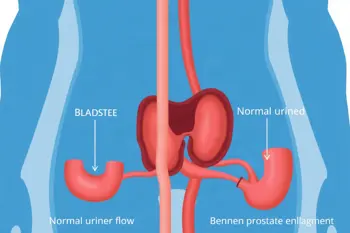
Benign prostatic hyperplasia is a condition in which the prostate grows larger than normal, but the growth is not caused by cancer. The prostate sits below the bladder and surrounds the urethra, so enlargement can narrow the passage used for urine. The gland has a second growth phase beginning around age 25 and continuing throughout life, while BPH commonly becomes noticeable later in that phase. 1
- BPH is also called an enlarged prostate, benign prostatic hypertrophy, or benign prostatic obstruction. 1
- BPH is the most common prostate problem in men older than 50. 1
- BPH is different from prostate cancer and does not automatically indicate cancer. 2
Changes in urine flow
Difficulty starting urination, known as hesitancy, is a frequently reported early change. A person may wait before the stream begins, need to strain, or notice that the flow is weaker than it used to be. The stream can also become intermittent, stopping and starting during one visit to the bathroom. These changes occur because prostate enlargement may restrict the urethra and make the bladder work harder to move urine outward. 3
- A weak stream may feel thin, slow, or less forceful than before. 6
- An interrupted stream may slow down and restart repeatedly. 3
- Straining or pushing to begin urination can accompany reduced flow. 3
Frequency, urgency, and nighttime urination
BPH can alter bladder behavior as well as urine flow. Increased frequency means needing to urinate more often during the day, while urgency describes a sudden, difficult-to-delay need to use the bathroom. Nocturia refers to waking during the night to urinate and may become noticeable when sleep is repeatedly interrupted. These storage symptoms can occur alongside weak flow or hesitancy. 4
- Frequent urination is a recognized symptom of BPH. 3
- Urgency is included among the core lower urinary tract symptoms associated with BPH. 5
- Nocturia may be an early noticeable change, particularly when nighttime waking becomes recurrent. 4
The sensation of incomplete emptying
Another early symptom is feeling that the bladder remains partly full after urination. This sensation may occur because the bladder cannot empty as efficiently against resistance at the urethra. Some people respond by returning to the bathroom soon afterward, while others notice only that urination no longer feels complete. Incomplete emptying is clinically relevant because retained urine can accompany worsening obstruction and should be assessed when persistent. 2
- A residual-fullness sensation is a commonly described BPH symptom. 2
- Dribbling after urination can occur among lower urinary tract symptoms. 7
- Symptoms may involve both bladder storage and urine-emptying difficulties. 7
Age, prevalence, and symptom variation
Age is an important context when assessing possible BPH. NIDDK estimates that BPH affects 5% to 6% of men ages 40 to 64 and 29% to 33% of men aged 65 and older. BPH rarely causes symptoms in men younger than 40. Other clinical summaries report that approximately half of men have prostate enlargement by age 60, although enlargement does not always produce noticeable urinary problems. 1
- Prostate enlargement and urinary symptoms are related, but they are not identical. 1
- The physical size of the prostate does not necessarily predict symptom severity. 1
- Some men have enlargement with few symptoms, while others develop disruptive lower urinary tract symptoms. 2
Why symptoms should be evaluated
Urinary changes should not automatically be attributed to BPH because infection, bladder conditions, prostate cancer, and other urological problems can produce overlapping symptoms. A clinical assessment helps identify the likely cause and determine whether symptoms are mild, progressive, or associated with complications. Evaluation may include a symptom questionnaire such as the International Prostate Symptom Score, along with other tests selected by a healthcare professional. 8
- New, worsening, or troublesome urinary symptoms warrant medical discussion. 2
- The International Prostate Symptom Score is used to quantify urinary symptom severity. 8
- BPH symptoms can affect sleep, work, travel, and daily activities. 2
Possible complications and management context
Persistent obstruction can place additional strain on the bladder and may lead to complications such as urinary retention, bladder stones, recurrent urinary tract infections, or kidney problems. The presence and severity of complications cannot be determined from symptoms alone. Management ranges from monitoring and lifestyle measures to medicines, minimally invasive procedures, or surgery, depending on symptom burden, findings, and the effect on urinary function. 1
- Complete inability to pass urine is a potentially serious form of urinary retention requiring medical assessment. 1
- Treatment decisions depend on symptoms and clinical evaluation rather than prostate size alone. 2
- BPH is generally manageable, but untreated complications can require more intensive care. 1
Sources
- National Institute of Diabetes and Digestive and Kidney Diseases, “Enlarged Prostate (Benign Prostatic Hyperplasia),” https://www.niddk.nih.gov/health-information/urologic-diseases/prostate-problems/enlarged-prostate-benign-prostatic-hyperplasia
- Harvard Health Publishing, “Enlarged Prostate (Benign Prostatic Hyperplasia),” https://www.health.harvard.edu/a_to_z/enlarged-prostate-benign-prostatic-hyperplasia
- Mayo Clinic, “Benign Prostatic Hyperplasia: Symptoms and Causes,” https://www.mayoclinic.org/diseases-conditions/benign-prostatic-hyperplasia/symptoms-causes/syc-20370087
- Cleveland Clinic, “Benign Prostatic Hyperplasia,” https://my.clevelandclinic.org/health/diseases/9127-benign-prostatic-hyperplasia-bph
- Urology Care Foundation, “Benign Prostatic Hyperplasia,” https://www.urologyhealth.org/urology-a-z/b/benign-prostatic-hyperplasia-(bph)
- Johns Hopkins Medicine, “Enlarged Prostate,” https://www.hopkinsmedicine.org/health/conditions-and-diseases/enlarged-prostate
- MedlinePlus, “Benign Prostatic Hyperplasia,” https://medlineplus.gov/ency/article/000381.htm
- National Health Service, “Prostate Enlargement,” https://www.nhs.uk/conditions/prostate-enlargement/
Authored by MyTrendSpot team