Natural remedies for managing daily tension and overwhelm: Evidence, limits, and practical use
Natural remedies for managing daily tension and overwhelm often begin with ordinary practices rather than medications or complex routines. Daily stress is a normal response to challenging situations, but persistent stress can affect sleep, concentration, mood, physical comfort, and existing health conditions. 1
Understanding daily tension and overwhelm
Stress may appear as worry, frustration, sadness, numbness, appetite changes, reduced energy, headaches, body pain, stomach problems, skin reactions, or difficulty making decisions. The Centers for Disease Control and Prevention distinguishes occasional stress from chronic stress, noting that long-term exposure can worsen health problems and that daily coping habits may help prevent stress from becoming persistent. 1
The practical goal is not to eliminate every stressful event or force constant relaxation. A more realistic objective is to create regular periods of recovery and improve the ability to respond to pressure. Techniques should be judged by safety, consistency, personal response, and whether they support sleep, functioning, and relationships rather than by claims of instant transformation.
Breathing and mindfulness techniques
Slow, controlled breathing can reduce stress-related physiological arousal by encouraging the body’s relaxation response. Harvard Health describes breath control as a way to counter the stress response, while paced methods such as a longer exhalation may be used during moments of tension or before sleep. 2
Mindfulness meditation may reduce symptoms of stress and anxiety for some people, although results vary and research does not establish one universally effective method. A short practice can involve noticing breathing, bodily sensations, or surrounding sounds without trying to suppress thoughts. Persistent anxiety, panic, trauma symptoms, or severe distress require more than self-guided relaxation. 3
Movement, yoga, and outdoor time
Regular physical activity can improve sleep quality, support brain health, and reduce short-term feelings of anxiety. Walking is a practical form of movement because it combines gentle exertion with a change of surroundings, and it can be adapted to different abilities and schedules. 4
Yoga combines physical movement, breathing, and mindfulness and may provide modest benefits for stress management and general well-being, although the evidence has limitations. Time in natural outdoor settings is also associated with lower stress, better mood, and improved psychological well-being. The useful pattern is regular, manageable participation rather than strenuous activity or a specific setting. 56
Sleep and daily routines
Consistent sleep is a central part of managing overwhelm because insufficient sleep can affect mood, thinking, and the ability to manage daily activities. Poor rest may also make ordinary stressors feel more intense, reducing emotional flexibility and concentration. A stable sleep and wake schedule, reduced evening stimulation, and a calming pre-sleep routine are commonly used behavioral supports. 7
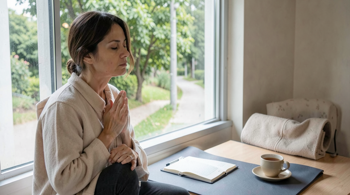
Daily routines can also reduce the number of decisions required during stressful periods. Regular meals, hydration, movement breaks, and planned pauses may help establish predictable recovery points. These habits are supportive measures, not substitutes for assessment when insomnia continues, daytime functioning declines, or stress is accompanied by significant depression or anxiety.
Caffeine, supplements, and safety limits
Caffeine can contribute to nervousness, jitters, and sleep disruption, particularly at higher intakes or among sensitive individuals. Reducing caffeine, especially later in the day, may therefore help people whose tension is linked to restlessness or poor sleep. The appropriate amount varies by person, and abrupt changes may be uncomfortable for some individuals. 8
Herbal products marketed for stress are not automatically safe or effective. Dietary supplements can interact with medicines, produce side effects, and vary in quality and composition. Extra caution is appropriate during pregnancy, with chronic illness, before surgery, or when prescription medicines are used. A qualified clinician or pharmacist can help evaluate an ingredient, dose, and possible interaction before use. 9
Social support and practical boundaries
Brief social connection can provide emotional reassurance, perspective, and practical support during periods of overwhelm. The American Heart Association identifies supportive relationships and social connection as useful parts of healthy stress management. Contact may involve speaking with a trusted friend, family member, colleague, counselor, or community support person. 10
Boundaries can complement connection by limiting avoidable overload. Useful examples include taking breaks from continuous news and social media, identifying specific stress triggers, separating urgent tasks from nonurgent tasks, and communicating realistic limits. These actions do not remove structural pressures, financial concerns, health problems, or unsafe relationships, so expectations should remain realistic.
When additional help is appropriate
Professional support is appropriate when tension or overwhelm persists, interferes with work, sleep, relationships, or daily functioning, or becomes difficult to manage with ordinary coping practices. A healthcare professional can consider medical contributors, medication effects, sleep disorders, anxiety, depression, trauma, and other conditions that may resemble routine stress. 11
Thoughts of self-harm, an inability to stay safe, or a mental-health crisis require urgent assistance through local emergency services or a crisis resource. In the United States, the CDC identifies 988 as a confidential crisis option available by call or text. Natural approaches can complement care, but they should not delay evaluation when symptoms are severe, persistent, or dangerous. 1
Sources
- Centers for Disease Control and Prevention, Managing Stress: https://www.cdc.gov/mental-health/living-with/index.html
- Harvard Health Publishing, Relaxation Techniques and Breath Control: https://www.health.harvard.edu/mind-and-mood/relaxation-techniques-breath-control-helps-quell-errant-stress-response
- National Center for Complementary and Integrative Health, Meditation and Mindfulness: https://www.nccih.nih.gov/health/meditation-and-mindfulness-effectiveness-and-safety
- Centers for Disease Control and Prevention, Benefits of Physical Activity: https://www.cdc.gov/physical-activity-basics/benefits/index.html
- National Center for Complementary and Integrative Health, Yoga: https://www.nccih.nih.gov/health/yoga
- American Psychological Association, Nurtured by Nature: https://www.apa.org/monitor/2020/04/nurtured-nature
- National Heart, Lung, and Blood Institute, Sleep Deprivation: https://www.nhlbi.nih.gov/health/sleep-deprivation
- U.S. Food and Drug Administration, Caffeine: https://www.fda.gov/consumers/consumer-updates/spilling-the-beans-how-much-caffeine-too-much
- National Center for Complementary and Integrative Health, Using Dietary Supplements Wisely: https://www.nccih.nih.gov/health/using-dietary-supplements-wisely
- American Heart Association, Stress Management: https://www.heart.org/en/healthy-living/healthy-lifestyle/stress-management
- National Institute of Mental Health, So Stressed Out: https://www.nimh.nih.gov/health/publications/so-stressed-out-fact-sheet
Authored by MyTrendSpot team