Analyzing Police Impound Offers: Rules, Fees, and Acquisition Realities in Public Auctions
When members of the public seek opportunities to acquire municipal vehicles, researching police impound offers provides a specialized pathway to browse public asset liquidations. These public auctions feature vehicles seized by law enforcement, recovered from traffic infractions, or abandoned on public roadways. Participating in these sales requires a detailed understanding of the legal frameworks, local municipal guidelines, registration parameters, and the inherent mechanical risks associated with acquired government inventory.
The Legal Mechanisms of Impoundment and Lien Foreclosure
The transition of a motor vehicle from a private asset to a publicly auctionable commodity is governed by strict statutory procedures. When law enforcement agencies authorize a vehicle tow due to a regulatory violation, abandonment, or lack of proper credentials, the vehicle is held in a municipal impound facility 1. If the vehicle remains unclaimed by the registered owner, the storage facility begins accruing daily fees, eventually establishing a possessory lien 1. This possessory status grants the operating entity the legal authority to initiate a foreclosure process to recover accumulated towing and storage costs 1.
It is critical to distinguish between basic impoundment and civil asset forfeiture, as the legal paths differ extensively. Impoundment represents temporary custody aimed at achieving compliance with local traffic laws, and ownership remains with the registered keeper until a statutory period expires 2. Forfeiture, conversely, is tied to alleged criminal activity, where the government permanently strips ownership through a lengthy judicial process 2. Most jurisdictions require a legal holding window of 30 to 120 days before an unclaimed impounded vehicle can legally transition to a public lien sale 3.
Registration Procedures and Participant Prerequisites
To participate in public auctions that feature impound inventory, prospective buyers must satisfy specific registration criteria established by municipal authorities. For instance, at the Omaha Police Department Vehicle Impound Facility, bidders must be at least 19 years old to register independently, though teens aged 16 to 18 may enter when accompanied by a registered adult 4. All attendees must present a valid government-issued photo identification card or a United States driver's license to receive a bidder number before entering the lot 4.
Financial verification is another mandatory threshold utilized to ensure bidding integrity and prevent speculative participation. Certain jurisdictions, such as the Kansas City Police Tow Lot, require a refundable registration deposit of $300 charged to the bidder's card on file prior to active bidding 5. Similarly, the Columbus Division of Police mandates registration before bidding begins and permits payment via cash or personal check, provided the bidder supplies a signed letter from their banking institution verifying sufficient funds 6. Non-compliance or failure to complete payment after winning a lot results in immediate forfeiture of the deposit and a permanent ban from future auctions 5.
Evaluating Municipal Auction Conditions and As-Is Realities
Vehicles acquired through municipal impoundment procedures are sold on an absolute as-is basis, meaning they carry no warranties, guarantees, or options for returns. Bidders must operate under the assumption that the vast majority of these vehicles are non-operational, exhibit structural damage, or lack basic starting mechanisms such as ignition keys 5. In most municipal sales, such as those conducted by the Suffolk County Police Department, minimum bid floors are instituted, with lots starting at $500 7.
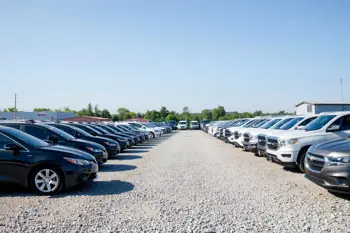
To mitigate the financial risks associated with blind bidding, most municipalities organize public preview windows. Bidders can inspect the physical condition of the vehicles, though starting the engines or conducting mechanical diagnostics is strictly prohibited 5. While some nationwide online platforms like Copart feature specific arbitration policies for certified vehicles under explicit green or yellow light categories 8, local municipal lots offer no such protections. Prospective buyers must conduct extensive physical examinations during the designated preview hours to estimate potential repair and reconditioning costs before committing funds 9.
Understanding the Financial Structure: Fees, Premiums, and Storage Costs
The final cost of acquiring an impounded vehicle extends far beyond the nominal winning bid, as municipal lots assess various administrative and processing surcharges. Bidders must calculate these additional fees beforehand to avoid unexpected financial liabilities during settlement.
The following table outlines the comparative fee structures, deposit prerequisites, and payment terms across prominent regional police impound auction facilities:
| Auction Facility | Required Deposit | Buyer's Premium / Fees | Accepted Payment Methods |
|---|---|---|---|
| Omaha Police Impound Facility 4 | None | Greater of $175 or 15% of purchase price | Cash or Credit Card only |
| Kansas City Police Tow Lot 5 | $300 Refundable Deposit | 10% Buyer's Premium + $25 Admin Fee per lot | Cash or Wire Transfer |
| Columbus Division of Police 6 | None | Varies by auction rules | Cash or Check with bank letter |
| Suffolk County Police Department 7 | None | Subject to local rules ($500 minimum bid) | Cash or certified funds |
Retrieval Protocols and Removal Timelines
Winning bidders face highly compressed timelines to settle accounts and physically remove their purchased vehicles from municipal custody. Because impound lots operate under severe space constraints, failing to retrieve an acquired asset promptly triggers immediate storage penalties. For example, the Omaha Police Department mandates that all acquired vehicles must be removed by 8:00 PM on the day of the auction, after which a $35 relocation fee and a $20 daily storage charge are applied 4.
Online liquidation systems and regional platforms likewise enforce strict removal regulations. While online portals like GovDeals allow regional search filters to locate vehicles nearby 10, local physical operations require swift execution. The Cincinnati Police Impound Lot, which hosts auctions on the first and third Saturday of each month, dictates precise pickup guidelines following their morning bidding sessions 11. In Nashville, the metropolitan government contracts the management of its vehicle impound facility to United Road Management Solutions, where all release conditions, fee structures, and strict removal timelines are managed through specialized logistics systems 12.
Reclaiming Personal Belongings from Seized Vehicles
A critical legal distinction exists between an impounded vehicle and the personal property contained within its cabin or trunk. Under United States administrative law, a municipal lien placed on an impounded vehicle does not extend to unattached personal belongings, such as medical supplies, child safety seats, clothing, or personal electronics 13. This means registered owners maintain the legal right to retrieve their loose personal items even if they lack the financial means to pay the towing and storage fees necessary to release the car itself 13.
However, items that are physically bolted, wired, or integrated into the vehicle, such as aftermarket stereo systems, custom wheels, or replacement batteries, are classified as components of the vehicle and fall under the operating facility's possessory lien 13. To reclaim personal items, owners must visit the impound lot within the statutory holding window, typically presenting a valid photo ID, proof of vehicle ownership, and scheduling an appointment to ensure staff availability. Failing to act within these tight statutory timelines results in the absolute disposal or auction of both the vehicle and its unclaimed interior contents 13.
Sources
- EngineerSkill.blog
- LegalClarity
- Towing Service Hub
- Omaha Police Department
- OAI Auctions
- The Columbus Dispatch
- TBR News Media
- Copart
- DailyStuff
- GovDeals
- Cincinnati Police Department
- Nashville.gov
- LegalClarity
Authored by MyTrendSpot team