Best dark spot corrector creams for face: An analytical overview of current dermatological trends and topical formulations
Understanding Hyperpigmentation and Topical Intervention
Hyperpigmentation occurs when excess melanin accumulates in specific areas of the skin, resulting in patches that are darker than the surrounding complexion 4. Managing these spots often involves topical formulations designed to inhibit pigment production, increase cellular turnover, or brighten the skin surface 2. Current clinical approaches frequently rely on ingredients like niacinamide, tranexamic acid, glycolic acid, and various botanical extracts to target discoloration arising from sun exposure, aging, acne, or hormonal fluctuations 2, 6. Because not all dark spots are cosmetic in nature, medical professionals emphasize the necessity of evaluating any new, changing, bleeding, or painful skin lesions to rule out underlying conditions 2.
Core Ingredients and Their Mechanisms
The efficacy of a dark spot corrector cream depends significantly on its active ingredient profile. Ingredients such as niacinamide are frequently cited for their role in improving overall skin tone and supporting the skin barrier 3, 8. Other potent agents include glycolic acid and PHAs (polyhydroxy acids), which serve as chemical exfoliants to remove surface-level pigmented cells, revealing a brighter complexion underneath 1, 7. Tranexamic acid and resorcinol are also commonly integrated into intensive treatments to assist in reducing the appearance of persistent dark patches 6, 11.
| Ingredient | Primary Function |
|---|---|
| Niacinamide | Tone improvement and barrier support |
| Glycolic Acid / PHA | Chemical exfoliation of surface pigment |
| Tranexamic Acid | Targeted reduction of dark spots |
| Thiamidol | Inhibition of melanin production |
| Vitamin C | Antioxidant-led brightening |
Market Trends in Nighttime Repair
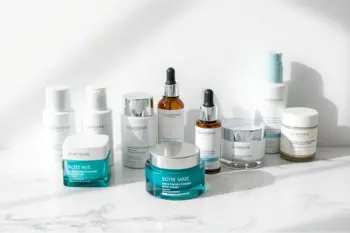
Nighttime represents a strategic period for skin renewal, leading to the development of dedicated nocturnal formulas. For instance, products such as the Caudalie Vinoperfect Dark Spot Correcting Glycolic Night Cream leverage papaya enzymes and glycolic acid to perform a gentle peel while the user sleeps 1. Similarly, the Laboratoire de Biarritz Dark Spot Correcting Night Cream utilizes an algae-based complex and PHAs to stimulate cell renewal and limit the recurrence of spots 7. These night creams are designed to work in synergy with the body's natural restorative processes, often providing more intensive treatment than daytime alternatives 1.
Daytime Protection and Maintenance
While targeted creams address existing discoloration, long-term success in managing hyperpigmentation is largely dependent on rigorous sun protection. Dermatologists maintain that broad-spectrum sunscreen with SPF 30 or higher is an indispensable component of any brightening routine 1, 8. Ultraviolet radiation exposure can darken existing spots and trigger the development of new hyperpigmentation, effectively negating the progress made by active treatment creams 1, 8. Consequently, many manufacturers, such as Elizabeth Arden with their Visible Brightening range, explicitly recommend pairing their brightening creams with consistent SPF application during the day 3.
Performance Expectations and Clinical Variability
Consumer expectations regarding the speed and visibility of results should be tempered by clinical reality. While some formulations like the Murad Rapid Dark Spot Correcting Serum are highlighted for their ability to show improvement in as little as seven days, others like the Palmer's Skin Success Dark Spot Corrector may require up to six to eight weeks of consistent use to yield measurable results in a clinical setting 6, 10. Efficacy percentages observed in studies often reflect specific demographics and controlled environments, which may not translate identically to every individual user’s experience with diverse skin tones and spot types 3, 10.
Safety Considerations and Regulatory Oversight
Topical skin brightening products are subject to rigorous testing, including dermatological evaluation and non-comedogenicity assessments, to ensure they do not cause unintended irritation or exacerbate skin issues 1, 7. However, users with sensitive skin or specific skin conditions should exercise caution, as ingredients like acids and potent brighteners can induce contact dermatitis if not used correctly 4. It is advised to monitor the skin for signs of sensitivity, such as redness or stinging, and to discontinue use if irritation occurs 4. Furthermore, those who are pregnant or nursing should review ingredient lists carefully, as some potent actives are not recommended during these periods 7.
Sources
- Caudalie. Vinoperfect Dark Spot Correcting Glycolic Night Cream.
- American Academy of Dermatology. How to fade dark spots.
- Elizabeth Arden. Visible Brightening Clearly Radiant Bounce Cream.
- DermNet. Hyperpigmentation overview and topical agents.
- SkinCeuticals. Discoloration Defense.
- Murad Skincare. Rapid Dark Spot Correcting Serum.
- Laboratoire de Biarritz. Dark Spot Correcting Night Cream.
- La Roche-Posay. Mela B3 Serum product data.
- Naturium. Multi-Bright Tranexamic Acid Treatment.
- Palmer's. Skin Success Dark Spot Corrector.
- Paula's Choice. Clinical Discoloration Repair Serum.
Authored by MyTrendSpot team