Affordable mulch near me: A Guide to Sourcing Bulk Landscape Materials
Understanding Bulk Mulch Procurement
Finding cost-effective landscaping materials often requires moving beyond standard retail bags toward bulk procurement methods. Bulk mulch is typically sold by the cubic yard, providing a significant volume increase compared to traditional bagged products found at consumer-facing home improvement centers 1. For instance, municipal yard waste centers often provide organic compost and mulch at lower price points because they process recycled materials locally 1. When searching for local options, consumers should identify whether a provider offers retail self-load services or necessitates commercial accounts for larger, bulk-truck deliveries 1.
Municipal and Community Resources
Many municipalities operate yard waste centers that recycle organic materials, turning leaves and woody debris into usable landscape products 1. These facilities often allow residents to pick up mulch for a nominal fee or even at no cost, depending on the local environmental management policies 2. It is common for these centers to process mulch through heat treatment, which effectively eliminates weed seeds and pathogens 1. Residents should consult their city or county website to determine if they must bring their own containers or if the facility provides loading services for open trucks and trailers 8.
Evaluating Private Landscape Supply Yards
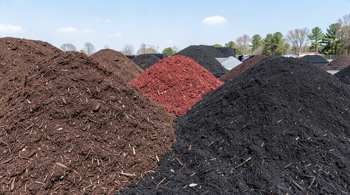
Private nurseries and landscape supply companies serve as the primary source for diverse mulch types, including decorative dyed options and premium hardwood bark 2, 3. Unlike big-box stores, these specialized yards often screen their products to ensure consistency and lack of debris 6. Pricing is usually structured by the cubic yard, and suppliers may offer tiered volume discounts for projects requiring 20 or more yards of material 2, 4. Buyers should consider the total cost of delivery, which is typically calculated based on travel time or distance from the supply yard to the destination 4, 9.
| Product Type | General Utility | Common Pricing Factors |
|---|---|---|
| Natural Hardwood Mulch | Suppresses weeds; retains moisture | Volume/Cubic Yard |
| Dyed Mulch (Black/Red/Brown) | Color retention; aesthetic finish | Processing/Dye quality |
| Pine Straw/Nuggets | Natural aesthetic for beds | Bale or bag quantity |
| Certified Playground Mulch | Safety compliance/Shock absorption | Certification standards |
Logistics and Delivery Considerations
When ordering bulk materials, the delivery process is a critical factor in the final expenditure. Many suppliers dump material directly into driveways or designated site locations, though the exact placement is often subject to the driver’s safety discretion 3. Delivery fees are generally flat-rate but can fluctuate based on the volume of the truck used-some vehicles are capable of carrying up to 30 cubic yards in a single trip 4. To minimize expenses, consumers often consolidate orders with neighbors to take advantage of larger bulk-truck capacity and shared delivery fees 4.
Utilizing Calculators and Estimations
To avoid over-purchasing, professional landscapers use volume calculators that factor in the total area length, width, and desired depth of the mulch bed 4, 6. A standard application depth is approximately 3 inches, though this may vary depending on the plant material and erosion control requirements 6. One cubic yard generally covers approximately 100 square feet at a 3-inch depth 6. By utilizing these tools, homeowners can prevent the waste of excess material and reduce the number of trips required for pickup or the need for secondary delivery runs 6.
Distinguishing Between Mulch Types
Not all mulch is engineered the same way, and the source material significantly impacts its longevity in the landscape. Premium mulches, such as double-shredded bark, offer higher color retention and a more uniform, finished appearance than mulch ground from mixed pallets or construction debris 7. Organic mulches serve an additional function as they decompose, slowly infusing carbon and organic matter back into the soil, which benefits plant root health 3. While undyed natural wood chips are typically the most economical, decorative dyed varieties are preferred for projects where consistent color throughout the season is the primary goal 4.
Sources
- City of Raleigh Yard Waste Center (raleighnc.gov)
- Durbin Creek Nursery (durbincreeknursery.com)
- Soil 911 (shop.soil911.com)
- Lumberjacks Hardwood Center (chattanoogahardwood.com)
- Northside Services LLC (northside-mulch.com)
- Wasco Nursery (wasconursery.com)
- Acors Topsoil & Mulch (acorstopsoilandmulch.com)
- Environmental Protection Agency (epa.gov)
- Affordable Landscape Supplies (affordablelandscapesupplies.com)
- Mr. Mulch (mrmulch.com)
Authored by MyTrendSpot team