Ways to manage everyday anxiety: Evidence-based guidance for calmer daily routines
Racing heartbeats, looping worst-case scenarios, and anxious feelings that creep into ordinary activities can make work, sleep, relationships, and concentration more difficult. Evidence-based anxiety management is not about forcing worry to disappear; it involves matching practical tools to physical symptoms, unhelpful thoughts, avoidance patterns, and ongoing lifestyle factors.
Understanding everyday anxiety
Anxiety is a natural response to uncertainty, perceived danger, or stress. It becomes more concerning when it appears too often, becomes unusually intense, or continues after a threat has passed and begins interfering with daily activities. Common experiences include physical tension, rapid breathing, racing thoughts, persistent worry, and difficulty concentrating. Identifying the dominant pattern helps determine whether a physiological, cognitive, behavioral, or lifestyle strategy is most relevant. 1
Anxiety coping strategies work best as a toolkit rather than as one supposedly perfect technique. Breathing and relaxation exercises primarily address bodily arousal, while cognitive behavioral therapy addresses thoughts and behavior. Sleep, physical activity, caffeine, alcohol, and social connection can influence the baseline level of distress that makes other coping skills easier or harder to use. 1
Using breathing and relaxation techniques
Slow breathing can help reduce the physiological arousal associated with everyday anxiety. Relaxation training may include diaphragmatic breathing, progressive muscle relaxation, and other methods intended to evoke the body’s relaxation response. These practices are most useful when learned during relatively calm periods, because repeated practice can make the technique more familiar during stressful moments. 6
When anxiety rises, a practical approach is to slow the breathing rhythm and focus attention on a gentle, steady exhalation rather than trying to take increasingly large breaths. Progressive muscle relaxation offers another option by systematically releasing tension from different muscle groups. These methods may reduce bodily alarm, but they do not address every cause of persistent anxiety and should not replace clinical care when symptoms are severe. 4
Managing worried thoughts with CBT principles
Cognitive behavioral therapy is considered a leading psychotherapy approach for anxiety disorders. It teaches people to identify automatic thoughts, examine whether those thoughts are accurate or useful, and change behavior patterns that maintain distress. Typical targets include catastrophizing, repeated “what if” questions, rumination, and assumptions that uncomfortable feelings signal immediate danger. 5
A self-guided CBT-style exercise can separate a situation from the interpretation attached to it. Writing down the triggering event, the prediction, the evidence supporting it, the evidence against it, and a more balanced interpretation can make worry less automatic. The goal is not forced positivity. It is a more accurate assessment that allows practical action without treating every possibility as a certainty. 2
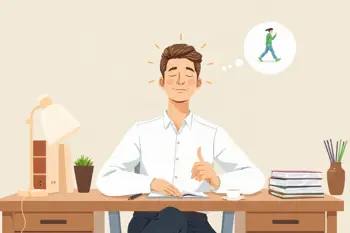
Reducing avoidance through gradual exposure
Avoidance often produces short-term relief but can strengthen anxiety over time by preventing new learning about feared situations. Gradual exposure works by approaching manageable versions of an avoided activity repeatedly and allowing anxiety to change without relying on escape or excessive reassurance. The process should be structured, realistic, and adjusted to the person’s circumstances rather than treated as a test of willpower. 1
Exposure can also involve tolerating small amounts of uncertainty, such as delaying a nonessential check or allowing an unanswered question to remain unresolved briefly. The purpose is not to create unnecessary distress or ignore genuine safety concerns. It is to build evidence that uncertainty and uncomfortable sensations can be tolerated without immediately performing a habitual avoidance or checking behavior. 3
Supporting the anxiety baseline with daily habits
Regular physical activity can support mood and reduce anxiety symptoms, while consistent sleep habits support emotional regulation. A manageable routine may include daily movement, a stable sleep schedule, and time away from persistent digital notifications. These measures are not instant cures, but repeated small actions can support the nervous system and make cognitive and relaxation strategies more usable. 7
Caffeine, nicotine, and other stimulants can worsen anxious sensations for some people, particularly when they contribute to rapid heartbeat, restlessness, or disrupted sleep. Alcohol can also interfere with sleep and may complicate anxiety management. MedlinePlus and the NHS identify exercise, sleep, relaxation practices, and reducing caffeine as practical measures that may help manage anxiety symptoms. 8
Knowing when professional support is appropriate
Professional help is appropriate when anxiety is persistent, difficult to control, or interferes with work, school, relationships, sleep, or ordinary responsibilities. Psychotherapy, including CBT, is an established treatment approach, and medication may also be considered by a qualified clinician. Some people benefit from combining professional treatment with lifestyle and coping practices, particularly when symptoms are moderate or severe. 5
Seeking help earlier can prevent avoidance and distress from becoming more entrenched. A clinician can assess whether symptoms reflect an anxiety disorder, another mental-health condition, a medical issue, substance effects, or a combination of factors. In the United States, people experiencing a mental-health crisis can call or text 988 for the Suicide and Crisis Lifeline. 11 12
Sources
- Simply Psychology, “The Anxiety Coping Toolkit: Evidence-Based Strategies That Actually Work”
- Nolla Health, “How to Manage Anxiety: Evidence-Based Strategies That Actually Help”
- Forbes, “5 Anxiety-Killing Habits To Live A Calmer Life, By A Psychologist”
- CNET, “9 Easy Ways to Soothe Anxiety Without Medication”
- National Institute of Mental Health, “Generalized Anxiety Disorder”
- National Center for Complementary and Integrative Health, “Relaxation Techniques”
- American Psychological Association, “Stress: Body and Mind”
- MedlinePlus, “Anxiety”
- Mayo Clinic, “Stress Management”
- National Health Service, “Generalised Anxiety Disorder”
- Substance Abuse and Mental Health Services Administration, “Anxiety”
- 988 Suicide & Crisis Lifeline
Authored by MyTrendSpot team