Auction listings for seized police impound vehicles: A Research Guide to Municipal Asset Liquidation
Auction listings for seized police impound vehicles represent a specialized segment of the secondary automotive market, where municipal agencies liquidate abandoned, forfeited, or surplus department property 1. These events are rarely managed directly by law enforcement; instead, agencies typically contract with third-party auction houses to facilitate the logistics, bidding, and financial collection processes 1. Understanding the structural requirements for these sales is essential for participants, as the environment differs significantly from traditional commercial car buying 2.
Operational Characteristics of Municipal Impound Auctions
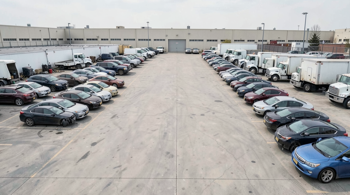
Most municipal impound auctions operate under strict legal frameworks, with sales managed through online-only platforms or physical sites like the Kansas City Tow Lot or the Norfolk Police Towing facility 1, 2. Participation often requires adherence to specific registration steps, such as establishing an account with the host auctioneer or providing a security deposit, which can reach $1,000 for certain fleet procurements 6, 8. The operational volume can be substantial, with single events in locations like Columbus, Ohio, frequently featuring over 100 vehicles in a single cycle 3.
Auction providers often employ standardized terminology to define the relationship between the buyer and the assets. Common practices include holding bi-weekly or monthly sales to manage lot inventory, such as the cadence observed in Norfolk or Kansas City, where dates are established well in advance to facilitate municipal clearing 1, 2. Prospective bidders are expected to conduct all necessary due diligence independently, as the auction house typically acts only as the intermediary for the government agency 2.
Defining 'As-Is' Purchase Conditions
A fundamental reality of police impound auctions is that all items are sold on an 'as-is, where-is' basis, signifying that no warranties, expressed or implied, are provided by the auctioneer or the municipality 1, 5, 7. Buyers should anticipate that many vehicles lack keys, may be non-operational, or have unknown mechanical history 1, 4. Because police impounds often include vehicles abandoned for significant durations or damaged in collisions, the onus of confirming the vehicle’s condition rests entirely upon the bidder 2, 8.
| Condition Factor | Standard Expectation |
|---|---|
| Operational Status | Generally unknown; most do not run or drive |
| Key Availability | Frequently missing; buyer responsible for replacement |
| Warranty | None; sales are final upon the close of the bid |
| History Reporting | Buyer must utilize independent services like Carfax or AutoCheck |
Registration and Financial Requirements
Entry into these auctions is contingent upon meeting specific registration criteria. While some platforms allow simple account creation, others mandate more rigorous verification, including the submission of valid identification or the placement of a refundable certified deposit 3, 6, 8. Failure to meet payment terms, such as the standard practice of full payment by a specified deadline, can result in the forfeiture of deposits and permanent exclusion from future bidding events 1, 4, 5.
Payment methods are strictly regulated to protect municipal interests. Cash payments are occasionally permitted at specific locations, but wire transfers, cashier's checks, and bank-validated letters of credit are the standard for transactions involving higher-value assets 3, 4, 8. Buyers must be prepared for additional costs beyond the winning bid, such as a buyer's premium-typically a percentage of the final price-and administrative fees per lot 4.
Logistics of Vehicle Removal
The transition from winning a bid to taking possession involves rigid removal timelines. Most jurisdictions require purchased vehicles to be cleared from the impound lot within a few business days, often by the following Wednesday or Saturday 3, 4, 8. Failure to remove the vehicle within the allotted timeframe frequently triggers daily storage fees, which can quickly accumulate and affect the overall economic feasibility of the acquisition 4.
Because many of these vehicles are non-operational, buyers must coordinate professional towing services in advance. Some facilities provide explicit guidance on how to manage the removal process during their specific windows of operation, such as Tuesday through Saturday, but rarely offer assistance or shipping services directly 4.
Regulatory Oversight and Title Status
The title process remains a primary point of friction for participants in municipal vehicle auctions. Depending on the state and the nature of the vehicle’s intake, buyers may receive a clean title, a salvage title, or specialized documentation requiring further processing through the local Department of Motor Vehicles 3. Each jurisdiction maintains its own laws regarding how seized, abandoned, or forfeited property is legally transferred to a private party, and buyers are advised to verify these requirements locally before participating 7.
The administrative burden of these transfers is the responsibility of the purchaser. In some cases, legal notices are published to inform the public of the upcoming auction, serving as the official record of the proceedings, which participants should consult for information regarding case numbers and specific legal conditions of the sale 3, 8.
Market Trends and Participation Strategies
The shift toward online-only auction formats has expanded the reach of police impound auctions, allowing broader public access to inventory that was previously limited to local in-person bidders 8. Platforms like GovDeals, PropertyRoom, and Copart facilitate this by providing centralized interfaces where municipalities can list assets [Gen-1, Gen-2, Gen-4]. Despite the convenience of digital bidding, successful participants often rely on attending in-person viewing windows where available to inspect the physical condition of the assets before the auction closes 4, 8.
Strategic participation involves a disciplined approach to bid calculation, factoring in the potential need for major repairs, the lack of mechanical history, and the added costs of administrative fees, premiums, and towing. Bidders who approach these auctions with an understanding of their inherent risks and a commitment to thorough due diligence are generally better positioned than those who enter the process without specific preparation 1, 2.
Sources
- Woolsey Auction, Kansas City Tow Lot Auction Listings
- Auction757, Norfolk Police Towing Auction
- NoticeRegistry, Public Notice Records for Columbus, OH
- OAI Auctions, Kansas City Police Tow Lot Bid Portal
- Burgess Auctions, Kansas City Police Tow Lot Details
- NoticeRegistry, Broward Sheriff’s Office Procurement Notice
- Fowler Auction, Kansas City Police Tow Lot Terms
- MyFoxZone, Abilene Police Impound Auction Reporting
Authored by MyTrendSpot team