Best professional teeth whitening kits at home: An evidence-based comparison
Professional teeth whitening kits at home generally fall into several formats, including prefilled trays, whitening strips, gel-and-tray systems, LED-assisted devices, and direct-application pens. Independent testing and dentist commentary indicate that effectiveness depends more on the whitening agent, application, consistency, and fit than on the presence of an LED light alone.
How professional at-home whitening differs
Professional take-home systems supplied through dental practices commonly use custom-fit trays and stronger gels selected after an examination. The trays are made from impressions of the patient’s teeth, helping distribute gel evenly and limit contact with the gums. Store-bought products use generic strips, trays, pens, or rinses and typically contain milder bleaching agents. This distinction affects whitening power, fit, supervision, and the likelihood of uneven application. 1
- Custom dental trays are designed for an individual mouth and are used on a dentist-directed schedule. 2
- Generic strips and trays are easier to obtain but may not follow every tooth contour closely. 3
- Professional does not mean risk-free, because incorrect use can still irritate teeth or soft tissue. 4
Tray-based systems and professional gel
Opalescence Go uses prefilled, disposable trays and is described as available in professional-strength formulations, making it relevant for people who prefer a tray format without filling syringes. Dentist-provided systems such as Pola Day use gel syringes with specified concentrations and wear schedules. Pola Day materials describe formulations including 7.5% and 9.5% hydrogen peroxide and 35% carbamide peroxide, with treatment periods ranging from 15 to 45 minutes depending on the formula. 5
- Opalescence Go is intended for users who prefer ready-filled trays. 6
- Pola Day includes gel intended for use inside trays, with different concentration options. 7
- Higher-strength formulas require particularly careful adherence to wear-time instructions.
Whitening strips for simpler application
Strip systems remain a prominent at-home category because they do not require a reusable tray or mouthpiece. Crest 3D Whitestrips Professional Effects is identified as an at-home strip kit, while Good Housekeeping’s testing coverage names Crest products among its leading whitening options. Its laboratory assessment involved 150 consumer testers and 2,250 response data points across whitening categories, evaluating ease of use, sensitivity, and shade change. 8
- Strips can suit users who prioritize a straightforward application process. 9
- Coverage may depend on how accurately the strip sits over the front teeth.
- Strips do not whiten fillings, crowns, or veneers, which can create shade differences. 10
LED kits and what the light does
LED whitening devices are often paired with strips or gel, but the light itself is not the bleaching ingredient. Dentist commentary reported by Allure explains that LED devices activate or accompany whitening gels, while the chemical agent performs the stain-breaking work. Listed examples include Colgate Optic White ComfortFit, Crest strips with an LED accelerator, MySmile, Novashine, and Auraglow. Results therefore depend on the gel, application, treatment consistency, and realistic expectations rather than the device alone. 11
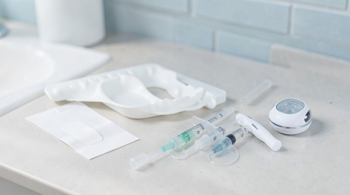
- GLO Brilliant combines whitening gel with an LED mouthpiece. 12
- Snow combines whitening serum with a reusable LED mouthpiece. 13
- AuraGlow combines an LED mouth tray with whitening gel syringes. 14
Options for sensitive teeth
Sensitivity is one of the main limitations of home whitening. The American Dental Association notes that whitening products can cause temporary tooth sensitivity or soft-tissue irritation and advises following product directions and seeking dental guidance when appropriate. Lumineux markets peroxide-free strips as a gentler alternative, while Rembrandt and Novashine are identified in testing or editorial coverage as options associated with sensitive teeth. Gentler positioning does not eliminate the need to monitor discomfort. 15
- Stop or adjust treatment if sensitivity or gum irritation becomes significant.
- Do not assume that a peroxide-free product produces the same result as a peroxide-based system.
- Existing dental problems should be discussed with a dentist before whitening.
Choosing a format and maintaining results
Selection depends on the user’s priorities: trays provide controlled gel placement, strips reduce equipment, pens allow targeted application, and LED systems add a reusable device to a gel-based routine. Colgate Optic White whitening pens are designed for direct application to individual teeth, while Burst provides a strip format without a light or reusable tray. Philips Zoom take-home products occupy a dental-channel category and are generally associated with dentist-supervised whitening. 16
- Whitening affects natural teeth, not veneers or crowns. 17
- Results build cumulatively, so skipping instructions or overusing strong formulas can undermine comfort. 18
- Maintenance usually involves spacing treatments after the intended shade is reached rather than repeating intensive courses continuously. 19
What to verify before using a kit
A credible comparison should examine the active whitening agent, concentration, wear time, tray or strip fit, sensitivity guidance, and whether dental supervision is included. Product claims can vary substantially: Moon’s Platinum Pro Glow device is described as using blue, red, and yellow light with dissolving strips, while its standard device is described as using blue LED technology and five-minute sessions. Such claims are manufacturer or retailer statements, not universal clinical outcomes. 20
- Check whether the product is intended for natural teeth only.
- Follow the stated frequency and treatment duration rather than extending sessions independently. 21
- Consider a dental examination when discoloration, restorations, pain, or persistent sensitivity is present.
Sources
- Forbes Vetted, “Best Teeth Whitening Kits 2026”
- Care 32 Dental, “Professional Take-Home Whitening Kits vs. Store-Bought Ones”
- Allure, “Dentist-Approved LED Teeth Whiteners”
- American Dental Association, “Whitening”
- OralCareLab, “Pola Day Advanced Tooth Whitening System”
- Opalescence, “Opalescence Go”
- PolaNight, “PolaNight Advanced Tooth Whitening System 16%”
- Good Housekeeping, “Best At-Home Teeth Whitening Products”
- Crest, “3D Whitestrips Professional Effects”
- Allure, “Dentist-Approved LED Teeth Whiteners”
- Allure, “Dentist-Approved LED Teeth Whiteners”
- GLO Science, “GLO Brilliant Teeth Whitening Device”
- Snow, “Snow Whitening Kit”
- AuraGlow, “Teeth Whitening Kit”
- American Dental Association, “Whitening”
- Colgate, “Optic White Professional Whitening Pen”
- Allure, “Dentist-Approved LED Teeth Whiteners”
- Allure, “Dentist-Approved LED Teeth Whiteners”
- Allure, “Dentist-Approved LED Teeth Whiteners”
- Ulta Beauty, “Moon Platinum Pro Glow LED Teeth Whitening Device”
- American Dental Association, “Whitening”
Authored by MyTrendSpot team