Ways to manage gout pain at home: Evidence-based guidance for flare-ups
Ways to manage gout pain at home begin with practical measures for a painful flare-up, including resting the affected joint, applying ice, elevating the limb, drinking water and using suitable medicines. Gout can cause sudden pain, swelling, redness and tenderness, often in the big toe, and symptoms may worsen when treatment is delayed. There is no genuine 10-minute cure, although appropriate treatment can shorten some attacks from six or seven days to one or two, while severe flares may last up to 14 days. 1
Rest and protect the affected joint
Rest reduces pressure and physical irritation in a joint inflamed by urate crystals. During a flare, avoid unnecessary walking, standing or activities that place weight on the painful area. Loose bedding and footwear can also reduce contact with an extremely tender toe or foot. The Arthritis Foundation reports that gout attacks often peak within 12 to 24 hours and then gradually subside, but untreated recurring attacks may involve more joints, last longer and become increasingly severe. 4
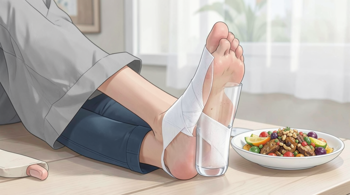
Elevation is another home measure for swelling. Raising an affected foot, ankle, knee, hand or wrist above the level of the heart can help fluid move away from the inflamed area and may reduce throbbing discomfort. Rest and elevation do not remove uric acid crystals, so they should be viewed as symptom-management measures rather than a cure. Continued swelling, repeated attacks or a joint that does not return toward normal warrants clinical evaluation. 5
Use cold therapy safely
An ice pack or cold compress may numb pain and reduce inflammation during a gout flare. Cleveland Clinic describes ice as one element of home care alongside rest, medication and recovery. A practical approach is to place the cold pack over a thin towel rather than directly on the skin, apply it for about 15 to 20 minutes, then remove it before repeating later. The joint should be checked for skin irritation or excessive numbness during use. 1
Cold therapy is most useful when combined with protection of the joint and elevation. It should not be treated as evidence that the diagnosis is definitely gout, particularly during a first attack. Several conditions can produce a hot, swollen, painful joint, and gout may require joint-fluid testing, blood testing or imaging for clarification. A high fever with severe or worsening joint pain and swelling can indicate infection inside the joint and requires urgent medical advice. 26
Consider medication with safety checks
Nonsteroidal anti-inflammatory drugs, including ibuprofen and naproxen sodium, are commonly used to reduce pain and inflammation during an acute gout attack. Prescription NSAIDs such as indomethacin and celecoxib are also used in some cases. Medication choice depends on attack severity, how often flares occur and other health conditions. Product directions and professional guidance matter because a medicine suitable for one person may be unsuitable for another. 2
Gout treatment includes two broad medication purposes: reducing pain and inflammation during an attack, and lowering uric acid in the blood to prevent future attacks and complications. Home measures cannot replace an individualized treatment plan when flares recur. People who already have prescribed gout medication should follow the instructions supplied by their healthcare professional rather than changing doses independently. A first suspected attack should also be assessed because other forms of arthritis can resemble gout. 26
Hydrate and adjust food and drinks
Drinking water supports kidney function and helps the body excrete uric acid, although hydration alone does not end an active flare. Water is preferable to alcohol and sugar-sweetened beverages during periods when symptoms are active. Beer and grain liquors are recognized gout triggers, and sugary sodas may contribute to higher uric acid levels. Hydration is especially relevant because uric acid buildup can also contribute to kidney stones, according to the cited home-care guidance. 35
Dietary changes focus on reducing foods especially rich in purines, which break down into uric acid. Common examples identified in the research include red meat, organ meats and certain seafood, including shellfish. A low-purine eating pattern may help reduce uric acid exposure, but it should be understood as part of longer-term management rather than an instant pain treatment. Alcohol avoidance during a flare may also reduce exposure to a known trigger and support the effectiveness of broader lifestyle measures. 14
Reduce the likelihood of future flares
Long-term prevention extends beyond what happens during a single painful episode. Maintaining a healthy weight can reduce stress on joints and is associated with lower uric acid levels, while a generally balanced eating pattern can reduce the frequency of attacks. Limiting alcohol, avoiding sugar-sweetened drinks and moderating high-purine foods are recurring themes in the supplied clinical guidance. These changes may require ongoing maintenance because gout commonly returns, sometimes within a year after an initial episode. 45
Repeated attacks can lead to persistent joint problems and tophi, which are masses of uric acid crystals that form in soft tissue or bone around joints. Healthcare professionals may recommend urate-lowering medicine when attack frequency, severity or related complications justify it. Blood uric acid results alone do not always confirm or exclude gout during an attack, so preventive treatment should be based on clinical assessment rather than a home test or diet change alone. 24
Know when home care is not enough
Medical assessment is particularly important when symptoms occur for the first time, when the usual treatment does not begin working within a couple of days or when pain and swelling are severe or worsening. A temperature of 38 degrees Celsius or higher alongside a hot, swollen joint is a warning sign for possible septic arthritis. Because joint infection can be serious, those symptoms should not be managed solely with ice, rest, hydration or over-the-counter pain relief. 6
Diagnosis may involve examination, medical history and, when needed, fluid drawn from the joint to identify urate crystals. Blood tests measure uric acid but high levels do not always mean gout, and some people with gout do not have high levels during a flare. X-rays, ultrasound and dual-energy CT can help identify crystals or rule out other causes. This diagnostic uncertainty is why persistent, atypical or recurrent symptoms require professional review. 2
Sources
- Cleveland Clinic, Gout Self-Care and Home Remedies
- Mayo Clinic, Gout: Diagnosis and Treatment
- Verywell Health, Easy Ways to Soothe Gout Flare-Ups Quickly
- Arthritis Foundation, Gout: Symptoms, Diagnosis, and Treatment
- Pacific Arthritis Care, How to Treat Gout Fast at Home
- NHS inform, Gout
Authored by MyTrendSpot team