Warning signs of thyroid disease: clinical patterns and when evaluation matters
Warning signs of thyroid disease may appear as unexplained weight change, persistent fatigue, temperature sensitivity, mood changes, altered bowel habits, or a visible neck swelling. Because thyroid hormones influence metabolism, heart rate, digestion, brain function, body temperature, and menstrual cycles, symptoms can affect several systems at once. However, these signs overlap with stress, aging, medication effects, and other illnesses, so symptoms alone cannot establish a diagnosis. 1
What the thyroid controls
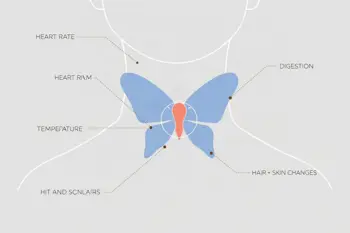
The thyroid is a small, butterfly-shaped gland at the front of the neck. It produces the hormones thyroxine, or T4, and triiodothyronine, or T3, which circulate through the bloodstream and help regulate how the body uses energy. Their effects extend to cardiac function, digestion, body temperature, mood, cognition, muscle activity, and reproductive cycles. A disturbance can therefore produce symptoms that initially seem unrelated. 4
Thyroid disease is an umbrella term for conditions in which the gland produces too much hormone, too little hormone, or develops a structural problem such as a nodule or enlargement. Hyperthyroidism accelerates many body processes, while hypothyroidism slows them. Autoimmune conditions, family history, certain medicines, iodine exposure, prior pregnancy, surgery, radiation, and other medical conditions may contribute, depending on the disorder. 2
Signs associated with an underactive thyroid
Hypothyroidism commonly presents with fatigue, unexplained weight gain or difficulty losing weight, cold intolerance, dry skin, hair loss, constipation, muscle weakness, and slowed thinking. Some people describe brain fog, low mood, reduced concentration, or a general loss of energy despite adequate sleep. Menstrual changes and fertility difficulties can also occur because thyroid hormones influence reproductive function. 3
The pattern is not identical for every person, and symptoms may develop gradually. Older adults can show fewer classic signs, with hypothyroidism sometimes resembling ordinary aging. Higher cholesterol has also been associated with an underactive thyroid. A combination of persistent symptoms, rather than one isolated change, provides a stronger reason for clinical assessment, particularly when symptoms are new or progressively interfering with daily activities. 5
Signs associated with an overactive thyroid
Hyperthyroidism can cause unintended weight loss, a fast or irregular heartbeat, hand tremors, anxiety, irritability, increased sweating, heat intolerance, diarrhea, and difficulty sleeping. Because the body uses energy more quickly, a person may feel restless or physically activated while also becoming tired. A newly irregular heart rhythm is a particularly important symptom to report because thyroid excess can affect cardiac function. 6
Eye irritation, pressure, or bulging eyes may occur with Graves’ ophthalmopathy, an eye condition associated with Graves’ disease. Hyperthyroidism is more common in women and people older than 60, and risk is also associated with family history, some autoimmune conditions, iodine-containing medicines, large iodine intake, nicotine products, and recent pregnancy. These factors do not prove disease, but they can provide useful context during evaluation. 6
Visible and physical warning signs
A swelling at the front of the neck may indicate a goiter, thyroid nodule, or another structural change. Possible related signs include a visible lump, pressure in the neck, trouble swallowing, or hoarseness. A goiter can occur when the thyroid is working excessively or is under stress, and it may appear with conditions including iodine-related disease, Hashimoto’s thyroiditis, or Graves’ disease. 7
Structural findings and hormone-production problems are not the same issue. A person can have a nodule or enlargement with normal hormone levels, while another person can have significant hormone imbalance without obvious neck swelling. Rapid neck enlargement, breathing difficulty, or major swallowing problems warrant prompt medical attention. These symptoms should not be interpreted through online checklists alone because examination and, when appropriate, imaging help distinguish possible causes. 7
Why thyroid disease is often missed
Many thyroid symptoms are nonspecific. Fatigue may be attributed to poor sleep or stress, weight change to diet or aging, and mood or concentration changes to ordinary life circumstances. Northwell Health describes thyroid dysfunction as an often-overlooked contributor to tiredness, fogginess, mood changes, and feeling unlike oneself. Subtle clues such as disrupted sleep, anxiety, irritability, or a slight tremor may appear before more recognizable symptoms. 3
Diagnosis can be especially difficult after age 50 because older patients often demonstrate fewer classic symptoms of either hypothyroidism or hyperthyroidism. Women are disproportionately affected, with the American Thyroid Association cited by clinical sources as estimating that women are five to eight times more likely than men to have thyroid problems. A family history or autoimmune disease can increase clinical suspicion, but neither is required for thyroid disease to occur. 2
How clinicians investigate symptoms
Evaluation generally begins with a medical history and physical examination, followed by blood testing. A thyroid-stimulating hormone, or TSH, test is commonly used to assess thyroid function. An elevated TSH can suggest an underactive thyroid, while a very low TSH can suggest an overactive thyroid. Clinicians may also assess thyroid hormone levels and consider the timing of symptoms, medicines, pregnancy, family history, and other health conditions. 8
Ultrasound may be considered when a lump, goiter, or other structural concern is present. Treatment depends on the cause and may involve monitoring, medication, or selected procedures, with follow-up needed to evaluate response and hormone levels. Untreated thyroid disorders can affect the heart, bones, fertility, and brain function. Severe palpitations, breathing difficulty, rapid neck swelling, or substantial pregnancy-related changes require medical assessment rather than self-treatment. 910
Symptoms that merit careful attention
No single warning sign confirms thyroid disease, and normal variation in weight, energy, mood, or bowel habits is common. Concern increases when several changes occur together, persist, worsen, or differ clearly from a person’s usual pattern. Examples include weight change with altered heart rate, fatigue with cold intolerance and constipation, or anxiety with tremor, sweating, and heat intolerance. Recording timing and combinations can make a clinical consultation more informative. 1
Thyroid conditions are generally treatable, but treatment is not interchangeable between disorders. Taking thyroid hormone, using antithyroid treatment, changing iodine exposure, or pursuing a procedure without professional guidance can create additional risks. A clinician must determine whether symptoms reflect hormone excess, hormone deficiency, autoimmune disease, a structural issue, or another condition. Testing and follow-up are therefore more reliable than symptom matching or assumptions based on family history. 4
Sources
- UChicago Medicine AdventHealth, “Thyroid Disease Warning Signs”
- Ochsner Health, “What Are the Early Warning Signs of Thyroid Problems?”
- The Well by Northwell, “How to Know If You Have a Thyroid Problem”
- NewYork-Presbyterian Health Matters, “What Are the Signs and Symptoms of Thyroid Disease?”
- AARP, “What Are the Warning Signs of a Thyroid Disorder?”
- National Institute of Diabetes and Digestive and Kidney Diseases, “Hyperthyroidism”
- Acibadem Hospitals Group, “Thyroid Symptoms: Common Causes, Related Conditions, and When to See a Doctor”
- Prevention, “Doctors Explain Signs You May Have a Thyroid Problem”
- National Institute of Diabetes and Digestive and Kidney Diseases, “Goiter”
- MedlinePlus, “Graves Disease”
Authored by MyTrendSpot team