Ex-Military Vehicle Auctions: A Practical Guide to Legality, Costs, Inspection, and Civilian Alternatives
Key facts
- HMMWVs, cargo trucks, MRAPs, trailers, generators, ambulances, and forklifts can appear in military surplus sales.
- Many HMMWVs are designated for off-road use, and an SF97 document may not convert into a road title in every state 1.
- Published HMMWV market references commonly place examples around $10,000 to $40,000, depending on configuration and condition 1.
- A 2026 Toyota 4Runner starts at approximately $43,065, while a 2026 Jeep Grand Cherokee Limited 4x2 lists an MSRP of $46,315 2 3.
Ex-military vehicle auctions cover a wide range of former government equipment, from four-wheel-drive utility trucks to heavy tactical vehicles and support machinery. The central question is not simply whether a vehicle can be purchased through an auction, but whether its documentation, condition, road status, running costs, and intended use make sense alongside a current civilian vehicle.
What appears in military surplus auctions
Military surplus is broader than ordinary used-car inventory. Common examples include HMMWVs from the M998 family, M35 “deuce-and-a-half” cargo trucks, M939 five-ton trucks, newer FMTV and LMTV models, and large MRAP vehicles such as the MaxxPro and Cougar. Support equipment can include trailers, generators, forklifts, ambulances, tractors, and other specialist machinery. Equipment reaching civilian channels is generally demilitarized, meaning weapons, armor, or sensitive systems may have been removed or disabled 4.
- Utility and tactical vehicles: Four-wheel-drive HMMWVs can offer strong ground clearance and carrying ability, but they were designed around military priorities rather than quiet, efficient road travel.
- Cargo trucks: M35, M939, and FMTV vehicles can provide substantial payload capability while requiring specialist storage, tires, servicing, and transport planning.
- Support equipment: Trailers and generators may avoid some title complications, but towing limits, electrical compatibility, and component condition still require examination.
How the auction process works
Access depends on the organizer, the asset, and the stated sale terms. Federal surplus property is commonly sold through an online government auction system, while specialist industrial auction platforms handle substantial volumes of military trucks and equipment. Registration normally precedes bidding, and each lot sets its own inspection arrangements, payment deadline, collection period, documentation, and removal requirements. Some federal auction guidance describes no buyer premium, while other military-equipment auction guidance reports a 10% buyer premium, showing why the lot terms must be read separately for every sale 5 1.
- Confirm whether bidding is open to the public or requires an eligibility document, including an End User Certificate for restricted equipment.
- Check whether bids are binding, whether deposits or penalties apply after nonpayment, and whether the vehicle is sold as-is.
- Establish the pickup deadline, loading responsibility, transport route, and whether the vehicle can legally travel on public roads.
- Calculate the bid, applicable auction charges, tax, transport, storage, repair, and registration costs before setting a maximum total.
Inspection points before bidding
A military vehicle can show limited odometer mileage while having extensive engine or operating hours. Inspection should therefore cover the hour meter, maintenance records, cold-start behavior, fluid leaks, drivetrain noise, steering play, brake operation, and evidence of long-term storage. Corrosion around the frame, suspension, battery area, cab, and wiring deserves particular attention. Military connectors, unusual electrical systems, specialized tires, and discontinued components can complicate civilian repairs even when the engine starts.
- Compare the odometer with operating hours and service records rather than treating mileage as the complete wear measure.
- Inspect axles, transfer cases, differentials, hubs, brakes, cooling systems, and suspension for leaks, damage, or missing parts.
- Look for corrosion under removable panels, around fasteners, in the cargo bed, and beneath protective coatings.
- Check whether radios, armor, winches, lights, seats, instruments, or demilitarization work have altered the original configuration.
- Use a qualified heavy-vehicle technician when there is no practical test drive or complete service history.
Titles, registration, and road legality
Former military ownership does not automatically establish normal road registration. A vehicle may be sold as off-road equipment, may arrive with an SF97 certificate, or may have documentation that a state motor-vehicle office treats differently from a conventional title. One published guide notes that many HMMWVs are designated off-road only and that some states convert an SF97 while others refuse to issue a road title 1. The state of intended registration should therefore be checked before bidding, not after transport.
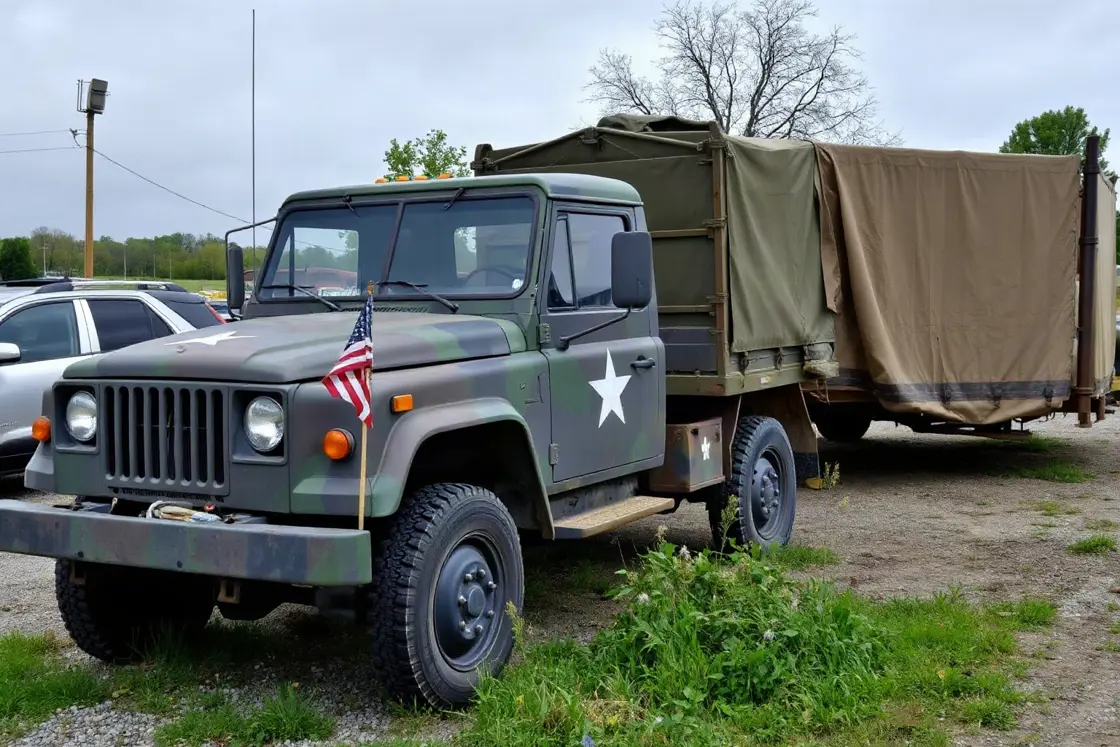
State requirements can involve vehicle identification, lighting, braking equipment, mirrors, emissions compliance, weight limits, safety inspections, taxes, and proof of ownership. A vehicle that can be hauled on a public highway is not necessarily legal to drive there. MRAPs and other very heavy vehicles may also face practical limits involving bridges, parking, freight transport, and local road classifications. Insurance underwriting, storage, and liability arrangements can be more complex than for a current civilian truck.
Ownership costs beyond the winning bid
The purchase figure is only one part of the financial calculation. Transportation from a depot may require specialized hauling, while a non-running vehicle can need loading equipment and storage. Repairs may include tires, batteries, seals, brakes, hoses, wiring, cooling components, and drivetrain work. Civilian conversion can add lighting, mirrors, seat belts, windshield equipment, emissions work, or other modifications. A published HMMWV guide places examples around $10,000 to $40,000 depending on configuration and condition, but that range does not represent a complete road-ready ownership cost 1.
| Cost area | What to assess |
|---|---|
| Auction charges | Buyer premiums, taxes, deposits, late collection charges, and payment conditions. |
| Transport | Flatbed or heavy-haul requirements, loading, fuel, storage, and distance. |
| Mechanical work | Fluids, tires, batteries, brakes, seals, electrical repairs, and drivetrain service. |
| Legal preparation | Title processing, inspection, registration, emissions work, lighting, and safety modifications. |
Comparison with current civilian vehicles
A military truck may provide specialized durability, payload, or off-road geometry, but a modern civilian model usually offers more predictable safety equipment, seating comfort, parts access, emissions compliance, and everyday drivability. The 2026 Toyota 4Runner starts at about $43,065 and combines a body-on-frame design with part-time four-wheel drive and up to 6,000 pounds of towing capacity when properly equipped 2. The 2026 Jeep Grand Cherokee Limited 4x2 lists an MSRP of $46,315, seats five, uses a 2.0-liter turbocharged engine, and is rated at 23 mpg combined 3.
| Vehicle | Reference price or range | Useful comparison data |
|---|---|---|
| HMMWV examples | About $10,000 to $40,000 | Diesel, four-wheel drive, military configuration; condition and legality vary 1. |
| 2026 Toyota 4Runner | Starting around $43,065 | Body-on-frame, part-time 4WD, up to 6,000-pound towing capacity 2. |
| 2026 Jeep Grand Cherokee Limited 4x2 | MSRP $46,315 | 2.0-liter turbocharged engine, five seats, 23 mpg combined 3. |
| 2026 Ford Ranger SuperCrew | Model reference varies by trim | 17 to 23 mpg combined, 270 to 405 horsepower, and 7,500-pound towing capacity 6. |
When an ex-military vehicle makes sense
A former military vehicle can suit an owner who has secure storage, mechanical knowledge, a clear off-road or restoration purpose, and a realistic transport and parts plan. It may also appeal to a specialist operator needing unusual ground clearance or payload characteristics that a civilian SUV cannot replicate. The strongest candidates have complete documentation, verifiable maintenance history, intact major systems, and a registration path confirmed in the intended state.
Warning signs include an unclear title status, missing identification information, heavy corrosion, unexplained operating hours, severe fluid leaks, disabled systems, absent components, or a sale location that makes inspection and transport impractical. A current civilian truck or SUV is often the lower-risk choice for commuting, family transport, towing on public roads, and predictable servicing. The sound comparison is total ownership cost and legal usability, not the auction bid alone.
Sources
- GovPlanet FAQ: Humvee Titles, Fees, Inspections, Pickup (2026) | BidProwl: https://bidprowl.com/guides/govplanet-faq
- Best 4x4 SUVs 2026: 4Runner, Bronco, Wrangler Ranked: https://nextcarreview.com/best-4x4-suvs-2026/
- Jeep Grand Cherokee Features and Specs: https://www.caranddriver.com/jeep/grand-cherokee/specs
- How to Buy a Surplus Military Vehicle (2026): Humvees, MRAPs & What's Legal to Own | GovAuctions.app: https://govauctions.app/guides/how-to-buy-surplus-military-vehicles
- GSA Auctions Explained (2026): FAQ, Fees & How to Bid | GovAuctions.app: https://govauctions.app/guides/gsa-auctions-faq
- 2026 Ford Ranger SuperCrew Price, Reviews, Pictures & More | Kelley Blue Book: https://www.kbb.com/ford/ranger-supercrew/2026/
Authored by MyTrendSpot team