Police seized home audio systems at auction: A factual guide to legality, listings, and buyer risks
Police seized home audio systems at auction may refer to confiscated stereos, speakers, amplifiers, and Bluetooth equipment offered after lawful disposal proceedings. The available evidence also shows an important distinction: some equipment is seized because of criminal investigations, while other systems are taken by local authorities after repeated excessive-noise complaints and later transferred to a charity sale or auction. 2
What the phrase usually means
Home audio equipment can enter public sales through several legal channels. Property may be unclaimed, seized during an investigation, forfeited after a court or administrative process, or classified as government surplus. A government surplus listing does not automatically mean the item was connected to a criminal case, so the listing's ownership history and disposal authority matter when evaluating what is being offered. 1
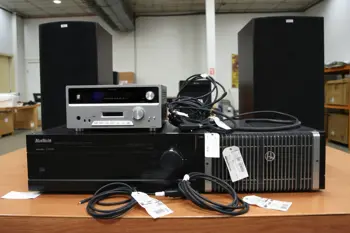
Examples of equipment categories include stereos, Bluetooth sets, speakers, amplifiers, wiring, head units, subwoofers, and aftermarket woofers. Police-impound sources may contain car audio components removed from abandoned or seized vehicles, while household-property auctions may describe equipment more broadly under electronics. Listings may therefore omit the exact phrase home audio system and use a brand, model, or general category instead. 4
How lawful disposal is authorized
Federal forfeiture is coordinated through the Department of Justice Asset Forfeiture Program, which supports seizure, forfeiture, and disposition of property connected with federal investigations. The U.S. Marshals Service manages and disposes of many seized and forfeited assets, generally through auctions or contracted sales providers. These processes are separate from ordinary municipal surplus programs and from every local police property sale. 67
Other federal channels have different purposes. The Internal Revenue Service conducts public auctions of property seized to satisfy unpaid tax liabilities, and personal property can include electronics and household goods. The U.S. Treasury also publishes information about forfeited-property auctions, while GSA Auctions primarily handles federal surplus personal property rather than property necessarily seized by police. 8910
Local noise seizures are a separate category
A New Plymouth report illustrates how audio equipment can be confiscated without being a criminal asset. Noise-control officers seized 18 sets, including stereos, Bluetooth systems, speakers, and an amplifier, between late 2023 and early 2025 after repeated residential complaints. Owners could reclaim equipment by paying a NZ$130 administration fee, while unclaimed systems were scheduled for a charity op-shop sale. 2
The same account reported 1,399 residential-noise complaints during the relevant year and described a rule change extending the period used in repeated excessive-noise cases from three days to eight days. In another case, Suffolk County police took eight concert-grade speakers after music was reportedly heard across two towns. These examples demonstrate that local noise-control powers, administrative fees, and disposal timelines differ from forfeiture proceedings. 25
Where public listings may appear
Law-enforcement property can be listed through specialist platforms or agency-operated sales. PropertyRoom.com identifies itself as an online auction platform for property supplied by law-enforcement agencies, including consumer goods and electronics. GovDeals and Public Surplus host public-agency asset sales, while Municibid supports municipal and public-agency auctions. HiBid is a marketplace where participating auctioneers and organizations advertise local online or live sales. 1112131415
International examples show further variation. Lauritz lists police-auction lots from several Danish police authorities, with inventory that can include electronics and headphones alongside bicycles, tools, and luxury goods. In the United Kingdom, police property is commonly divided between lost or unclaimed property and seized or forfeited goods, with sales handled by auction houses, force eBay shops, or other providers. 316
What inspection and documentation should establish
Condition is often uncertain because equipment may be used, removed from a vehicle, incomplete, or offered without a demonstrated operating test. A responsible review examines photographs, model numbers, visible damage, connectors, wiring, remote controls, power supplies, and whether speakers or amplifiers are sold separately or as one lot. The listing should also state whether testing occurred and whether accessories are included. 14
Ownership documentation is equally significant. A buyer should distinguish a lawful disposal record from an unsupported claim that an item was seized. Relevant listing information may identify the supplying agency, forfeiture or unclaimed-property status, title information where applicable, and any restrictions on resale or transfer. The legal source of the property determines whether the purchaser receives good title, particularly when an item originated in a criminal investigation. 36
Financial, collection, and maintenance risks
The winning bid is not necessarily the complete financial obligation. Auction terms may add a buyer's premium and sales tax, and some sales require payment and collection on the same day. A Powell Auction police seizure and equipment sale, for example, specified a 15 percent buyer's premium, added sales tax, online-only bidding, and a defined pickup date. Such terms can materially affect the total cost and feasibility of collecting bulky speakers or amplifiers. 17
Shipping can create another practical barrier. Some auctioneers use third-party shippers, while local police sales may require the purchaser to remove items personally. Electronics may also require replacement cables, repairs, cleaning, or compatibility checks after installation. These ongoing maintenance realities, combined with uncertain testing and limited return rights, mean that a low bid does not establish that the equipment is operational or suitable for a particular room, receiver, or power system. 117
How to interpret an auction notice
Auction notices should be read as legal and logistical documents rather than simple inventories. The key fields are the seller or agency, lot description, photographs, condition disclosure, inspection schedule, payment methods, buyer's premium, tax treatment, pickup window, shipping arrangements, and any statement about title or provenance. Official agency pages can also clarify whether property was unclaimed, forfeited, seized for tax purposes, or classified as surplus. 189
Public examples show why assumptions are risky. San Antonio seized-property auctions have included electronics among much wider collections of jewelry, tools, consoles, household goods, and other items, with registration, viewing, same-day payment, and same-day removal requirements. A listing that contains electronics therefore does not guarantee a dedicated audio category or a complete system. Each lot must be assessed independently, with local law and the auctioneer's published conditions controlling the process. 1819
Sources
- Search Labz, “Your Ultimate Guide to Buying Police Impound Audio Systems at Auctions in 2026”
- LiveNews.co.nz, “Noisy neighbours’ loud gear to be sold off”
- GovAuctions.app, “UK Police Property & Seized Goods Auctions”
- Top Research Topics, “A Guide to Police Impound Audio Systems from Auctions”
- News 12 New York, “Bay Shore man’s speakers seized by police”
- U.S. Marshals Service, Asset Forfeiture
- U.S. Department of Justice, Asset Forfeiture Program
- Internal Revenue Service, IRS Auctions
- U.S. Department of the Treasury, Treasury Auctions
- GSA Auctions
- PropertyRoom.com
- GovDeals
- Public Surplus
- Municibid
- HiBid
- Lauritz.com, Police Auctions
- Powell Auction & Realty, Police Seizure & Equipment Auction
- San Antonio Express-News, SAPD Seized Property Auction
- KENS 5, Police-Seized Items Auction
Authored by MyTrendSpot team