CPAP Machine Alternatives: A Comprehensive Analysis of Clinical Treatment Options
While continuous positive airway pressure (CPAP) therapy remains the established clinical standard for treating obstructive sleep apnea (OSA), many patients experience significant challenges with long-term adherence 1. Data indicates that between 30% and 50% of patients may struggle to maintain consistent CPAP usage due to factors such as mask discomfort, claustrophobia, noise, and the physical burden of travel-related equipment 6. As a result, medical professionals often evaluate alternative interventions tailored to individual anatomical, physiological, and lifestyle profiles 2. Understanding these options requires an objective look at clinical efficacy, eligibility, and the physiological mechanisms of each therapy 5.
Oral Appliance Therapy and Mechanical Solutions
Oral appliance therapy involves the use of custom-fitted devices, such as mandibular advancement devices (MADs), which are designed to hold the jaw or tongue in a forward position during sleep 7. By preventing the collapse of the upper airway tissues, these devices may reduce the frequency of breathing interruptions 6. Clinical research suggests that these appliances are particularly effective for patients with mild to moderate obstructive sleep apnea who either prefer not to use a CPAP machine or cannot tolerate the pressure delivery system 4. Successful implementation typically requires collaboration with a qualified dental specialist to ensure proper fit and ongoing monitoring of the patient's sleep architecture 7.
In addition to oral appliances, other mechanical options exist, such as nasal expiratory positive airway pressure (EPAP) devices. These small, disposable or reusable valves are placed in the nostrils to create resistance during exhalation, which helps maintain airway pressure naturally 6. Furthermore, positional therapy represents a behavioral and mechanical approach suitable for individuals whose apnea symptoms occur primarily when they sleep on their backs 2. Devices used in positional therapy encourage side-sleeping, effectively addressing the specific anatomical triggers that contribute to sleep-disordered breathing in these patient cohorts 6.
Implantable Neurostimulation Systems
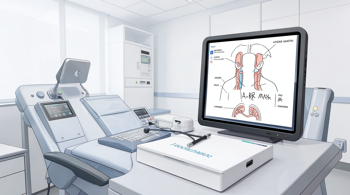
Hypoglossal nerve stimulation, often represented by the Inspire therapy system, is an implantable solution for adults with moderate to severe obstructive sleep apnea who demonstrate an intolerance or lack of success with standard PAP therapies 8. This technology works by delivering gentle electrical stimulation to the nerves that control tongue movement, ensuring the airway remains open throughout the sleep cycle 9. Modern iterations, such as the Inspire V, have introduced advancements that simplify the implantation process by utilizing integrated sensors to detect breathing patterns, thereby reducing the amount of hardware and procedural time required 8.
Another notable system, Genio therapy, utilizes a battery-free implant design placed beneath the chin, which is activated by an external unit worn during the night 10. This neurostimulation approach aims to eliminate the need for a chest-implanted battery while providing continuous support to the upper airway muscles 10. Candidates for these surgical interventions must undergo comprehensive medical evaluations to determine their specific anatomical suitability, as the effectiveness of neurostimulation is heavily dependent on specific physiological markers and the absence of certain types of complete airway collapse 10.
Surgical Interventions for Anatomical Obstruction
When nonsurgical treatments prove ineffective or if there is a clear, treatable anatomical obstruction, upper airway surgery may be considered as a clinical intervention 6. These procedures are generally reserved for cases where specific structural issues-such as enlarged tonsils, a deviated septum, or excess pharyngeal tissue-contribute significantly to the severity of the obstruction 6. Otolaryngologists, or ear, nose, and throat (ENT) specialists, perform detailed anatomical assessments to identify whether surgical correction could provide sustainable relief from symptoms 9.
Surgical outcomes vary significantly based on the complexity of the airway anatomy and the severity of the patient's sleep apnea. Patients are typically advised to weigh the potential for procedural success against the standard risks associated with any surgical intervention 9. Furthermore, surgery is rarely the first line of defense; it is often positioned as an alternative after trials of non-invasive therapies have been exhausted or found insufficient, reflecting a personalized approach to chronic disease management 5.
Lifestyle Modifications and Emerging Pharmacotherapy
Lifestyle changes, while often cited as foundational to overall health, serve as an essential adjunct to medical treatment for many individuals with sleep apnea 6. Significant weight loss has been shown to reduce the severity of the condition for patients who have obesity, as it can decrease the pressure on the upper airway during sleep 1. However, medical experts caution that lifestyle changes alone are frequently insufficient to resolve moderate-to-severe apnea and should be integrated into a broader treatment plan rather than viewed as a standalone replacement for prescribed medical equipment 2.
Emerging research is also focusing on pharmacological interventions that target upper airway muscle activation, including noradrenergic and serotonergic pathways 5. While these therapies demonstrate short-term promise in clinical studies, they are currently under rigorous investigation to manage potential side effects and determine their long-term viability as substitutes for CPAP 5. At present, these pharmacological options are viewed as complementary to traditional strategies, representing the evolving landscape of sleep medicine as researchers seek to diversify treatment possibilities for patients with varied clinical needs 5.
| Therapy Type | Primary Mechanism | Typical Candidate Profile |
|---|---|---|
| Oral Appliance | Mandibular advancement | Mild to moderate OSA |
| Neurostimulation | Nerve activation | CPAP intolerant (moderate/severe) |
| Positional Therapy | Sleep position modification | Positional-dependent OSA |
| Surgery | Anatomical correction | Structural obstruction |
Sources
- Sleep Foundation, CPAP Alternatives
- American Academy of Sleep Medicine, Oral Appliance Therapy
- National Heart, Lung, and Blood Institute, Sleep Apnea Treatment
- MDPI, Efficacy of Mandibular Advancement Devices
- Springer Nature, Upper Airway Muscle Activation Review
- AZ Dentist, Beyond the Hose: Top Sleep Apnea Treatments
- Star Sleep & Wellness, Mask-Free Treatment Options
- Tufts Medicine, Goodbye CPAP News
- Inspire Medical Systems, Patient Education
- Dallas Sleep, Genio Therapy
Authored by MyTrendSpot team