Understand stroke treatment options: A clinical guide to emergency care and recovery
Understand stroke treatment options by first recognizing that stroke is a medical emergency requiring rapid assessment. Treatment differs substantially according to whether a blood clot has blocked a vessel or a blood vessel has ruptured, so emergency imaging and clinical evaluation determine which therapies are safe. Symptoms can include sudden weakness or numbness on one side, difficulty speaking or understanding, vision changes, dizziness, coordination problems, seizures, or an unexplained severe headache. 1
How clinicians classify the stroke
Ischemic stroke occurs when a clot obstructs blood flow to the brain. The clot may form in a narrowed artery, known as a thrombotic stroke, or travel from another location, including the heart, as an embolic stroke. Hemorrhagic stroke occurs when a blood vessel bleeds within the brain or in the space between the brain and skull. Because clot-dissolving medication can worsen bleeding, treatment cannot be selected safely from symptoms alone. 2
Emergency teams typically establish when the person was last known to be well, assess neurological function, review medications and medical history, and perform brain imaging. A transient ischemic attack, or TIA, can produce similar symptoms that resolve, but it remains a medical emergency because it signals a high short-term risk of a permanent stroke. Urgent evaluation is generally expected within 24 hours, even when symptoms have disappeared. 1
Emergency treatment for ischemic stroke
Eligible patients with acute ischemic stroke may receive intravenous thrombolysis, a clot-dissolving treatment intended to restore blood flow and limit brain injury. Alteplase and tenecteplase are thrombolytic medicines used in appropriate circumstances, but eligibility depends on timing, imaging, blood pressure, recent procedures, bleeding risk, and other clinical factors. A CT scan or equivalent imaging is used to exclude hemorrhage before treatment is considered. 3
Thrombolysis is time-sensitive, and the potential benefit must be weighed against the risk of serious bleeding, including bleeding in the brain. The treatment window and eligibility rules are not identical for every patient, and newer guidelines address thrombolytic choice, contraindications, and imaging-based selection. Hospital teams therefore make the decision using the actual symptom timeline and examination rather than relying on a fixed treatment assumption. 4
Mechanical thrombectomy and catheter procedures
Mechanical thrombectomy is a catheter-based procedure that removes a clot from a blocked brain artery. It is mainly considered when imaging identifies a large-vessel occlusion and the patient meets neurological and imaging criteria. The procedure may be combined with intravenous thrombolysis when both treatments are appropriate. Its purpose is to reopen the artery and preserve brain tissue that remains potentially recoverable. 5
Selected patients may benefit from thrombectomy beyond the earliest treatment period, in some cases up to 24 hours after the person was last known to be well, when advanced imaging shows salvageable tissue. Patient selection continues to evolve for large infarct areas, basilar artery blockage, medium-vessel occlusion, pre-existing disability, and presentations beyond 24 hours. These situations require individualized specialist assessment because technical access does not always guarantee meaningful functional benefit. 3
Treatment for hemorrhagic stroke
Hemorrhagic-stroke care focuses on limiting bleeding, reducing pressure in the brain, and preventing further injury. Management may include carefully lowering dangerously high blood pressure, reversing the effects of anticoagulant medicines, treating swelling, monitoring neurological status in an intensive-care setting, and addressing complications. Clot-dissolving medicines and routine aspirin are not appropriate responses to an unconfirmed stroke because the underlying problem may be bleeding. 6
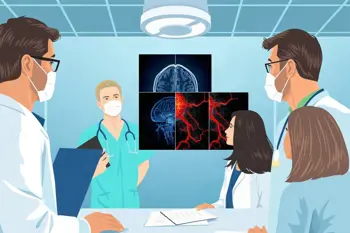
Some hemorrhagic strokes require neurosurgery or an endovascular procedure. The appropriate approach depends on the location and size of the hemorrhage, pressure effects, the condition of the patient, the source of bleeding, and whether an abnormal blood vessel can be repaired. Procedures may be used to control the bleeding source, relieve pressure, or manage an aneurysm or other vascular abnormality when specialists determine that intervention is appropriate. 7
Medicines after the acute event
After an ischemic stroke, clinicians often use antiplatelet medicine, anticoagulation for selected heart-related clot sources, blood-pressure medicine, and statin therapy. These treatments are not interchangeable. Anticoagulants may be considered when atrial fibrillation or another cardioembolic source is identified, while antiplatelets are used in other situations. The choice, timing, and duration depend on stroke cause, brain imaging, bleeding risk, and other medical conditions. 2
Aspirin should not be taken during a suspected stroke before clinicians confirm that bleeding is not the cause. Longer-term prevention also addresses high blood pressure, cholesterol, diabetes, smoking, physical activity, and other modifiable risks. Treatment plans require continuing follow-up because medicines may need adjustment, side effects must be monitored, and the underlying cause of the stroke may require additional testing or specialist care. 8
Rehabilitation and long-term recovery
Rehabilitation commonly begins in the hospital after the patient is medically stable. Physical therapy addresses movement, strength, walking, and balance; occupational therapy focuses on daily activities and practical independence; and speech-language therapy can address communication, cognition, and swallowing. Rehabilitation intensity and setting depend on the person’s impairments, safety, support needs, and ability to participate. Recovery may continue after discharge through coordinated outpatient or community services. 10
Early hospital care also includes monitoring for swallowing difficulty, falls, immobility, infection, seizures, mood changes, and other complications. Emotional and cognitive effects can be less visible than weakness or speech problems, but they may influence work, relationships, medication adherence, and independence. The overall treatment plan therefore combines emergency brain protection, prevention of another stroke, functional rehabilitation, and reassessment as abilities and care requirements change. 4
What to do when stroke is suspected
Sudden facial drooping, arm or leg weakness, speech difficulty, vision loss, severe unexplained headache, loss of balance, or a seizure warrants calling emergency services rather than driving the person to hospital. Emergency medical personnel can begin assessment during transport and notify the receiving hospital. The exact time symptoms began, or the last time the person was known to be normal, should be recorded because it affects eligibility for time-sensitive treatments. 9
Food, drink, and medicines should not be given casually while awaiting assessment, particularly aspirin, because swallowing may be unsafe and bleeding has not yet been excluded. Telestroke services can support hospitals that do not have an on-site stroke specialist by helping evaluate symptoms and determine whether emergency treatments may be suitable. Even symptoms that resolve require urgent assessment because they may represent a TIA rather than a harmless temporary episode. 9
Sources
- Johns Hopkins Medicine, Stroke
- NHS inform, Treatment for stroke
- American Heart Association and American Stroke Association, 2026 Guideline for the Early Management of Patients With Acute Ischemic Stroke
- National Institute of Neurological Disorders and Stroke, Stroke Treatment
- Cleveland Clinic, tPA for Stroke
- Centers for Disease Control and Prevention, Stroke Treatment
- Mayo Clinic, Stroke Diagnosis and Treatment
- Johns Hopkins Medicine, Stroke Treatment
- National Health Service, Stroke Treatment
- Eunice Kennedy Shriver National Institute of Child Health and Human Development, Stroke Rehabilitation
Authored by MyTrendSpot team