Affordable dental implant bridges near me: A consumer research guide
The search for “Affordable dental implant bridges near me” usually concerns a fixed way to replace several adjacent missing teeth while limiting the number of implants required. An implant-supported bridge can use implants as anchors for multiple replacement teeth, but suitability and total cost depend on bone condition, gum health, treatment design, and the services included in the written estimate. 1
How an implant-supported bridge works
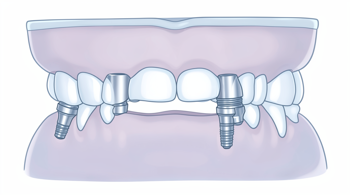
An implant-supported bridge replaces several missing teeth in a row without requiring an individual implant for every tooth. A commonly described design uses two implants, one at each end of the gap, with replacement teeth spanning between them. The restoration is fixed rather than removable, and it does not require reshaping healthy neighboring teeth in the manner of some conventional bridges. 7
Dental implants function as replacement tooth roots that can support crowns, bridges, or dentures. The implant must integrate with the jawbone before the final bridge is attached, so treatment can involve examination, imaging, surgical placement, healing, and restorative appointments. The sequence varies according to bone volume, oral health, and the proposed restoration. 2
Who may be a candidate
Candidacy is determined through a clinical evaluation rather than location or an advertised price. Assessment commonly considers the amount and condition of jawbone, gum health, bite alignment, remaining teeth, general health, and the design of the implant system. A three-dimensional scan may be used to evaluate anatomy and plan implant positions, particularly when several teeth are being replaced. 3
Implant bridges may be considered when missing teeth are adjacent and the surrounding anatomy can support the planned implants. Single implants may be more appropriate when missing teeth are separated, when independent cleaning is important, or when bite forces require separate support. Bone shrinkage, active gum disease, untreated decay, or a need for grafting can change the recommended sequence and total treatment time. 10
What determines the total cost
A quoted implant-bridge fee can represent very different packages. Relevant components include the consultation, diagnostic imaging, extractions, bone grafting, implant placement, abutments, the bridge itself, laboratory work, anesthesia, temporary teeth, and follow-up care. An itemized estimate is therefore more informative than a single headline figure or a price described as “starting at.” 9
| Cost component | Why it matters |
|---|---|
| Imaging and examination | Determines anatomy, bone support, and treatment design. |
| Implants and abutments | Reflects the number and type of supports required. |
| Bridge and laboratory work | Varies with the number of teeth, material, and fabrication process. |
| Extractions or grafting | Adds procedures when teeth must be removed or bone volume is insufficient. |
Published figures and geographic differences
Available published examples illustrate why local comparisons require careful qualification. One North Phoenix comparison describes a typical three-unit dental bridge range of about $2,500 to $6,000, while implant treatment is listed at about $3,000 to $5,000 per tooth in that source. These figures are category examples, not guaranteed regional prices or complete implant-bridge quotes. 6
Other published treatment pages use different formats. A Spring Hope, North Carolina practice describes an implant bridge supported by two implants, while a separate full-arch program lists $25,000 per arch and includes extractions, implants, same-day fixed provisional teeth, and a final zirconia bridge. Full-arch treatment is not equivalent to a limited implant bridge, so package figures should not be compared without matching the number of teeth and included services. 7
Insurance, financing, and lower-cost pathways
Dental insurance may contribute to parts of implant treatment, such as the restoration or associated procedures, but plan rules vary substantially. Medicare generally does not cover most routine dental services, although limited coverage may apply in specific medical circumstances. Written confirmation should identify annual limits, exclusions, waiting periods, missing-tooth clauses, and whether bone grafting or sedation is covered. 4
Federally funded health centers may provide dental services with fees adjusted according to household income and family size at participating locations. Dental schools can also be a lower-cost pathway because supervised students perform treatment, although eligibility and appointment availability vary and care may take longer. These options may not offer every implant service, so treatment scope and referral arrangements should be verified directly. 5
Questions to ask before choosing a provider
Comparison should focus on clinical scope and the complete treatment plan rather than the lowest advertised number. The FDA identifies dental implants as medical devices and states that planning should account for patient health, jawbone condition, and implant-system design. Patients should also examine the dentist’s implant experience, the laboratory and materials used, warranty terms, maintenance requirements, expected timeline, and who handles complications. 3
- How many implants and replacement teeth are included?
- Does the estimate include imaging, extractions, grafting, abutments, temporary teeth, and the final bridge?
- What happens if an implant fails or the bridge needs repair?
- How will the bridge be cleaned underneath, and what follow-up visits are expected?
- Which portions, if any, are submitted to dental insurance?
Maintenance remains part of the long-term cost and health responsibility. A fixed bridge does not eliminate the need for brushing, cleaning beneath the restoration, professional examinations, and management of gum disease. The bridge design should allow practical hygiene access, and patients should understand whether replacement of components, repairs, or future imaging carries separate fees. A consultation is most useful when it produces a written plan that distinguishes medical suitability from financial assumptions. 8
Risks and comparison limits
An implant bridge involves surgery and a healing period, so it is not an instant substitute for every missing-tooth situation. Risks may include inadequate bone support, complications affecting the gums or implant, prosthetic damage, and the need for additional procedures. The FDA’s oversight of dental implants as medical devices does not mean that every patient is eligible or that outcomes are identical across systems and providers. 3
Price comparisons can be misleading when one quote covers only implant placement and another includes the finished bridge, sedation, grafting, and follow-up. A nearby provider may also refer surgery, imaging, or laboratory work elsewhere, creating separate bills. The most reliable comparison is an itemized, written plan that identifies the number of implants, each treatment stage, materials, exclusions, expected maintenance, and the total projected timeline.
Sources
- American Dental Association MouthHealthy, Dental Implants
- National Institute of Dental and Craniofacial Research, Dental Implants
- U.S. Food and Drug Administration, Dental Implants
- Medicare.gov, Dental Services Coverage
- Health Resources and Services Administration, Find a Health Center
- American Dental Association, Dental Implants
- Cleveland Clinic, Dental Implants
- Mayo Clinic, Dental Implant Surgery
- CareCredit, Dental Implant Cost Factors
- WebMD, Guide to Dental Implants
Authored by MyTrendSpot team