Police auction heavy duty work vehicles on sale: Understanding the Government Surplus Market
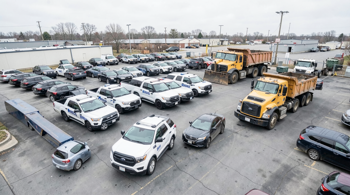
Government agencies and local police departments frequently rotate their vehicle fleets, leading to the public offering of retired heavy-duty work assets 1. These sales typically include a wide variety of equipment, ranging from pursuit-rated SUVs and pickup trucks to specialized machinery such as street sweepers, dump trucks, and tractors 23. Unlike standard retail purchases, acquiring these assets occurs through public auction environments, which are governed by specific legal and procedural frameworks defined by the selling municipality or law enforcement agency 4.
Understanding the Nature of Public Agency Surplus Auctions
Public agency auctions are designed to liquidate assets that have reached the end of their designated service life due to age, mileage, or a shift in operational requirements 5. For example, agencies often auction off vehicles after they have reached high mileage intervals, such as one instance involving a 2014 Ford E-350 Super Duty with over 536,000 miles 6. It is important to distinguish between surplus vehicles, which are retired public assets, and police-seized property, which may be sold through separate court-related or law enforcement programs 7. These distinctions can impact the documentation provided at the time of sale and the overall condition of the assets.
Common Platforms and Auction Mechanics
Government entities utilize various digital and physical channels to facilitate these sales. Major platforms like GovDeals, Public Surplus, and Municibid provide central marketplaces where municipalities across the United States can list items 89. Some departments choose to partner with private auction firms to conduct online-only events or managed in-person sales 10. Regardless of the venue, bidders are typically required to register and adhere to strict bidding windows. In some cases, such as a recent auction held by Lane County Fleet Services, the sale occurs annually to support replacement funds for new fleet acquisitions 11.
Due Diligence and Asset Inspection Realities
A fundamental component of participating in these auctions is the buyer’s responsibility to conduct thorough due diligence 12. Because most government assets are sold on an as-is, where-is basis, they are often offered without warranties or guarantees 13. Bidders are encouraged to review provided photographs, VIN details, and mileage reports carefully. When possible, prospective buyers should attend scheduled in-person previews to perform independent visual inspections 14. In instances where physical inspection is not feasible, some auction houses may provide recorded video walkthroughs or disclosure notes regarding known mechanical issues, such as reported accidents or non-starting conditions 15.
Regulatory and Documentation Requirements
Purchasing at a law enforcement or municipal auction requires navigating specific documentation processes. In Texas, for instance, purchasers are issued a Law Enforcement Auction Sales Receipt (Form VTR-71-1), which is a prerequisite for paying taxes and registering the vehicle with the local County Tax Assessor-Collector 16. Out-of-state buyers face additional complexities, as they may not be eligible for a standard title through the local jurisdiction and must coordinate with their home state’s Department of Motor Vehicles to understand requirements for bonded titles or registration 17. Failure to verify these requirements beforehand can result in significant delays after the purchase is finalized.
Associated Costs and Financial Obligations
The final cost of a vehicle is rarely limited to the winning bid amount. Buyers must account for additional financial obligations, including buyer’s premiums, which often range from 10% to 15% of the final sale price, as well as applicable sales taxes 18. Furthermore, successful bidders are generally responsible for all logistical costs associated with the removal of the asset, including transportation, loading, and any necessary towing fees 19. Agencies often impose strict deadlines for payment and removal, typically within 48 hours to a few days after the auction closes, and failure to comply can lead to forfeiture of the item and potential bans from future auctions 20.
Summary of Market Indicators and Asset Variety
| Asset Type | Typical Condition Status | Common Documentation |
|---|---|---|
| Police Interceptors | Decommissioned/Stripped | Bill of Sale/Title |
| Heavy-Duty Trucks | Operational or Non-Starting | Form VTR-71-1 (Varies) |
| Construction Equipment | High Usage/As-Is | Government Surplus Transfer |
The variety of available equipment remains high, with regular listings for items like 2020 Ford Explorer police interceptors, 2013 Ford F550s, and various types of heavy machinery 21. While the market offers a diverse range of utility assets, participants must maintain a realistic view of the maintenance requirements inherent in purchasing surplus equipment 22. Whether sourcing from platforms like GovPlanet or regional specialists like Powell Auction & Realty, the consistency of these auctions relies on the periodic turnover of public fleets, which ensures a steady, albeit variable, supply of industrial and transport assets for the public market 23.
Sources
- Global Auction Guide - TX 2014 Ford E-350 Super Duty
- Auction757 - Hampton Police & GB's Towing Auction
- InstaDriv - Shalatin Police Auction
- KTNV - Clark County Agencies Online Auction
- NBC16 - Lane County Annual Surplus Auction
- Global Auction Guide - Freer Police Department Listing
- General Research - Surplus vs. Seized Definitions
- GovDeals - Official Government Surplus Marketplace
- Public Surplus - Online Asset Auctions
- Municibid - Government and School Surplus Listings
- NBC16 - Lane County Auction Operational Details
- Auction757 - Due Diligence Requirements
- OK.com - Miramar Online Auction Terms
- Global Auction Guide - Inspection Appointment Requirements
- Global Auction Guide - Jim Wells County Sheriff Listing
- Global Auction Guide - VTR-71-1 Form Requirements
- Global Auction Guide - Out-of-State Title Procedures
- Powell Auction & Realty - 15% Buyers Premium Disclosure
- General Research - Logistics and Removal Costs
- Lane County Public Works - Payment and Removal Deadlines
- Mahoning Matters - Austintown Township Surplus
- General Research - Maintenance Realities
- GovPlanet - Heavy-Duty Asset Market Overview
Authored by MyTrendSpot team