Police impound luxury watches for sale: A Guide to Asset Forfeiture and Government Auction Procedures
Law enforcement agencies periodically conduct auctions involving luxury timepieces that have been seized through criminal investigations or civil forfeiture actions 1, 2. These items, which often include high-end brands such as Rolex, Patek Philippe, Audemars Piguet, and Hublot, are typically recovered as part of proceeds of crime operations where assets are used to facilitate illicit activities or store criminal wealth 5, 7, 9. Understanding the lifecycle of these assets from seizure to public disposal requires insight into the legal frameworks and operational procedures governing government asset management.
The Role of Asset Forfeiture in Law Enforcement
Asset forfeiture serves as a strategic tool for law enforcement to disrupt criminal organizations by stripping away the financial benefits of their illicit activities 6, 9. In cases involving organized crime, money laundering, or high-value theft, luxury watches are frequently targeted for confiscation because they act as portable stores of wealth 3, 7. These items are often documented in forensic accounting investigations alongside other assets like gold bullion, designer apparel, and real estate, and are ultimately held by the state under legal confiscation orders 5, 6, 9.
When a court approves a proceeds-of-crime application, the seized assets are transitioned into the custody of specialized asset management offices or police evidence units 3, 6, 9. The primary objective during this phase is to ensure the legal transfer of ownership to the government, allowing the state to liquidate the property. The proceeds generated from these sales are frequently directed back into law enforcement funding, supporting ongoing investigations into serious and organized criminal enterprises 5, 6, 9.
Operational Dynamics of Government Auctions
Government agencies utilize diverse channels to liquidate seized assets, ranging from live, location-specific auctions to web-simulcast events and dedicated online marketplaces 1, 2, 3. For instance, federal entities like the U.S. Marshals Service or local police departments often partner with auction houses or use established governmental platforms to manage the sale of recovered property 1, 2, 10. The scale of these events varies, with some auctions featuring hundreds of lots, while others focus on specific categories of high-value goods 1, 3.
Participation in these auctions typically involves strict registration requirements to ensure compliance with financial regulations 1, 3. Potential bidders are often required to submit a cash deposit or meet verified identification standards before they are permitted to participate in the bidding process 1, 3. Because these sales are designed to dispose of property under specific legal authority, they operate under distinct terms and conditions that differ from private-market transactions 10.
Risk Mitigation and Independent Verification
Acquiring watches from government auctions carries inherent risks, primarily because these items are almost exclusively sold on an as-is basis 10. Law enforcement agencies do not typically provide authentication, manufacturer warranties, or guarantees regarding the functionality of the timepieces 10. Potential buyers should note that items may lack original boxes, papers, or might require significant servicing to restore functionality 10. Furthermore, some recovered items may have been damaged during the commission of the crime or while in police custody 10.
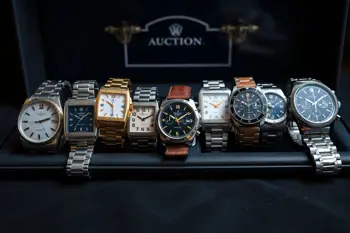
Independent authentication is a critical step for anyone participating in these sales. Since police-held goods are recovered from various sources, including pawn shops and theft rings, bidders are encouraged to verify reference numbers, serial numbers, and internal movement components 4, 10. Law enforcement investigators occasionally recover counterfeit goods alongside authentic luxury items, meaning the burden of provenance verification lies with the buyer 4, 10.
Common Platforms and Sales Channels
Various digital platforms facilitate the sale of confiscated, unclaimed, and surplus government assets, providing a standardized interface for public interest 10. The following table outlines typical venues and the nature of the property they handle.
| Platform | Typical Asset Source |
|---|---|
| U.S. Marshals Service Auctions | Federally forfeited assets from major criminal cases |
| PropertyRoom.com | Recovered, seized, and unclaimed local police property |
| GovDeals / Public Surplus | Public agency surplus and confiscated property |
| Private Auction Houses | High-value collections authorized for disposal by agencies |
Legal Compliance and Procedural Realities
The disposal of seized watches is governed by strict legal protocols to ensure transparency and prevent the corruption of seized property back into the criminal market 7, 10. Agencies must fulfill mandatory legal waiting periods and notice requirements before an asset can be legally auctioned 2, 10. For seized property in criminal investigations, the forfeiture determination is the legal trigger that permits the sale 10. Agencies like the Criminal Assets Bureau or regional economic crime units prioritize the dismantling of criminal wealth, which often involves a forensic investigation into how a specific item was acquired, sometimes involving the original owners or secondary market dealers in the audit process 7, 8.
Summary of Buyer Considerations
Before engaging with auctions involving police-seized inventory, interested parties should evaluate several procedural factors to avoid potential pitfalls 10. Understanding the following checklist can help in navigating the process effectively:
- Confirm the legitimacy of the auction platform and its formal affiliation with the selling agency 10.
- Review the specific auction terms, including buyer premiums, sales tax requirements, and immediate payment deadlines 2, 10.
- Factor in the potential cost of restoration, as many seized watches have not been maintained for years 10.
- Research the history of the auction house or government portal to ensure it handles high-value asset liquidations regularly 10.
- Exercise caution regarding unrealistic promises of government-seized auctions, as these are often targets for impersonation scams 10.
Sources
- U.S. Marshals Service - Asset Forfeiture Program Overview
- WATCHPRO USA - US Marshals Auction of Seized Prestige Watches
- Paperjam News - Confiscated Exceptional Watches Auction
- WATCHPRO USA - Police Seizure of Luxury Watches in London
- WATCHPRO - Organized Crime Asset Auctions
- Teesside Live - Proceeds of Crime Asset Confiscation
- WATCHPRO - Criminal Assets Bureau Luxury Watch Currency Analysis
- WATCHPRO - Investigation into WatchTrader & Co. Money Laundering
- BBC News - Drug Gang Asset Confiscation
- General Government Procedural Research (GSA/FBI/DOJ/Auction Guidelines)
Authored by MyTrendSpot team