Understand prostate cancer treatment options: A clinical guide to decisions and trade-offs
How treatment decisions are made
Prostate cancer treatment is selected according to stage, risk group, PSA level, Grade Group, biopsy and imaging findings, symptoms, overall health, life expectancy, and personal preferences. The same diagnosis can therefore lead to different recommendations for different people. A multidisciplinary discussion involving urology, radiation oncology, and medical oncology can help compare cancer control, side effects, and quality-of-life priorities. Genomic tests may provide additional risk information for some men with low- to intermediate-risk disease, although no test predicts outcomes with complete certainty. 1 2
- Localized cancer remains within or near the prostate and may be treated with surveillance, surgery, radiation, or selected focal approaches.
- Locally advanced or recurrent cancer may require combinations of radiation, hormone therapy, surgery, or systemic treatment.
- Metastatic cancer is generally managed with treatments that act throughout the body, together with symptom and complication control.
Active surveillance and watchful waiting
Active surveillance is commonly used for selected men with low-risk and some favorable intermediate-risk cancers. It does not mean ignoring the cancer. Monitoring can include scheduled PSA tests, examinations, imaging, and repeat biopsies, with curative treatment considered if tests show progression. Watchful waiting is less intensive and usually emphasizes symptom management and quality of life rather than routinely trying to eradicate the cancer. It may suit some older men or people with substantial other health problems. 3 4 9
- Surveillance seeks to delay or avoid treatment-related urinary, bowel, and sexual effects while the disease remains stable.
- Watchful waiting is based more heavily on age, general health, symptoms, and life expectancy.
- Both approaches require an agreed follow-up plan and clear criteria for changing management.
Surgery for localized disease
Radical prostatectomy removes the prostate and is generally considered when cancer has not spread beyond the prostate and the person is fit for an operation. Robotic tools are used for many prostatectomies, but the important decision is whether surgery fits the cancer and the patient’s priorities, not the technology alone. Possible lasting effects include urinary incontinence and erectile dysfunction. Recovery, existing medical conditions, previous operations, and the surgeon’s experience can affect the balance of risks and benefits. 2 5 6
- Potential advantage: the prostate and cancer can be removed, with pathology providing additional information about the tumor.
- Potential risks: urinary leakage, erectile dysfunction, bleeding, infection, and effects related to anesthesia or surgery.
- Important comparisons: continence goals, sexual function, age, health conditions, and whether radiation remains appropriate if cancer returns.
Radiation therapy
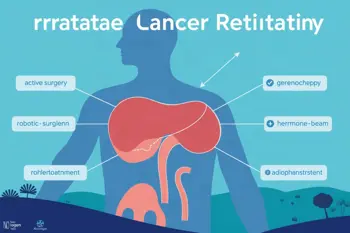
Radiation uses high-energy treatment directed at prostate cancer. External-beam radiation therapy includes techniques such as intensity-modulated radiation therapy, proton beam therapy, and shorter stereotactic body radiation therapy for selected patients. Brachytherapy places radioactive seeds directly in the prostate. For localized disease, external-beam radiation, stereotactic radiation, and brachytherapy can provide similar long-term cancer control for many men. Radiation is sometimes combined with androgen-deprivation therapy, particularly when risk is higher. 2 5
- Possible urinary effects include irritation, urgency, or leakage.
- Possible bowel effects include irritation or changes in bowel habits.
- Sexual function can decline over time, and hormone therapy may add hot flashes, fatigue, metabolic effects, and reduced libido.
Hormone and other systemic therapies
Androgen-deprivation therapy lowers or blocks testosterone, a hormone that can promote prostate cancer growth. It may be used for recurrent, locally advanced, or metastatic cancer, and alongside radiation in selected intermediate- or high-risk cases. Advanced disease may also be treated with chemotherapy, targeted therapy, immunotherapy, or radiopharmaceutical treatment. These therapies circulate through the body rather than treating only the prostate. Treatment selection depends on previous therapy, symptoms, disease location, biomarker findings, and general health. 7 8 2
- Chemotherapy such as docetaxel or cabazitaxel is mainly used in advanced disease and may be combined with hormone treatment.
- Immunotherapy with sipuleucel-T is an option for selected men with metastatic castration-resistant disease and few or no symptoms.
- Bone-directed medicines such as denosumab or zoledronic acid may reduce skeletal complications when cancer affects bone.
Biomarker-guided and radiopharmaceutical treatment
Some advanced prostate cancers contain DNA-repair gene alterations that may make them suitable for PARP inhibitors or other precision medicines. Genomic or biomarker testing can therefore influence treatment selection, particularly after cancer has spread or become resistant to hormone suppression. Lutetium-177 vipivotide tetraxetan, known as Pluvicto, is approved for certain adults with PSMA-positive metastatic castration-resistant prostate cancer after specified prior androgen-receptor-pathway inhibition and taxane-based chemotherapy. Eligibility is narrower than the general term “advanced prostate cancer” suggests. 11 10
- Testing may identify inherited or tumor-specific alterations with treatment implications.
- PSMA-directed radiopharmaceutical treatment requires confirmation of PSMA-positive disease and satisfaction of prior-treatment criteria.
- Potential toxicities, monitoring requirements, access limitations, and interactions with previous therapy must be reviewed by the oncology team.
Comparing options and preparing for care
For localized cancer, surgery and radiation are both established treatments with strong long-term outcomes, so the choice often depends on side-effect priorities, medical suitability, convenience, and personal values rather than a universal superior option. A second opinion and consultation with both a urologic surgeon and radiation oncologist can clarify trade-offs. Questions should address expected urinary, bowel, sexual, hormonal, and bone effects, follow-up schedules, additional treatment if the cancer recurs, and whether a clinical trial is relevant. 5 6 12
| Issue | What to clarify |
|---|---|
| Cancer status | Stage, Grade Group, PSA pattern, imaging, biopsy findings, and metastatic sites. |
| Personal health | Heart and lung disease, previous surgery, medicines, functional status, and life expectancy. |
| Ongoing care | PSA monitoring, imaging, repeat biopsy, hormone-related monitoring, and management of treatment effects. |
| Research options | Whether a clinical trial offers a scientifically appropriate investigational approach. |
Sources
- Mayo Clinic, Prostate cancer: Diagnosis and treatment, https://www.mayoclinic.org/diseases-conditions/prostate-cancer/diagnosis-treatment/drc-20353093
- Memorial Sloan Kettering Cancer Center, Treatments for Prostate Cancer, https://www.mskcc.org/cancer-conditions/prostate-cancer/treatment
- Cancer Council Australia, Treatment for prostate cancer, https://www.cancer.org.au/types-of-cancer/prostate-cancer/treatments-for-prostate-cancer
- Fred Hutch Cancer Center, Prostate Cancer Treatment Options and Support, https://www.fredhutch.org/en/diseases/prostate-cancer/treatment.html
- Mayo Clinic, Prostate cancer treatment: Surgery vs. radiation, https://www.mayoclinic.org/diseases-conditions/prostate-cancer/in-depth/prostate-cancer-treatment-surgery-vs-radiation/art-20592862
- Prostate Cancer Foundation, Choosing a Treatment for Prostate Cancer, https://www.pcf.org/patient-support/patient-summits/2026-localized-prostate-cancer-patient-summit/choosing-a-treatment-for-prostate-cancer-what-to-consider/
- National Cancer Institute, Prostate Cancer Treatment, https://www.cancer.gov/types/prostate/patient/prostate-treatment-pdq
- American Cancer Society, Treating Prostate Cancer, https://www.cancer.org/cancer/types/prostate-cancer/treating.html
- National Comprehensive Cancer Network, Prostate Cancer Patient Guidelines, https://www.nccn.org/patients/guidelines/content/PDF/prostate-patient.pdf
- U.S. Food and Drug Administration, FDA approves Pluvicto for metastatic castration-resistant prostate cancer, https://www.fda.gov/news-events/press-announcements/fda-approves-pluvicto-metastatic-castration-resistant-prostate-cancer
- Prostate Cancer Foundation, Precision medicines and prostate cancer treatment, https://www.pcf.org/about-prostate-cancer/prostate-cancer-treatment/
- Cleveland Clinic, Prostate Cancer, https://my.clevelandclinic.org/health/diseases/6600-prostate-cancer
Authored by MyTrendSpot team