Early symptoms of acid reflux you should know: Clinical signs and warning patterns
Early symptoms of acid reflux you should know include the familiar burning sensation called heartburn, but reflux can also appear as sour-tasting fluid, nausea, swallowing discomfort, cough, or hoarseness. Occasional reflux is common, while persistent or worsening symptoms may indicate gastroesophageal reflux disease, or GERD, and should be assessed in context.
Heartburn is the most recognizable early symptom
Heartburn is usually described as a burning pain in the middle of the chest, behind the breastbone. The sensation may rise from the lower chest toward the throat and often develops after eating. Mayo Clinic reports that discomfort may become worse in the evening, while lying down or bending over can intensify it. These patterns occur because stomach contents can move backward into the esophagus and irritate its lining. 1
Occasional heartburn does not automatically mean GERD. However, heartburn that occurs more than twice a week, interferes with ordinary activities, or continues despite nonprescription medicines warrants discussion with a healthcare professional. Chest discomfort should not be assumed to be reflux when it is severe or accompanied by pressure, breathing difficulty, or pain extending to the arm or jaw. 2
Regurgitation can cause a sour or bitter taste
Regurgitation is another common early sign. It occurs when stomach contents travel upward through the esophagus and reach the throat or mouth. A person may notice food returning, a sour or bitter taste, or the sensation that stomach acid is backing up. The National Institute of Diabetes and Digestive and Kidney Diseases identifies heartburn and regurgitation as the most common symptoms associated with gastroesophageal reflux. 1
Regurgitation may be more noticeable after a large meal or when lying down soon after eating. It can occur with or without heartburn, so the absence of chest burning does not rule out reflux. Repeated exposure of the throat or esophagus to stomach contents can be irritating, and persistent episodes should be evaluated rather than attributed automatically to a particular food or beverage. 3
Swallowing changes should not be overlooked
Difficulty swallowing, known medically as dysphagia, or pain during swallowing can occur when reflux irritates the esophagus. Some people describe food as moving slowly, sticking behind the breastbone, or requiring repeated sips of liquid. These symptoms are not simply minor variations of ordinary heartburn. NIDDK lists swallowing problems and painful swallowing among symptoms that should prompt medical attention. 1
Persistent swallowing difficulty can also reflect conditions unrelated to reflux, which is why self-diagnosis is unreliable. A clinician may consider the timing of symptoms, the types of food involved, and whether the problem is getting worse. Trouble swallowing combined with unexplained weight loss, persistent vomiting, bleeding, or loss of appetite is particularly important to report. 2
Throat and breathing symptoms may be less obvious
Not every person with reflux experiences classic heartburn. NIDDK notes that chronic cough and hoarseness can occur as symptoms connected with GERD complications in the throat or lungs. A cough that continues without an obvious infection, or a voice that becomes persistently rough, may therefore be part of a broader symptom pattern, although these signs can also have other causes. 1
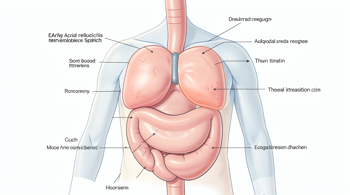
Reflux-related throat symptoms can be especially difficult to recognize when chest burning is absent. A sore throat, repeated throat clearing, or a sensation of irritation may lead people to consider respiratory or voice conditions first. The University of Utah Health describes atypical or silent presentations as reasons some people do not recognize GERD. Medical assessment is useful when symptoms persist, recur, or disturb sleep. 4
Timing and triggers help identify a pattern
The relationship between symptoms and body position can provide useful context. Mayo Clinic reports that heartburn commonly worsens after eating and may become more noticeable at night, while lying down or bending over can increase discomfort. This timing does not prove that reflux is responsible, but repeated symptoms in the same circumstances can help a clinician evaluate the pattern. 2
Risk factors can also influence the likelihood of recurrent reflux. NIDDK identifies overweight or obesity and pregnancy among factors that can affect the lower esophageal sphincter, the muscle that normally helps prevent stomach contents from moving backward. Smoking, alcohol, certain foods, and abdominal pressure are also discussed in the supplied clinical sources as possible contributors. Individual triggers differ, so symptom tracking is more informative than assuming every listed trigger applies to everyone. 3
When early symptoms require medical evaluation
Medical advice is appropriate when symptoms do not improve with lifestyle changes or nonprescription treatment, occur repeatedly, or interfere with sleep and daily activities. NIDDK specifically advises evaluation for chest pain, persistent vomiting, swallowing problems, painful swallowing, unexplained weight loss, appetite loss, or signs of digestive bleeding such as vomit containing blood or material resembling coffee grounds. Black, tarry stool is another warning sign. 1
Severe chest pain or pressure requires urgent attention because heart attack symptoms can resemble heartburn. Mayo Clinic advises emergency help when chest discomfort occurs with arm or jaw pain or difficulty breathing. GERD itself can cause inflammation and, over time, complications such as narrowing of the esophagus, according to MSD Manual. The safest approach is to treat new, severe, or changing symptoms as requiring professional evaluation rather than relying on symptom labels alone. 5
Acid reflux, GER, and GERD are not identical
Gastroesophageal reflux describes the backward movement of stomach contents into the esophagus. Occasional episodes can happen in many people. GERD refers to a chronic condition in which reflux is frequent or causes symptoms, inflammation, or damage. Ohio State Health and Discovery distinguishes acid reflux as the flow of stomach acid and GERD as a longer-term disease diagnosed through clinical findings and, in some cases, evidence of esophageal injury. 6
Recognizing early symptoms is therefore useful, but symptoms alone cannot establish a diagnosis. Heartburn, regurgitation, cough, hoarseness, nausea, and swallowing changes may overlap with other digestive, respiratory, or cardiac conditions. A detailed history of symptom timing, severity, frequency, food association, and body position can help a healthcare professional determine whether reflux is likely and whether further assessment is needed. 1
Sources
- National Institute of Diabetes and Digestive and Kidney Diseases, Symptoms & Causes of GER & GERD: https://www.niddk.nih.gov/health-information/digestive-diseases/acid-reflux-ger-gerd-adults/symptoms-causes
- Mayo Clinic, Heartburn: Symptoms & causes: https://www.mayoclinic.org/diseases-conditions/heartburn/symptoms-causes/syc-20373223
- Harvard Health, Gastroesophageal Reflux Disease: https://www.health.harvard.edu/a_to_z/gastroesophageal-reflux-disease-gerd-a-to-z
- University of Utah Health, The Not-So-Obvious Symptoms of GERD and Why It Should Be Treated: https://healthcare.utah.edu/the-scope/health-library/all/2026/09/not-so-obvious-symptoms-of-gerd-and-why-it-should-be-treated
- MSD Manual Consumer Version, Gastroesophageal Reflux Disease: https://www.msdmanuals.com/home/digestive-disorders/esophageal-and-swallowing-disorders/gastroesophageal-reflux-disease-gerd
- Ohio State Health & Discovery, How to manage acid reflux: https://health.osu.edu/health/general-health/how-to-manage-acid-reflux
Authored by MyTrendSpot team