Gallbladder Attack Symptoms: Clinical Signs, Warning Signals, and Evaluation
Gallbladder attack symptoms generally refer to pain and related digestive symptoms caused when a gallstone blocks a bile duct. The characteristic pattern is upper-right abdominal pain that may follow a heavy meal, although similar symptoms can occur with appendicitis, ulcers, pancreatitis, gastroesophageal reflux disease, and other conditions. 1
Typical pain pattern
The most recognizable symptom is sudden or intense pain in the upper-right abdomen, beneath the right ribcage. It may also be felt in the upper middle abdomen or radiate toward the back, right shoulder, or chest. This pain is commonly called biliary colic when pressure builds behind a temporary blockage. 2
Gallbladder attacks often occur after heavy meals and frequently develop in the evening or during the night. Clinical descriptions also associate episodes with greasy, oily, or fatty meals, with discomfort sometimes beginning about 15 to 20 minutes after eating and lasting from 30 minutes to four hours. 1 2
Digestive symptoms that may accompany an attack
Nausea and vomiting commonly accompany gallbladder pain, particularly when the episode is severe. These symptoms do not establish the diagnosis by themselves, because several abdominal and gastrointestinal disorders can produce a similar combination of pain, nausea, and vomiting. 3
A temporary blockage may resolve when a stone moves and no longer obstructs the duct, allowing the attack to stop. However, a previous attack increases the likelihood of additional attacks, and recurrent symptoms should be medically evaluated rather than assumed to be ordinary indigestion. Gallstones that do not block bile ducts generally cause no symptoms. 1
Warning signs of a complication
Pain that continues for several hours, especially when it is steady and associated with abdominal tenderness, can indicate more than uncomplicated biliary colic. Acute cholecystitis is inflammation of the gallbladder that usually develops over hours when a gallstone persistently obstructs the cystic duct. 3
Fever, chills, jaundice, tea-colored urine, and light-colored stools are warning signs requiring prompt medical assessment. They may reflect infection or inflammation involving the gallbladder, liver, or pancreas, or a continuing obstruction of the bile ducts. 1
- Abdominal pain lasting several hours
- Nausea and vomiting with persistent pain
- Fever or chills, including a low-grade fever
- Yellow skin or yellowing of the whites of the eyes
- Dark urine or unusually light-colored stools
How an attack differs from cholecystitis
Uncomplicated symptomatic gallstones can cause episodic biliary colic when obstruction is temporary. Acute cholecystitis generally involves inflammation from persistent cystic-duct obstruction and more often produces severe, steady upper-abdominal pain, fever, nausea, and tenderness. Infection may develop after inflammation begins. 4
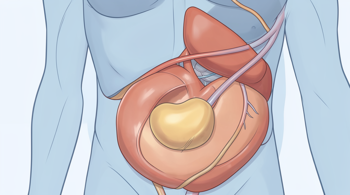
The distinction matters because prolonged obstruction can lead to serious complications, including gallbladder infection, bile-duct obstruction, cholangitis, or gallstone pancreatitis. Persistent symptoms should not be self-diagnosed as a routine attack, particularly when fever, jaundice, or vomiting is present. 5
Conditions with similar symptoms
Gallstone symptoms can resemble appendicitis, ulcers, pancreatitis, and gastroesophageal reflux disease. Pain that spreads toward the chest or back can also overlap with symptoms from conditions outside the biliary system, so the location and timing of pain cannot independently confirm a gallbladder disorder. 1
Medical history, physical examination, and laboratory evaluation alone may be insufficient for an accurate diagnosis of gallstone disease. The American Academy of Family Physicians identifies ultrasonography as the first-line imaging test for right-upper-quadrant pain, while guidance summaries also describe liver-function testing as part of evaluation. 5 7
Evaluation and treatment considerations
Ultrasound can usually detect gallstones and may show associated gallbladder inflammation. When symptoms are present and imaging confirms symptomatic gallstones, clinical guidance generally supports laparoscopic gallbladder removal. People with silent gallstones, meaning stones without symptoms and without impaired gallbladder, liver, or pancreatic function, typically do not require treatment. 1 4
For acute cholecystitis, guidance summarized by NICE recommends early laparoscopic cholecystectomy within one week of diagnosis when clinically appropriate. Surgery may not be suitable at presentation for every patient, and percutaneous cholecystostomy is described as an option for gallbladder empyema when surgery is contraindicated and conservative management has not succeeded. 7
Because symptoms may recur and complications can progress, the practical clinical issue is not simply whether pain resembles a gallbladder attack. The duration of pain, associated fever or jaundice, examination findings, laboratory results, and imaging determine whether the episode represents temporary obstruction, acute inflammation, or another abdominal condition.
Sources
- 1. National Institute of Diabetes and Digestive and Kidney Diseases, Symptoms & Causes of Gallstones
- 2. Cleveland Clinic, Gallbladder Attack: Symptoms and How To Stop It
- 3. Merck Manual Professional Edition, Acute Cholecystitis
- 4. MSD Manual Consumer Version, Cholecystitis
- 5. American Academy of Family Physicians, Gallstone Disease
- 6. MSD Manual Quick Facts, Cholecystitis
- 7. NICE Guideline Summary via Medscape, Gallstone Disease: Diagnosis and Management
Authored by MyTrendSpot team