Early symptoms of shingles you should know: A clinical guide to recognizing the warning signs
Early symptoms of shingles you should know include pain, burning, tingling, itching, or unusual skin sensitivity that may begin days before the signature rash. Because these sensations can resemble a pulled muscle, sciatica, kidney stones, or other problems, some adults delay medical evaluation even though early antiviral treatment can reduce illness severity and the risk of lasting nerve pain. 1
Why shingles can begin without a rash
Shingles, also called herpes zoster, results when the varicella-zoster virus, the virus responsible for chickenpox, becomes active again after remaining dormant in nerve tissue. The reactivated virus travels along nerve fibers toward the skin, which explains why the first symptoms often occur in a defined area rather than across the entire body. A visible rash may not appear until two or three days after nerve symptoms begin. 2
The early stage is called the prodrome or pre-eruptive phase. During this period, the skin may look normal even though the affected nerve is producing pain or abnormal sensations. This timing can make shingles difficult to identify, particularly when symptoms occur in the back, chest, abdomen, face, or scalp and seem connected to a joint, muscle, tooth, or internal organ. 5
Early sensations to recognize
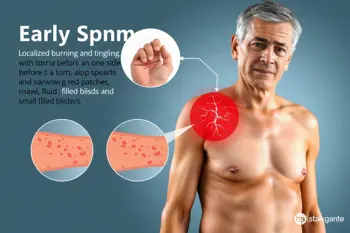
The most characteristic early clues are localized burning, tingling, itching, numbness, or a deep ache on one side of the body or face. Some people describe sharp, stabbing, shooting, or electric-shock-like pain. Sensitivity may be disproportionate to the skin’s appearance, with ordinary contact from clothing, bedding, or a light touch becoming uncomfortable. 3
Symptoms usually follow a narrow area supplied by one nerve pathway, sometimes described as a band or strip. Pain can be constant or intermittent, and itching or a crawling sensation may occur in the same region. These symptoms are not proof of shingles by themselves, because several neurological, muscular, dental, and skin conditions can cause similar sensations. 8
What happens when the rash appears
After the early nerve discomfort, shingles commonly produces red patches followed by clusters of fluid-filled blisters. The rash generally appears on one side of the torso, neck, or face and follows the path of the affected nerve. In typical cases, it remains limited to one side rather than forming a widespread, symmetrical eruption. 4
The blisters may become more painful as they develop, then break, dry, and form crusts. The rash is often the feature that enables a clinician to recognize shingles, although some people experience nerve pain without an obvious eruption. A weakened immune system can be associated with a more extensive rash, making clinical assessment particularly important when the pattern is unusual. 2
Other symptoms that may accompany the warning signs
Shingles is primarily a nerve and skin infection, but some people also report general symptoms before or during the rash. These can include fatigue, headache, chills, dizziness, light sensitivity, and a foggy or slowed feeling. Such symptoms are nonspecific and may occur with many infections, so they become more informative when they accompany one-sided burning, tingling, or localized tenderness. 6
Fever and headache may accompany shingles, but their absence does not exclude it. Likewise, the presence of fatigue or chills does not establish a diagnosis. The combination of a localized sensory change followed by a one-sided blistering rash is more suggestive than any single general symptom. A healthcare professional can distinguish shingles from other causes through examination and, when necessary, testing. 3
Who faces higher risk and why timing matters
Anyone who has had chickenpox can potentially develop shingles because the varicella-zoster virus remains in the body after the initial infection. Risk rises substantially with age, particularly after 50, and is also higher among people with certain illnesses or treatments that weaken immune defenses. Shingles can occur in otherwise healthy adults, so lack of a known immune problem does not rule it out. 3
Antiviral medicines are generally most useful when started early, with clinical references emphasizing treatment within about 72 hours after the rash begins. Early treatment can shorten the illness, reduce symptom severity, and lower the likelihood of persistent nerve pain called postherpetic neuralgia. Because the earliest pain may precede the rash, suspected cases should be discussed with a clinician rather than assessed solely by appearance. 2
When medical evaluation is especially important
Prompt medical assessment is particularly important when pain or a rash affects the eye, forehead, nose, or other areas of the face, because facial involvement can threaten vision or affect cranial nerves. Evaluation is also important for adults over 50, people with weakened immune systems, and anyone with severe or rapidly spreading symptoms. Atypical rashes may require different diagnostic considerations. 1
Shingles can cause complications even after the skin heals. The most recognized is postherpetic neuralgia, a persistent nerve-pain condition that is more concerning with increasing age. Vaccination is an established prevention strategy for adults aged 50 and older and for certain adults aged 19 and older with weakened immune systems. Eligibility and timing should be reviewed with a healthcare professional. 7
Practical distinctions and diagnostic limits
A one-sided burning or tingling area followed by blisters is more consistent with shingles than a generalized itchy rash or irritation appearing equally on both sides. However, pain before a rash can mimic a pulled muscle, pinched nerve, kidney stone, appendicitis, heart-related symptoms, dental pain, or other conditions depending on its location. Location and timing therefore matter when describing symptoms to a clinician. 1
No single early symptom confirms shingles, and self-diagnosis can delay evaluation of other serious conditions. Useful details include when the pain began, whether it is limited to one side, whether clothing or touch worsens it, when skin changes appeared, and whether fever, headache, fatigue, or immune-suppressing treatment is present. These observations help clinicians assess whether antiviral treatment or further testing is appropriate. 5
Sources
- AARP, “Early Symptoms of Shingles You Should Know About”
- Merck Manual Consumer Version, “Shingles”
- Harvard Health, “What to do if you have or suspect you have shingles”
- CVS Health, “What are the first signs of shingles?”
- Merck Manual Professional Edition, “Herpes Zoster”
- HealthPartners, “Early shingles symptoms and stages of progression”
- NewYork-Presbyterian Health Matters, “What Is Shingles: Symptoms, Causes, Treatment, and Vaccine Guide”
- Vyta, “Shingles Symptoms: What the Rash and Nerve Pain Feel Like”
Authored by MyTrendSpot team