Common warning signs of a heart attack to recognize: A Comprehensive Clinical Overview
Recognizing the clinical indicators of a myocardial infarction, commonly referred to as a heart attack, is a fundamental component of emergency health awareness. In the United States, approximately 800,000 individuals experience a heart attack each year 1. These events occur when blood flow to the heart muscle is obstructed, preventing the delivery of oxygen and potentially leading to the death of cardiac tissue if not treated immediately 1. Because timely medical response is the primary determinant of survival, identifying the diverse range of warning signs is essential for the general population 2.
Defining the Mechanics of Cardiac Obstruction
A heart attack primarily occurs due to a blockage in one or more coronary arteries 9. This is frequently caused by the accumulation of fatty deposits, known as atherosclerosis, which can narrow the vessel walls over time 3. When these plaques rupture, they often trigger the formation of a blood clot that halts blood flow to a specific section of the heart muscle 3. While less common, some heart attacks can occur due to prolonged low blood pressure or an excessively rapid heart rate that prevents adequate oxygen supply to the muscle tissue 3.
It is important to note that the clinical presentation of these events is rarely uniform. While television and media often depict a sudden, dramatic collapse, the reality is frequently more subtle or progressive 8. Symptoms can manifest hours, days, or even weeks before a significant cardiac event occurs 6. Because these early warning signs are often fleeting, such as momentary episodes of fatigue or chest tightness, they are frequently misidentified as benign conditions like indigestion or muscle strain 6.
Primary Symptoms and Physical Indicators
The most frequently reported symptom of a heart attack is chest discomfort, which may manifest as pressure, squeezing, fullness, or a localized ache in the center or left side of the chest 1. This sensation often persists for several minutes, though it may intermittently subside and return 1. Beyond the chest, discomfort may radiate to other parts of the upper body, specifically the neck, jaw, shoulders, back, or one or both arms 1. Individuals experiencing these symptoms should treat them with urgency, regardless of how mild the initial sensation may feel 2.
Shortness of breath is another hallmark symptom that may occur in conjunction with chest pain or as an isolated indicator 1. This respiratory distress can present even when the individual is at rest or performing minimal physical activity 1. Additional clinical indicators that medical professionals associate with myocardial infarction include the sudden onset of a cold sweat, lightheadedness, nausea, or profound feelings of weakness 2.
Variations in Symptoms Between Demographic Groups
Clinical data indicates that symptom manifestation can vary significantly between individuals, influenced by factors such as sex, age, and existing underlying conditions 8. Women, for example, are statistically more likely to experience symptoms that do not involve the classic description of intense chest pressure 7. They are more prone to reporting nausea, vomiting, abdominal cramping, or profound, unusual fatigue that precedes the acute phase of an event 2.
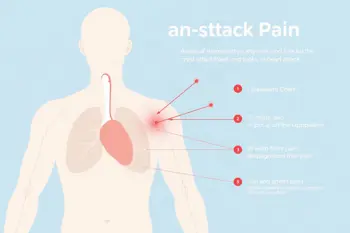
| Symptom Category | Common Presentation |
|---|---|
| Chest | Pressure, squeezing, fullness, or pain |
| Respiratory | Sudden shortness of breath |
| Systemic | Cold sweat, nausea, lightheadedness |
| Radiating | Discomfort in jaw, back, neck, or arms |
Researchers have not definitively identified why these symptomatic differences persist, though some theories point to differences in heart and vessel structure 7. Regardless of the potential variations, the necessity for immediate medical evaluation remains universal. In some cases, particularly in individuals with diabetes, a heart attack may be silent, producing little to no recognizable symptoms at all 4.
The Critical Role of Emergency Response
Because the mortality rate for heart attacks is significant-with roughly 100,000 deaths annually in the U.S. alone-calling 911 is the single most important action an individual can take when symptoms are observed 9. Emergency responders are equipped to initiate life-saving interventions, such as the administration of antiplatelet medications, which can help reduce damage to the cardiac muscle 2. Delaying medical attention in the hope that symptoms will resolve on their own is a common factor that contributes to worse clinical outcomes 7.
If a person suspects they are having a heart attack, they should seek immediate care even if they are uncertain about the nature of the symptoms 1. In emergency settings, doctors utilize tools like an electrocardiogram (ECG) and cardiac troponin blood tests to differentiate between an acute coronary syndrome and other, less critical conditions 5. Early diagnosis facilitates rapid reperfusion therapy, which aims to restore blood flow to the oxygen-starved heart tissue before permanent damage occurs 5.
Secondary Risks and Long-Term Management
Surviving an initial cardiac event is only the first step in the recovery process. Post-myocardial infarction care typically involves a comprehensive strategy to manage ongoing risks, including lipid-lowering therapies, the use of beta-blockers, and participation in structured cardiac rehabilitation programs 5. Managing blood pressure and maintaining a regimen of dual antiplatelet therapy are also common components of long-term care plans designed to prevent subsequent events 5.
Education remains a vital tool for prevention. By understanding that symptoms such as indigestion-like pain, dizziness, or jaw discomfort could serve as legitimate warning signs, individuals can be better prepared to take life-saving action 10. The goal of public health awareness regarding these signs is not to induce panic but to ensure that the threshold for seeking professional medical evaluation remains appropriately low when potential cardiac irregularities arise 6.
Summary of Diagnostic Realities
In total, about 20% of all myocardial infarctions are characterized as silent, meaning they pass without the patient recognizing typical symptoms 4. This emphasizes the importance of routine physical checkups, especially for those with existing risk factors such as hypertension or coronary artery disease 4. With approximately 805,000 Americans affected each year, the collective focus on recognizing early physical cues continues to be a cornerstone of cardiovascular health strategy 4.
Sources
- https://medlineplus.gov/heartattack.html
- https://www.massgeneralbrigham.org/en/health-wellness/warning-signs-of-heart-attack
- https://www.health.harvard.edu/a_to_z/heart-attack-myocardial-infarction-a-to-z
- https://health.ucdavis.edu/conditions/heart-vascular/heart-attack
- https://www.merckmanuals.com/professional/cardiovascular-disorders/coronary-artery-disease/acute-myocardial-infarction-mi
- https://health.clevelandclinic.org/early-signs-of-a-heart-attack
- https://familydoctor.org/condition/heart-attack/
- https://health.clevelandclinic.org/what-does-a-heart-attack-really-feel-like
- https://www.merckmanuals.com/home/heart-and-blood-vessel-disorders/coronary-artery-disease/acute-coronary-syndromes-unstable-angina-and-heart-attack-myocardial-infarction
- https://www.heartfoundation.org.au/blog/5-warning-signs-of-a-heart-attack-you-may-not-know
Authored by MyTrendSpot team