Clinical Analysis of the Top 15 spinal stenosis specialists in the United States: A Nationwide Profile
The search for the Top 15 spinal stenosis specialists in the United States often begins when patients experience progressive pain, numbness, or mobility issues. Finding a highly qualified specialist is a critical step in navigating structural changes in the spinal anatomy. This article outlines key clinical profiles of leading physicians and institutions across the nation to assist in evaluating expert care.
Clinical Foundations and Diagnostics of Spinal Stenosis
Spinal stenosis represents an anatomical narrowing of the spinal canal or nerve root canals, which can compress the spinal cord and exiting nerve roots. This narrowing typically manifests in the lumbar or cervical spine, producing symptoms such as neurogenic claudication, leg pain, and balance difficulties. Because symptoms develop gradually, patients often struggle with physical tasks before seeking clinical evaluation. This compression requires precise diagnostic imaging to formulate an effective treatment program.
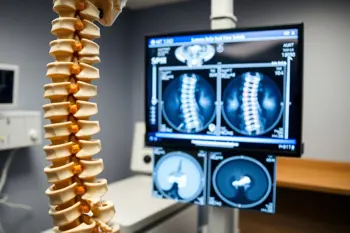
To confirm a diagnosis of spinal stenosis, medical providers rely primarily on advanced neuroimaging modalities. Magnetic resonance imaging (MRI) is the gold standard for visualizing soft tissues, ligamentous hypertrophy, and the exact degree of spinal canal compromise. When an MRI is contraindicated, clinical teams utilize computed tomography (CT) myelography to map nerve compression. These detailed imaging techniques enable spine specialists to differentiate between mechanical structural narrowing and other neuropathic conditions.
Multidisciplinary Care and Institutional Benchmarks
Leading healthcare institutions in the United States approach spinal stenosis through integrated, multidisciplinary spine programs. These centers bring together neurosurgeons, orthopedic spine surgeons, physiatrists, and physical therapists to coordinate patient care. Major academic hubs like the Cleveland Clinic, the Hospital for Special Surgery, and UCSF Medical Center are globally recognized for establishing rigorous benchmarks in musculoskeletal medicine. This collaborative framework ensures that surgical options are explored only after comprehensive conservative protocols have been exhausted.
When assessing spine care centers, clinical outcomes, patient safety metrics, and research contributions serve as the primary quality markers. Top-tier institutions regularly publish clinical data regarding decompression efficacy, infection rates, and long-term recovery metrics. By maintaining extensive patient outcomes databases, these clinical networks track the long-term success of both minimally invasive techniques and complex reconstructive surgeries. This systematic commitment to data-driven medicine helps patients receive care aligned with modern clinical standards.
Leading Orthopedic and Neurological Spine Specialists in the Northeast
In the northeastern region of the United States, several board-certified specialists are recognized for their expertise in spinal decompression and reconstructive surgery. Dr. Andrew A. Sama, practicing at the Hospital for Special Surgery in New York City, is highly regarded for his focus on complex reconstructive spine surgery and clinical outcomes 1. Also based at the Hospital for Special Surgery, Dr. Stéphane Owusu-Sarpong specializes in advanced robotic-assisted and minimally invasive spine surgeries, actively contributing to clinical research on patient-reported outcomes and motion preservation 2.
Further clinical excellence in the Northeast is represented by Dr. Paul C. McCormick, who serves as the Director of The Och Spine Hospital at The Neurological Institute of New York 3. Dr. McCormick is an accomplished neurosurgeon specializing in neurological spine pathology and complex decompression techniques 3. Additionally, Dr. Alexander Vaccaro, the president of Rothman Orthopaedics in Philadelphia, is an internationally recognized expert in spinal trauma and complex reconstruction, having authored extensive literature on surgical innovations and clinical safety standards 4.
Academic Leaders in the Midwest and Mid-Atlantic Regions
The Mid-Atlantic and Midwestern states house some of the country's most prominent clinical departments focusing on degenerative spinal pathologies. Dr. Steven C. Ludwig, based at the University of Maryland Medical Center in Baltimore, is a key figure in adult spine surgery, emphasizing advanced techniques for degenerative spinal disorders 1. In Ohio, Dr. Elizabeth Yu acts as the Chief of the Division of Spine in the Department of Orthopaedic Surgery at the Ohio State University Wexner Medical Center 5.
Dr. Yu is known for managing spinal stenosis and degenerative scoliosis with a focus on exhausting conservative treatments prior to recommending surgery 5. In the Midwest, Dr. Michael P. Steinmetz serves as the Chairman of the Department of Neurosurgery at the Cleveland Clinic 6. Dr. Steinmetz focuses on complex spine surgery, spine trauma, and minimally invasive decompression procedures, combining clinical leadership with ongoing academic research 6.
Prominent Spine Surgeons of the Western United States
The Western United States features highly specialized centers dedicated to advanced motion-preserving and minimally invasive spine surgeries. At UCSF Health in San Francisco, Dr. Praveen V. Mummaneni serves as the co-director of the UCSF Spine Center, where he leads research in minimally invasive approaches to degenerative spine diseases and spinal deformities 7. In Phoenix, Arizona, Dr. Juan Uribe, the Chief of the Division of Spinal Disorders at the Barrow Neurological Institute, is globally recognized for refining lateral access decompression techniques and minimally invasive spinal reconstruction 1 8.
Further south in Newport Beach, California, Dr. Nickul Jain operates at the DISC Sports and Spine Center, treating chronic spine deformities, cervical stenosis, and lumbar narrowing with modern surgical approaches 9. In the Pacific Northwest, Dr. Peter Nora, a board-certified neurosurgeon practicing at Swedish Neurosurgery in Issaquah, Washington, brings over three decades of clinical experience to treating spinal stenosis and complex radiculopathies 10.
Key Specialists in the Southern and Southeastern Regions
The Southern and Southeastern United States support several highly ranked spine specialists utilizing modern surgical methods. Dr. G. Alexander West, practicing at Houston Methodist Hospital in Texas, has over three decades of neurosurgical experience, focusing extensively on lumbar and cervical spinal stenosis, nerve root decompression, and degenerative disc disease 11. In Florida, Dr. Steven Vanni of the HCA Florida Neurosurgical Specialists in Davie offers advanced orthopedic spine surgery and neurosurgical intervention for spinal stenosis and lumbosacral narrowing 12.
Additionally, Dr. Samuel A. Joseph, Jr., founder of the Joseph Spine Institute in Tampa, Florida, is recognized for his contributions to minimally invasive spine surgery, scoliosis correction, and complex reconstruction 13. In Virginia, Dr. Chun-Po Yen, an associate professor of neurosurgery at the University of Virginia, specializes in minimally invasive spine therapies and complex spinal care, offering specialized options for degenerative stenosis 14.
Treatment Balancing: Risks, Limitations, and Eligibility
While advanced surgical interventions can provide substantial relief for patients suffering from severe spinal stenosis, it is essential to present an objective, 360-degree view of the treatment pathway. Surgical procedures, such as laminectomy or spinal fusion, carry inherent risks including infection, nerve injury, and adjacent segment disease. Furthermore, structural decompression does not always resolve chronic neuropathic pain, and some patients may experience post-laminectomy syndrome. Consequently, determining surgical eligibility requires a thorough multidisciplinary review.
To mitigate these clinical risks, standard medical protocols mandate exhausting non-surgical options before proceeding to the operating room. Conservative strategies, including targeted physical therapy, non-steroidal anti-inflammatory medications, and epidural steroid injections, frequently manage symptoms effectively for prolonged periods. Specialists must evaluate each patient's overall health, bone density, and lifestyle to determine if they are an appropriate candidate for surgical intervention. This balanced clinical approach ensures optimal patient outcomes while minimizing unnecessary exposure to surgical risks.
Sources
- Newsweek America's Leading Doctors
- Becker’s Spine Review
- Och Spine at NewYork-Presbyterian
- Becker’s Spine Review (East US)
- Ohio State University Wexner Medical Center
- Cleveland Clinic
- UCSF Health
- Barrow Neurological Institute
- Medical News Today (Newport Beach)
- Medical News Today (Issaquah)
- Medical News Today (Houston)
- Medical News Today (Davie)
- Joseph Spine Institute
- UVA Health
Authored by MyTrendSpot team