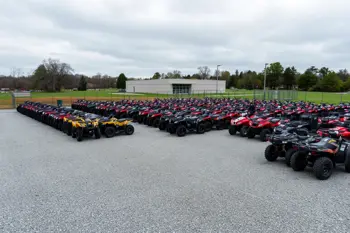
Government Surplus and Seizure Markets: Impound All Terrain Vehicles ATVs on sale
Many public buyers monitor local and state agency liquidations to find various 'Impound All Terrain Vehicles ATVs on sale' after they are forfeited due to regulatory non-compliance 1. Government municipal fleet sales, tow yard liquidations, and civil forfeiture processes serve as primary channels through which these unclaimed off-road utility assets are re-introduced into the secondary market 2. Navigating this landscape requires an objective understanding of regional enforcement laws, vehicle storage protocols, and formal bidding procedures to manage transaction risks and mechanical variables effectively.
Legal Frameworks Governing ATV Seizures and Forfeitures
To comprehend why these off-road units enter public liquidation, buyers must analyze the specific laws leading to law enforcement interventions. In many jurisdictions, all-terrain vehicles (ATVs) are non-street-legal utility assets restricted to private lands or recreational trails 3. For example, Rockford Police operate under a municipal code approved by the Code and Regulation Committee, which designates illegal off-road machines operated on streets as municipal nuisances, authorizing immediate impoundment 4. Similarly, the Pine Hill Police Department enforces local Ordinance 2023-1034 alongside New Jersey Title 39:3C-3, which mandates formal registration and operator age minimums on public lands 3.
Furthermore, other enforcement agencies apply comparable documentation standards, as demonstrated by the Royal Canadian Mounted Police (RCMP) 5. Operators using unregistered, uninsured, or un-plated utility vehicles on public roadways face rapid vehicle seizures and regulatory fines 6. When these seized units remain unclaimed in municipal storage lots past legal thresholds, they transition into asset recovery programs, resulting in public auctions of the forfeited inventory 2 1.
The Operational Path of an Impounded Off-Road Asset
The timeline of a seized off-road vehicle involves structured administrative steps before any public sale can occur. Upon initial seizure, a public notice is typically published to formally notify owners and lienholders of the impoundment status 7. In Minnesota, for instance, public registry listings detail specific parameters such as the exact vehicle identification number (VIN) of the impounded unit and the contacting tow operator, providing a legal timeline for owners to reclaim their property 7.
When owners fail to respond within designated deadlines, custody of the off-road vehicle transfers to the holding entity to offset accrued financial liabilities. These liabilities include immediate towing fees, daily storage rates, and civil administrative penalties 7 8. In cases of unresolved ownership disputes or legal challenges, such as litigation in Suffolk Superior Court regarding Boston Police Department seizures, vehicles may remain in tow yard custody for extended periods 8. Ultimately, if these holding fees exceed the asset's utility or if the owner formally relinquishes claims, the storage facility or municipal fleet agency initiates liquidation proceedings 2 7.
Primary Channels for Acquiring Liquidated Off-Road Assets
Those tracking municipal liquidations can access various online and in-person channels to purchase confiscated property. Local police departments, such as the Louisville Metro Police Department (LMPD), routinely partner with professional liquidation firms like Auctions ASAP to list dozens of unclaimed cars, trucks, and ATVs 2. These municipal auctions are highly regulated, typically operating on digital bidding platforms that close at specified times to ensure transparent public participation 2.
The table below highlights the primary organizational platforms where interested buyers can track historical averages of liquidated all-terrain vehicles:
| Platform Category | Primary Examples | Asset Source Types |
|---|---|---|
| Federal Surplus Platforms | GSA Auctions 9 | Federal seizures, customs forfeitures |
| National Salvage Brokers | Copart 10, SCA Auctions 11 | Insurance write-offs, municipal impounds |
| Government Portals | GovDeals 12 | Municipal fleet liquidations, police asset forfeiture |
Public Liquidation vs. Zero-Tolerance Vehicle Destruction Policies
While some municipalities opt to auction impounded off-road machinery to recover administrative costs, other jurisdictions employ a zero-tolerance approach that completely bypasses the resale market. In Connecticut, cities like New Haven, Hamden, and Bridgeport operate a Joint Regional Dirt Bike and ATV Task Force designed to actively seize illegal street-operating off-road units 13 14. Under specific state legislative provisions, these regional coalitions bypass the traditional auction model and instead utilize heavy machinery to publicly crush confiscated units 13 14.
This policy is implemented to prevent the immediate return of nuisance vehicles to the public streets, a common concern among municipal leaders 14. Consequently, the availability of impounded recreational vehicles varies heavily by state; some regions offer structured auction channels, whereas others systematically destroy all non-compliant inventory to maintain public safety 13 14.
Technical and Mechanical Considerations for Auction Buyers
Participating in government or municipal seizure auctions requires careful technical scrutiny, as these assets are historically sold in as-is condition with no express or implied warranties 15. Seized machines often present a broad spectrum of physical conditions, ranging from nearly pristine late-model utility units to heavily weathered or damaged salvage units 1 11. For example, salvage databases in California show that many available ATVs are processed with varying degrees of damage, including side impacts, rollovers, front-end damage, or theft-recovery wear 11.
Additionally, long storage periods in outdoor municipal lots can lead to battery depletion, fuel system gumming, and tire dry-rot, which buyers must calculate into their post-acquisition costs 7. Prospective bidders must carefully assess vehicle identification numbers (VINs) to confirm the model year and prevent acquiring units with unresolved legal liens or disputed ownership claims in municipal courts 7 8.
Administrative Guidelines and Bidding Requirements
Acquiring a liquidated all-terrain vehicle through an official public sale requires strict adherence to administrative procedures. Most public auctions require participants to register prior to the bidding window, which may involve providing valid photo identification and a refundable bidding deposit 1. Furthermore, payment methods for government-liquidated assets are highly regulated; cash, certified cashier's checks, or secure electronic bank transfers are usually the only accepted settlement forms, with payment deadlines often set within 24 to 48 hours of the auction's close 1.
Once a bid is successfully completed and paid, the buyer assumes responsibility for transporting the vehicle, as most tow yards charge immediate storage fees if the asset is not removed within a specified timeframe 7. Winning bidders are also issued a formal bill of sale or salvage certificate, which must be presented to the state DMV or natural resource department to secure legal title and registration 3. Observing these rigid protocols ensures that the asset is successfully transitioned into the buyer's legal ownership, devoid of outstanding municipal liabilities 1 3.
Sources
- Keros News Portal
- Louisville Metro Police Department
- Pine Hill Police Department
- Rockford Police Department
- Royal Canadian Mounted Police
- Coffee Franchise Hub
- NoticeRegistry Minnesota
- Suffolk County Superior Court Case Records
- GSA Auctions Official Portal
- Copart Online Vehicle Auctions
- SCA Auctions California
- GovDeals Government Auctions
- WTNH News Connecticut
- Connecticut Visitor Guide
- Repo Finder Idaho Database
- Polaris Off-Road Official Website
- Quad Expert Powersports Specifications
Authored by MyTrendSpot team