Walking Groups for a Healthier Lifestyle: A Comprehensive Analysis of Community-Based Movement Initiatives
The Clinical Basis for Community Walking Programs
Physical inactivity remains a significant public health challenge, with nearly one in four adults in the United States reporting no regular exercise outside of occupational duties 5. Sedentary behavior functions as an independent risk factor for chronic conditions, including type 2 diabetes, cardiovascular disease, and cognitive decline 5. Medical professionals increasingly emphasize that walking is a uniquely accessible, low-impact exercise that, despite its simplicity, is profoundly effective for long-term health management 2, 5.
Clinical research supports the recommendation of 150 minutes of moderate-intensity activity per week to improve cardiovascular metrics, including blood pressure and cholesterol stabilization 2. When performed in a group setting, walking moves beyond a mere physical activity into a behavioral intervention. Systematic reviews indicate that organized walking groups consistently achieve higher levels of participant adherence compared to solitary exercise routines, primarily due to the accountability and social infrastructure these groups provide 5, 6.
Structuring the Community Movement Model
Modern walking initiatives often follow structured models designed to balance physical exertion with social engagement. Programs like 'Walk with a Doc' utilize a model where healthcare providers lead community members on walks, allowing for informal education on health topics while participants exercise 4, 7. This format facilitates direct access to medical expertise and provides an environment where individuals can safely increase their activity levels regardless of their initial fitness status 4, 7.
Other initiatives, such as community-based walking groups in Northern Ireland or regional programs in the United States, prioritize accessibility by utilizing local parks and existing infrastructure to reduce barriers to entry 1, 8. These programs are often noncompetitive and cater to diverse ability levels, focusing on the consistency of the movement rather than the intensity of the pace 1, 3. The objective is to normalize regular, purposeful movement within the daily schedules of participants 5.
Indoor and Seasonal Strategy Adaptations
Environmental factors often dictate the sustainability of a walking routine, particularly in regions prone to extreme weather. To maintain year-round consistency, several organizations have developed indoor walking partnerships. For example, some health systems collaborate with regional shopping centers to establish formal 'Mall Walker' programs during colder months, ensuring that inclement weather does not result in sedentary lapses 3, 8. These programs frequently incorporate health screenings, educational lectures, and professional wellness resources into their designated time slots 3.
| Program Feature | Primary Benefit |
|---|---|
| Doctor-Led Events | Professional guidance and health education |
| Indoor Mall Routes | Weather-independent consistent movement |
| Community Ambassadors | Social inclusion and participant retention |
| Local Park Trails | Natural stress reduction and outdoor access |
The Role of Social Connection in Physical Health
The psychological impact of group walking is a critical component of its success. Beyond the physiological improvements in bone density and cardiovascular function, the social dimension addresses issues of isolation and stress 2, 4. Participants in organized groups report higher levels of motivation and improved mood, as the social interaction serves as a powerful behavioral reinforce 4, 6. The communal aspect helps individuals overcome initial hesitation, fostering a supportive atmosphere where personal health goals are treated as shared objectives 1, 8.
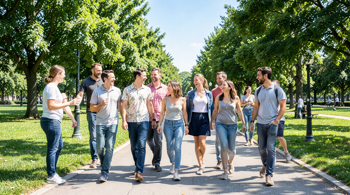
The following table outlines key psychological and social drivers noted in group walking participants:
- Increased accountability through peer-to-peer relationships 5
- Reduced feelings of depression through community interaction 4
- Enhanced confidence for individuals starting new fitness routines 1
- Meaningful connections that extend beyond the walking path 2
Operational Logistics and Participant Guidelines
Prospective participants in walking programs should evaluate both the physical requirements and the logistical framework of the specific group. Most programs emphasize the need for appropriate footwear and hydration, regardless of the intensity of the walk 3, 7. Because many groups rely on volunteer leaders or partnerships with local institutions, communication channels like social media pages or community email lists are standard for disseminating schedule updates and weather-related changes 8, 9.
It is recommended that individuals new to regular exercise consult with a primary healthcare provider before beginning a new routine. For those with existing health conditions, organizations often suggest starting with shorter, slower-paced sessions to build stamina gradually 5. Accessibility remains a core tenet of these programs, with many groups explicitly inviting individuals of all ages and abilities to participate at their own comfort level 1, 7.
Evaluating Long-Term Health Outcomes
The impact of regular walking is cumulative, with even short sessions yielding measurable results over time. Research shows that 15 minutes of brisk walking daily is linked to significant improvements in health outcomes 5. For older populations, walking is essential for maintaining independent mobility and balance, effectively mitigating the risks of age-related physical decline 4. By integrating walking into a broader framework of wellness-which may include nutritional guidance and professional medical oversight-communities can foster an environment where preventive health becomes the standard rather than the exception 3, 4.
Ultimately, the efficacy of walking groups lies in their ability to remove the complexity from exercise. By providing a structured, supportive, and cost-accessible framework, these groups empower individuals to reclaim their physical health while simultaneously building community resilience 1, 5. Future growth in this sector is likely to focus on further integrating professional health monitoring with public space development to ensure that active lifestyles remain sustainable for all demographics 9, 10.
Sources
- Walking for All: https://walkingforall.com/
- American Heart Association: https://www.heart.org/en/news/2026/03/30/the-many-ways-a-walking-club-can-put-you-on-the-path-to-health
- Independence Health System: https://www.independence.health/about-us/community-wellness/mall-walkers/
- Range Fore Hope Foundation: https://rangeforehope.org/initiatives/walk-with-a-doc/
- South Texas Health System: https://southtexashealthsystem.com/about/news/south-texas-health-system-gme-consortiums-hosts-monthly-walk-with-a-doc-events-to-promote-healthier-lifestyles/
- PubMed: https://pubmed.ncbi.nlm.nih.gov/25586967/
- Walk with a Doc: https://www.walkwithadoc.org/
- America Walks: https://americawalks.org/
- Rails-to-Trails Conservancy: https://www.railstotrails.org/
- National Recreation and Park Association: https://www.nrpa.org/our-work/Three-Pillars/health-and-wellness/
Authored by MyTrendSpot team