Natural remedies for back pain: Evidence, safety, and practical considerations
Natural remedies for back pain are most often discussed in connection with staying active, gentle exercise, heat or cold therapy, acupuncture, mindfulness, and other nonpharmacologic approaches. Research indicates that many cases of nonspecific low back pain improve with time, while persistent or recurring symptoms require a more careful assessment rather than relying exclusively on home remedies. 1
Movement and exercise as foundational approaches
For nonspecific acute low back pain lasting less than six weeks, continued activity is generally more helpful than bed rest. Evidence summarized by the American Academy of Family Physicians indicates that staying active improves pain intensity and function more than resting. The approach does not require strenuous workouts: ordinary movement and gradual return to tolerated activities are emphasized as alternatives to prolonged inactivity. 1
For subacute and chronic low back pain, exercise therapy reduces pain intensity compared with no treatment or usual care. Walking, carefully selected strengthening exercises, and low-impact yoga may support mobility and muscle conditioning, although the appropriate routine depends on the individual pattern of pain. Targeted exercises are also identified as among the more effective self-management options for chronic symptoms. 4
Heat and cold for short-term symptom relief
Heat and cold applications are commonly used for temporary relief during an acute flare. Harvard Health reports that acute back pain often settles with time, rest periods, and hot or cold compresses. Cold is generally discussed in relation to a recent painful episode, while warmth may be more comfortable for stiffness or muscle spasm. These approaches address symptoms rather than establishing the underlying cause. 3
Heat or cold should therefore be viewed as supportive measures that may make movement easier, not as replacements for activity or clinical evaluation when pain persists. Harvard’s guidance places these methods within a broader plan that can include diagnosis, professional assessment, and physical rehabilitation. The evidence does not establish that compresses prevent recurrence or correct structural disorders. 2
Acupuncture, massage, and manual approaches
Acupuncture has a stronger research basis than many informal natural-remedy claims. The AAFP summary reports that acupuncture moderately reduces pain intensity and improves function compared with no treatment in people with chronic nonspecific low back pain. It is best understood as a complementary option, with outcomes measured against no treatment rather than as proof that acupuncture works for every cause of back pain. 1
Massage therapy is frequently included among complementary treatments for tight or painful muscles, and a 2025 review evaluated massage alongside physical therapy, cognitive behavioral therapy, spinal manipulation, acupuncture, and yoga. The same review describes complementary approaches such as acupuncture and yoga as showing moderate efficacy, while also noting variation in practitioner access, treatment quality, cost, and patient adherence. 5
Tai chi, qigong, yoga, and mindful movement
A 2026 meta-analysis examined traditional Chinese exercise for nonspecific low back pain across 38 studies involving 3,054 patients. The review evaluated pain intensity, dysfunction, quality of life, and overall treatment effectiveness, providing evidence that structured traditional movement practices are an active area of research rather than merely anecdotal remedies. Study quality and differences between individual programs remain important when interpreting the findings. 6
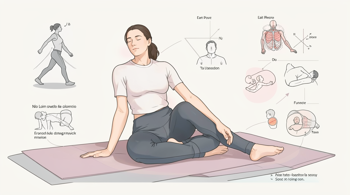
A separate 2026 systematic review included eight randomized controlled trials involving 526 patients with chronic nonspecific low back pain. Tai chi significantly reduced reported pain and improved some disability measures, including RMDQ scores and overall functional disability, but it did not significantly improve ODI scores. These mixed results suggest potential benefit while also showing that effects may differ according to the outcome measured. 7
Mindfulness, stress, sleep, and daily habits
Psychological therapies using progressive muscle relaxation and behavioral techniques reduce pain compared with usual care, although the AAFP summary reports no corresponding improvement in function. Mindfulness and meditation are therefore more appropriately considered tools for coping, stress regulation, and daily participation than guaranteed methods for eliminating the physical source of pain. 1
For chronic back pain, Harvard Health emphasizes that diagnosis and an experienced health professional are important because persistent symptoms can have multiple possible causes. A broader lifestyle plan may include regular movement, posture adjustments, sleep improvement, and weight management, but these measures require continued practice. Natural approaches are not one-time cures, and benefits may depend on adherence over time. 2
Supplements and topical remedies: limits and precautions
Magnesium supplements are often used by people who associate muscle spasms or cramps with back tension, but the supplied research does not establish magnesium as a broadly effective treatment for nonspecific low back pain. Similarly, turmeric’s curcumin has anti-inflammatory properties that may help manage chronic pain, yet the available information describes possible benefit rather than a definitive treatment effect. Supplements should not be treated as substitutes for active rehabilitation. 5
Topical capsaicin, derived from chili peppers, is identified in the supplied research as a possible option for localized chronic back pain. Evidence and suitability can vary by diagnosis, skin sensitivity, and product formulation. More broadly, nonpharmacologic treatments are probably safe, but the AAFP notes that data concerning serious adverse effects are limited. Persistent symptoms should be evaluated before extended self-treatment. 1
When natural self-care is not enough
Back pain that lasts longer than 12 weeks, keeps returning, or substantially interferes with ordinary tasks warrants medical assessment. Harvard Health notes that chronic pain can be difficult to diagnose because it may involve different structures and contributing factors. An evaluation may include a physical examination and, when appropriate, imaging, blood tests, or nerve testing. The purpose is to match treatment to the actual back disorder. 2
Prompt medical attention is particularly important when back pain occurs with numbness, leg weakness, fever, significant trauma, or changes in bowel or bladder control. These warning signs can indicate a condition requiring more than home care. Bed rest lasting more than a day or two may slow recovery, while pain medicines, when used, are generally recommended only as additions to active treatments and not as long-term solutions because of associated risks. 84
Sources
- American Academy of Family Physicians
- Harvard Health, Create a Plan to Relieve Your Back Pain
- Harvard Health, Managing Chronic Back Pain
- NCBI Bookshelf, InformedHealth.org
- Journal of Pain Research, Conservative and Complementary Treatments for Low Back Pain
- Frontiers in Pain Research, Traditional Chinese Exercise and Nonspecific Low Back Pain
- Frontiers in Pain Research, Tai Chi and Chronic Nonspecific Low Back Pain
- Acibadem International, Over-the-Counter Remedies for Lower Back Pain
Authored by MyTrendSpot team