Warning signs of an overactive thyroid: A clinical guide to symptoms and risks
The warning signs of an overactive thyroid, also called hyperthyroidism, can be easy to mistake for stress or other health problems. Because excess thyroid hormone speeds many body functions, symptoms may involve weight, heart rate, temperature regulation, digestion, mood, strength, sleep, and vision. 1
What an overactive thyroid does
Hyperthyroidism occurs when the thyroid gland produces more thyroid hormone than the body needs. The thyroid is a small, butterfly-shaped gland at the front of the neck, and its hormones influence how the body uses energy and how quickly vital functions proceed. Excess hormone can therefore affect nearly every organ, including the heart, muscles, digestive system, nervous system, skin, and reproductive system. 1
The condition affects about 1 out of 100 Americans aged 12 years and older. It is more common in women and people older than 60, although it can occur at any age. Graves disease is the most common cause, while thyroiditis, thyroid nodules, certain medicines, iodine exposure, and other conditions can also contribute. 2
Heart, weight, and temperature changes
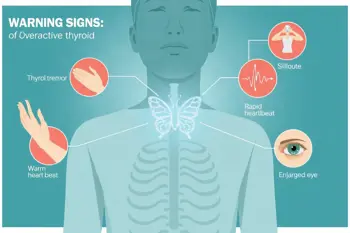
A fast heartbeat or a pounding, fluttering, or irregular sensation in the chest is a prominent warning sign. Blood pressure may rise, and abnormal rhythms can occur. Unintentional weight loss is also common, sometimes despite an increased appetite, because the body is burning energy at an accelerated rate. Some people can instead gain weight, so weight change alone cannot establish the cause. 3
Heat intolerance and excessive sweating may occur even when other people feel comfortable. These symptoms reflect the increased metabolic activity associated with elevated thyroid hormone levels. Shortness of breath, chest discomfort, or palpitations deserve particular attention because untreated hyperthyroidism can place additional strain on the cardiovascular system and contribute to atrial fibrillation or heart failure. 9
Nervous-system and sleep symptoms
Neurological and psychological changes may include nervousness, anxiety, irritability, restlessness, and difficulty concentrating. A fine tremor, especially noticeable in the hands or fingers, is another frequently reported sign. These changes can appear gradually, making them easy to attribute to caffeine, emotional strain, or a demanding schedule rather than to a hormonal disorder. 7
Difficulty falling asleep, insomnia, and disrupted sleep are also associated with excess thyroid hormone. Fatigue can coexist with an accelerated metabolism, and some people experience muscle weakness, particularly during ordinary activities. In older adults, symptoms may be less obvious and can present mainly as fatigue, a faster heart rate, reduced activity, or social withdrawal. 4
Digestive, skin, and reproductive clues
Increased bowel frequency is a recognized gastrointestinal warning sign because elevated thyroid activity can speed digestion. Some people develop diarrhea or broader changes in bowel habits. Increased thirst, unusual sweating, hair thinning or hair loss, and skin changes may accompany these digestive symptoms. No single symptom is specific to hyperthyroidism, so the overall pattern and its progression are clinically important. 3
Menstrual changes can provide an additional clue. Periods may become lighter or less frequent, and menstrual patterns can shift as thyroid hormones affect reproductive functions. Fatigue and muscle weakness may be present at the same time, despite the person feeling physically overactivated. These symptoms should be interpreted in relation to age, medications, pregnancy status, and other possible medical explanations. 5
Neck and eye warning signs
A visible or palpable swelling at the base of the neck may indicate an enlarged thyroid, known as a goiter. Thyroid nodules can also be present. Neck enlargement is not proof of hyperthyroidism, since different thyroid conditions can cause swelling, but a new or changing lump warrants medical assessment, especially when it occurs alongside palpitations, weight loss, tremor, or heat intolerance. 4
Graves disease may produce thyroid eye disease, with bulging or swollen eyes, dryness, redness, tearing, light sensitivity, blurred vision, or double vision. Eye symptoms are particularly relevant because they can occur with the autoimmune form of hyperthyroidism and may require assessment separately from hormone testing. Vision changes should not be dismissed as an ordinary feature of tiredness or aging. 4
When symptoms signal a serious complication
Untreated or poorly controlled hyperthyroidism can contribute over time to atrial fibrillation, heart failure, osteoporosis, and thyroid eye disease. Cardiovascular effects may include a persistently rapid pulse, abnormal rhythm, increased cardiac workload, and chest pain. The level of risk varies according to the cause, hormone levels, age, pregnancy status, and existing heart or bone disease. 3
Thyroid storm, also called thyroid crisis, is a rare but severe escalation of hyperthyroidism and a medical emergency. It may involve a sudden worsening of symptoms, high fever, stomach pain, and reduced consciousness. Infections, surgery, extreme stress, heart attack, or stroke can trigger it. Severe symptoms involving fever, confusion, fainting, chest pain, or marked breathing difficulty require emergency medical attention. 10
How clinicians confirm an overactive thyroid
Symptoms can raise suspicion but cannot confirm hyperthyroidism because anxiety, weight loss, bowel changes, sleep problems, and palpitations have many possible causes. Doctors use thyroid function blood tests to determine whether hormone levels are elevated and whether the pituitary signal, thyroid-stimulating hormone, is appropriately suppressed. Further testing may help identify Graves disease, thyroiditis, nodules, medication effects, or iodine-related causes. 6
Evaluation also considers family history, autoimmune conditions, recent pregnancy, iodine-containing medicines or supplements, nicotine exposure, and the appearance of the thyroid and eyes. About 1% of people in the United States have hyperthyroidism, but symptoms may be subtle in older adults. A clinician may therefore investigate a combination of modest changes rather than waiting for a dramatic symptom cluster. 1
What to record before an evaluation
A concise symptom record can help distinguish a temporary complaint from a developing pattern. Useful details include changes in weight or appetite, resting heartbeat, sweating, heat sensitivity, bowel frequency, tremor, sleep, strength, menstrual cycles, neck swelling, and eye symptoms. The timing of each change and any recent infection, pregnancy, surgery, medication change, or iodine exposure may also be relevant to the clinical assessment. 2
Record whether palpitations are fast, irregular, intermittent, or persistent. 9
Note whether weight loss occurs despite normal or increased food intake. 9
Report tremor, muscle weakness, diarrhea, insomnia, or new concentration problems together rather than as isolated complaints. 7
Include neck swelling, bulging eyes, blurred vision, or double vision in the medical history. 4
Sources
- National Institute of Diabetes and Digestive and Kidney Diseases, Hyperthyroidism (Overactive Thyroid): https://www.niddk.nih.gov/health-information/endocrine-diseases/hyperthyroidism
- Merck Manual Consumer Version, Hyperthyroidism: https://www.merckmanuals.com/home/hormonal-and-metabolic-disorders/thyroid-gland-disorders/hyperthyroidism
- Penn Medicine, Hyperthyroidism, Symptoms and Causes: https://www.pennmedicine.org/conditions/hyperthyroidism
- FamilyDoctor.org, Hyperthyroidism: https://familydoctor.org/condition/hyperthyroidism/
- Nebraska Medicine, What Is Hyperthyroidism, and How Is It Treated?: https://www.nebraskamed.com/health/conditions-and-services/endocrine-care/what-is-hyperthyroidism-and-how-is-it-treated
- Merck Manual Professional Edition, Hyperthyroidism: https://www.merckmanuals.com/professional/endocrine-and-metabolic-disorders/thyroid-disorders/hyperthyroidism
- Henry Ford Health, 10 Often-Overlooked Signs of an Overactive Thyroid: https://www.henryford.com/blog/2025/12/10-unexpected-symptoms-overactive-thyroid
- Medical Park, Hyperthyroidism Symptoms: https://www.medicalpark.com.tr/en/health-guide/overactive-thyroid-hyperthyroidism
- Harvard Health, Hyperthyroidism and Your Heart: https://www.health.harvard.edu/healthbeat/hyperthyroidism-and-your-heart
- Merck Manual Quick Facts, Hyperthyroidism: https://www.merckmanuals.com/en-ca/home/quick-facts-hormonal-and-metabolic-disorders/thyroid-gland-disorders/hyperthyroidism
Authored by MyTrendSpot team