Police impound furniture and household items: An analysis of legal frameworks and recovery procedures
When law enforcement agencies seize personal assets, including furniture and household goods, they operate under specific legal frameworks designed to balance evidentiary requirements with individual property rights 5. These items may be taken into custody for various reasons, including as evidence in criminal investigations, during the enforcement of municipal by-laws, or for safekeeping during specific incidents 5, 8. The transition of these items into police possession initiates a formal, highly structured administrative process that dictates how the property is documented, stored, and eventually returned to its rightful owner or disposed of in accordance with the law 5.
The Seizure and Impoundment Process
Police may take possession of household items during lawful activities such as the execution of search warrants, by-law enforcement operations, or when responding to disputes between roommates or family members 6, 8. In cases of criminal investigation, items are secured as evidence and held in facilities such as a property and evidence division until the prosecuting attorney or investigating officer authorizes their release 2. Similarly, in by-law enforcement operations, such as those targeting unlicensed street trading, furniture displayed on public sidewalks may be confiscated to maintain public order and accessibility 8.
It is common for agencies to experience logistical strain, as seen in Sacramento, where the management and storage of property collected from homeless encampments resulted in significant annual staffing costs 7. To mitigate these pressures, some jurisdictions, such as the City of Madison, designate specific locations for the storage of items recovered from encampments and provide a set window for owners to initiate the retrieval process 14. Once that window closes, unclaimed items are often slated for disposal 14.
Procedures for Recovering Seized Items
The responsibility for initiating the return of impounded goods typically rests with the owner, who must adhere to the specific protocols of the holding agency 2. Standard recovery processes generally require individuals to provide valid, government-issued photo identification and documented proof of ownership, such as receipts, photographs, or serial numbers 2, 6, 10. In instances where items are part of a court case, the release may necessitate a court order provided directly by the court clerk to the law enforcement entity 2.
Agencies such as the St. Louis Police Department and the Davenport Police Department frequently issue public notices regarding unclaimed property, establishing clear deadlines for owners to contact the department’s property custody division 10, 12. Failure to make contact within the mandated period, which can range from 30 to 90 days depending on the jurisdiction, generally results in the forfeiture of the property and its subsequent disposal 10, 12, 15.
Public Auctions of Unclaimed Property
When property remains unclaimed after legally required holding periods, law enforcement agencies may dispose of it through public auctions 1, 13. These auctions serve to recover costs and, in some cases, provide monetary relief to victims or depositors involved in the original case 1. The inventory at such sales often spans a wide spectrum, including luxury items like Rolex watches and designer handbags, as well as household appliances, power tools, and general electronics 3, 7, 13.
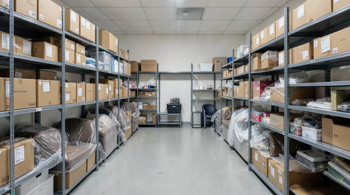
Agencies frequently partner with online platforms to conduct these sales, making the process accessible to a broader range of bidders 13. For example, the Opelika Police Department utilizes national online auction platforms to dispose of property that is no longer needed for evidence, ensuring compliance with state code during the transition of ownership 13. Buyers at these auctions are typically responsible for their own shipping and handling fees, and sales are generally final, underscoring the importance of careful review of item descriptions before bidding 13.
Regulatory Oversight and Legal Friction
The handling of seized property is subject to strict legal scrutiny to protect due process and prevent the violation of property rights 5, 17. Courts have ruled that the impoundment of vehicles or personal items must satisfy specific legal tests, such as a community caretaking function, rather than being used merely to prevent illegal driving without proper justification 17. Improper seizure or failure to follow established inventory protocols can lead to the suppression of evidence in criminal cases 17.
Furthermore, disputes can arise regarding the financial administration of the seizure process itself. In some cases, municipalities have contested the fees charged by sheriffs or other enforcement agents involved in the seizure of goods, highlighting the complex intersection of local governance, law enforcement budgets, and the rights of individuals whose property has been moved into the custody of the state 4.
Risks and Challenges in Property Management
The accumulation of large volumes of seized property presents persistent safety and operational challenges for police departments. Bengaluru, for instance, has faced concerns regarding fire hazards created by the build-up of thousands of seized vehicles on police premises, a situation exacerbated by administrative neglect and delays in scheduling auctions 16. Such incidents underscore the logistical burden that maintaining custody of impounded assets places on police departments, which often lack the space or staff required for long-term storage 7, 16.
| Challenge | Operational Impact |
|---|---|
| Storage Constraints | Departments often lack adequate space for long-term retention of bulk items. |
| Fire/Safety Hazards | Unmanaged piles of seized property pose risks to police station premises. |
| Administrative Burden | Managing intake and release processes consumes significant departmental staffing hours. |
| Legal Compliance | Failure to follow strict notice and auction rules can result in litigation. |
Conclusion
The lifecycle of impounded furniture and household items is governed by a rigid legal and administrative process that balances the necessity of law enforcement operations with the rights of property owners. While individuals have the legal pathway to reclaim their belongings through proof of ownership and timely contact with authorities, the burden of initiating this process is significant 2, 6. As police departments continue to face challenges related to storage and property management, the trend toward outsourcing these tasks and utilizing national online auction platforms is likely to continue, shaping how unclaimed assets are returned to the public domain 7, 13.
Sources
- https://pressmediaofindia.com/hyderabad-ccs-to-auction-seized-household-items-on-september-12/
- https://my.spokanecity.org/police/get-help/recover-property/
- https://www.expressnews.com/news/article/san-antonio-police-property-auction-rolex-louis-22336115.php
- https://www.news24.com/politics/city-of-ekurhuleni-disputes-sheriffs-fees-after-dramatic-furniture-seizure-20260724-0652
- https://www.uklegalguides.com/how-do-police-handle-confiscated-property/
- https://www.happlawgroup.com/faq/how-to-request-shared-item-exchanges-via-police/
- https://www.sacbee.com/news/local/article315759119.html
- https://www.citizen.co.za/germiston-city-news/news-headlines/local-crime-news/2026/01/15/empd-seizes-illegal-goods-and-furniture-during-germiston-by-law-operation/
- https://www.qredible.co.uk/b/what-can-bailiffs-take-exempt-goods-and-rights/
- https://www.noticeregistry.com/missouri/notice/other-st-louis-1216456
- https://debtletterguide.com/what-can-bailiffs-take-uk-guide-what-they-can-and-cannot-remove/
- https://www.noticeregistry.com/iowa/notice/other-davenport-423185
- https://opelikadailynews.com/opelika-police-launch-propertyroom-com-online-auctions-for-unclaimed-property/
- https://madison365.com/city-of-madison-holding-personal-belongings-from-corey-ruiz-protest-encampment-at-demetral-park/
- https://www.noticeregistry.com/oregon/notice/other-gladstone-299383
- https://www.thehindu.com/news/cities/bangalore/seized-vehicles-pile-up-at-bengaluru-police-stations-raising-fire-and-safety-concerns/article70676171.ece
- https://www.sanfranciscocriminallawyerblog.com/impounding-a-drivers-vehicle-pursuant-to-the-vehicle-code-to-prevent-further-illegal-driving-does-not-satisfy-the-community-caretaking-function-and-allow-a-search/
Authored by MyTrendSpot team