Vehicles for sale at police auction: An Analysis of Government Surplus and Impound Disposal
Understanding the Mechanics of Police and Impound Auctions
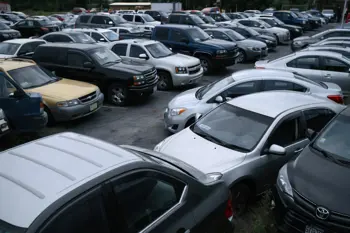
Police auctions serve as a formal mechanism for law enforcement and municipal agencies to dispose of unclaimed, abandoned, and surplus property 3. These events often include a diverse inventory, such as decommissioned police interceptors, seized passenger vehicles, and abandoned property that has remained in municipal impound lots for extended periods 2. Agencies like the San Antonio Police Department and the Saint Paul Police Department regularly utilize these auctions to clear lot space and return value to the community 2, 4. The operational scale can vary significantly, ranging from small local events featuring a few dozen vehicles to large-scale online auctions that aggregate inventory from multiple jurisdictions 1, 7.
Government-led auctions operate under strict regulatory frameworks designed to ensure transparency and fairness in the disposal of public assets 4, 5. Because these vehicles often originate from abandoned or forfeited contexts, their historical mechanical records are frequently unavailable to the agency conducting the sale 5. Prospective bidders should expect to operate in an environment where the burden of due diligence rests entirely upon them 1. Understanding the specific rules set by local municipalities is essential, as these requirements can differ drastically from one region to another 5, 7.
Registration and Eligibility Requirements for Bidders
Participating in a police vehicle auction typically requires adherence to specific registration protocols. For in-person auctions, such as those held by the Saint Paul Police Department, attendees may be required to purchase a bid card and present a valid photo ID to participate 4. Age restrictions are common, with many venues requiring bidders to be at least 18 years old 4. Registration deadlines are often strictly enforced; for instance, the Lubbock Police Department requires all attendees to be registered by the start time of the auction, with no exceptions for late arrivals 5.
For online platforms, the registration process involves creating an account with the host site and sometimes providing credit card authorizations to verify identity 7. Some agencies, such as those in Kansas City, mandate that bidders provide proof of a current salvage or dealer license if they intend to purchase specific types of vehicles designated for salvage-only use 7. Non-compliance with these administrative requirements can lead to permanent bans from future auction events, underscoring the importance of reviewing all documentation before registration 4, 7.
The Reality of As-Is Vehicle Sales
A fundamental characteristic of government vehicle auctions is that all items are sold on an as-is basis, with no warranties, guarantees, or refund policies 4, 5, 9. This means the agency assumes no responsibility for the mechanical condition, authenticity of mileage, or even the existence of essential components like engines or keys 5. While some vehicles may be in running condition, others may be non-operational and require towing from the premises 4, 7. Agencies strongly advise that prospective buyers conduct thorough inspections during the designated viewing periods before the auction begins 1, 5.
The lack of a warranty is not the only risk factor; buyers should also consider the potential for hidden defects that are not immediately detectable upon visual inspection 5. Some bidders choose to utilize third-party services, such as CARFAX, to gain historical insights, though it is critical to note that these private companies are not affiliated with the law enforcement agencies or the auction houses themselves 1. The reliance on external historical reports does not mitigate the legal reality that the final sale is absolute and without recourse 4, 5.
Logistics: Payment, Titling, and Removal
Winning a bid is only the initial step in the acquisition process. Payment protocols are often rigid; for example, some local impound auctions require payment in cash or via specific wire transfers by strict deadlines 4, 7. Failure to meet these payment timelines can lead to the forfeiture of the bid and permanent exclusion from future sales 4. Once payment is secured, the buyer is typically responsible for all transportation, registration, and title-related costs 7.
Titling is a significant area of complexity in government auctions. Some agencies do not guarantee clear titles and may only provide a bill of sale, which the purchaser must then present to the state tax assessor or equivalent authority to navigate the titling process 5, 7. In states like Missouri, this may involve mandatory VIN inspection appointments with the highway patrol 7. Furthermore, residents of states other than the one where the auction is held should exercise caution, as certain states will not issue titles to out-of-state residents, effectively barring them from the bidding process 5.
Online Versus In-Person Auction Environments
The transition from traditional, in-person auctions to online platforms has changed how surplus vehicles are managed 4, 7. Online venues allow for broader accessibility and often provide descriptive guides to help potential bidders understand the process 7. Conversely, in-person auctions offer the benefit of physical inspection days where potential buyers can view the vehicles firsthand 1, 5. Some agencies, like those in Saint Paul, utilize a hybrid model, holding regular in-person auctions while simultaneously sending select vehicles to regional online auction houses 4.
Regardless of the format, most modern auctions utilize platforms that allow for multi-city surplus sales, increasing the volume of available equipment, which may range from police interceptors to lawn equipment and digital cameras 8. Bidders on these platforms must account for buyer premiums, which are fees added on top of the final winning bid price, often calculated as a percentage of the total amount 8. Understanding these additional costs is necessary to accurately gauge the total investment required for any given vehicle.
Summary of Federal and Local Auction Channels
| Auction Type | Description |
|---|---|
| GSA Fleet Sales | Federal surplus vehicles usually in good condition 9 |
| Impound/Abandoned | Vehicles cleared from local lots, condition unknown 5 |
| Seized Assets | Vehicles forfeited due to legal violations 9 |
| Surplus Property | Retired municipal fleet vehicles 7, 8 |
Government vehicle auctions provide a secondary market for a wide array of assets. Whether dealing with the U.S. General Services Administration for federal fleet vehicles or local police departments for impounded property, the common thread is the responsibility of the purchaser to manage risks 9. Prospective buyers are encouraged to verify current auction schedules, read all terms of service, and consult with local tax and motor vehicle departments to ensure full compliance with regional requirements before participating 4, 5, 7.
Sources
- https://auction757.com/auction_listings/hampton-police-gbs-towing-auction-9-17/
- https://www.expressnews.com/news/article/san-antonio-police-hosting-vehicle-auction-week-22431724.php
- https://www.columbus.gov/Services/Public-Safety/Police/Find-a-Police-Service/Police-Auctions
- https://www.stpaul.gov/departments/police/public-auctions
- https://www.mylubbock.us/388/Abandoned-Vehicle-Auction
- https://www.govdeals.com/en/automobiles-cars
- https://www.kcmo.gov/city-hall/departments/public-works/tow-services/vehicle-auctions
- https://www.miramarflnews.com/news/local/article316715947.html
- https://www.usa.gov/car-auctions
Authored by MyTrendSpot team