Police auction motorcycles and scooters: An analysis of institutional disposal and public acquisition processes
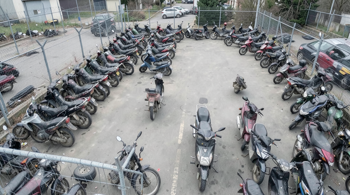
Law enforcement agencies worldwide frequently manage the logistical challenge of clearing impounded, abandoned, and forfeited property that accumulates at police stations and storage yards over time 1. The disposal of these items, specifically motorcycles and scooters, is often facilitated through public auctions after the exhaustion of legal notice periods 2. These events serve to decongest police facilities and allow for the lawful liquidation of assets that have remained unclaimed by their original owners 1.
Operational Drivers for Law Enforcement Auctions
The primary motivation for police departments to conduct auctions is the need to manage case property and impounded vehicles that occupy limited space at police stations 1. Items such as motorcycles and cars may be held for extended periods due to criminal investigations or failure of owners to claim their property after release from custody 2. Exposure to weather and time often results in the deterioration of these assets, necessitating a formal disposal process 1. Local regulations, such as the Disposal of Uncollected Goods Act in certain jurisdictions, provide the legal framework for these sales 8.
Transparency remains a critical component of these public proceedings. In Amritsar, for example, police conducted auctions in multiple phases to ensure that the disposal of over 100 motorcycles was managed systematically 1. Similarly, in Sri Lanka, the police announced a series of scheduled auctions for 271 decommissioned vehicles, providing designated inspection dates to allow interested parties to examine the condition of the assets prior to the bidding process 4.
Market Context and Asset Availability
Auctioned motorcycles and scooters often represent a diverse array of models, ranging from common business-use bikes to private transport units 6. Popular brands frequently appearing in international inventory lists include TVS, Boxer, Captain, and Skygo, among others 6, 9. While some vehicles may be in functional or repairable condition, others are sold as scrap or for parts, particularly when they lack registration documentation or have unclear chassis numbers 1, 6.
In the United States, municipal and federal agencies utilize specialized online marketplaces to handle the sale of surplus and seized assets 11, 12. These platforms host inventory from various law enforcement departments, often listing motorcycles alongside trucks, cars, and other general equipment 11. Because these agencies do not typically maintain dedicated two-wheel marketplaces, prospective participants must search broader categories of surplus property 11.
Regulatory Oversight and Inspection Protocols
Before an auction proceeds, law enforcement agencies must adhere to strict procedural requirements, including the publication of gazette notices or official sales announcements 6, 8. These notices provide owners with a final opportunity to claim their property, typically within 30 days, before the vehicle is transitioned to the auctioneer for disposal 8, 9. Courts often play a role in authorizing these sales, ensuring that legal formalities are satisfied before any title or property transfer occurs 6.
For the public, the ability to inspect assets before bidding is a standard component of institutional auctions 4. Inspection phases allow interested parties to assess the physical state of a motorcycle or scooter, which is vital because many items are sold strictly on an as-is basis 11. This designation implies that the agency provides no warranties regarding the mechanical function, roadworthiness, or historical condition of the vehicle 11.
Risk Management and Due Diligence
Acquiring a vehicle from a police auction requires significant due diligence from the participant. Potential buyers are generally responsible for verifying the Vehicle Identification Number (VIN), title status, and lien information 11. In salvage-focused environments, vehicles may carry branded titles, such as theft-recovery, flood-damaged, or parts-only, which can complicate the process of legal registration and insurance coverage 11. The lack of a clear title can be a significant friction point for individuals intending to restore a motorcycle for regular road use 6.
Beyond the final bid amount, purchasers must often account for additional financial obligations. These can include buyer premiums, storage fees, sales taxes, and transportation costs 11. Each auction platform or local jurisdiction may impose specific rules regarding payment deadlines and the timeframe for removing the property from the storage yard 11.
Digital Transition in Auction Procedures
The movement toward digital bidding platforms has expanded the reach of police auctions, enabling wider participation beyond immediate local areas 5. Online auction houses and intermediary websites now host listings for thousands of vehicles, ranging from single seized units to large lots of confiscated motorbikes 7, 16. This digitalization facilitates the management of inventory by consolidating assets from various departments into a centralized online location, allowing for more consistent documentation 11.
However, despite the convenience of online systems, the fundamental risks of police-led auctions remain constant. Participants are expected to register through verified platforms and adhere to strict user agreements 11. Whether the auction is held in a physical yard or through an online portal, the responsibility for evaluating the condition and legal status of the motorcycle remains entirely with the bidder 5, 11.
Standardized Procedures for Auction Participation
| Process Step | Requirement/Consideration |
|---|---|
| Public Notice | Legal gazette or police announcement period (7-30 days) |
| Inspection | Verifying VIN, condition, and repair requirements |
| Due Diligence | Background checks via CARFAX or similar services |
| Bid Obligations | Buyer premiums, taxes, and registration fees |
| Post-Purchase | Legal transfer and transportation of the asset |
As municipalities continue to utilize these auctions as a means of asset recovery and station management, the volume of available equipment fluctuates based on local crime rates and administrative efficiency 1, 2. Interested parties should maintain vigilance regarding official public notices and ensure they have a clear understanding of the regulatory landscape governing the acquisition of police-seized property in their specific region 4, 6.
Sources
- The Tribune, Police auction 115 vehicles lying abandoned at different stations in Amritsar, earn over Rs 5 lakh
- tndNews Uganda, Hoima police to auction unclaimed motorcycles, cars and tv sets
- Naija Business, Nigeria Police Force (NPF), Oyo State Police Command- Auction Sales Of Abandoned/Unclaimed Vehicles, Motorcycles And Other Items
- Newswire, Sri Lanka Police to auction 271 decommissioned vehicles
- Auction757, Norfolk Police Towing Auction
- Radio Generation Kenya, Police set March auctions for unclaimed vehicles and motorcycles
- The Saigon Times, HCMC to auction nearly 7,000 confiscated motorbikes
- News Hub, Police Stations Announce Public Auction of Cars and Motorcycles
- Kenyans.co.ke, Six Police Stations to Auction Vehicles, Motorcycles and Household Items
- GSA Auctions, Federal Surplus Auctions
- GovDeals, Online Auctions for Government Agencies
- Public Surplus, Online Public Agency Auctions
- Municibid, Municipal Government Auctions
- PropertyRoom, Law Enforcement Property Auctions
- PoliceAuctionsUSA, Seized and Impounded Vehicle Auctions
- Copart, Salvage and Insurance Vehicle Auctions
Authored by MyTrendSpot team