Top wound care clinics in the United States: An Analysis of Clinical Excellence and Specialized Treatment Protocols
Defining Chronic Wound Management Standards
Chronic wounds are defined clinically as injuries that fail to show significant signs of healing within a 30-day timeframe under traditional medical care 4, 7. These conditions often stem from underlying health issues such as diabetes, peripheral vascular disease, or immobility leading to pressure injuries 4, 7. Leading facilities across the United States operate under a multidisciplinary model, integrating vascular surgery, podiatry, infectious disease management, and plastic surgery to address the root causes of tissue damage 4, 10. The primary objective in these clinical settings is to prevent complications, such as limb loss, through rigorous debridement and patient-specific intervention plans 1, 7.
High-performing wound centers frequently seek accreditation from entities such as the Undersea and Hyperbaric Medical Society (UHMS) or maintain Joint Commission standards to ensure high-quality patient safety protocols 8, 9. Accreditation requires that clinics demonstrate rigorous staff training and equipment maintenance, providing a benchmark for the level of care patients can expect 8. The integration of these high standards, combined with advanced diagnostic imaging like near-infrared spectroscopy (NIRS), allows clinicians to map tissue oxygenation levels and customize treatments with precise data rather than subjective assessment 3.
Advanced Therapeutic Modalities in Modern Centers
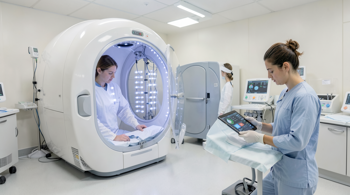
Modern wound care centers utilize a suite of sophisticated therapies to stimulate the body's natural healing mechanisms. Hyperbaric oxygen therapy (HBOT) stands out as a critical tool, providing high levels of oxygen to promote new tissue growth and combat persistent infections 4, 7. Beyond standard hyperbaric chambers, some clinics, such as The WISH Clinic in Colorado, utilize alternative approaches like vapor-based hyperoxic therapies to enhance tissue oxygenation in a manner more accessible to certain patient populations 3. These facilities often manage complex cases involving surgical wounds, diabetic foot ulcers, and venous stasis ulcers 1, 6.
Negative pressure wound therapy (NPWT) and cellular tissue-based products (CTPs) represent other pillars of contemporary wound management 1, 4. NPWT employs a vacuum-assisted pump to remove excess fluid from the wound bed, thereby reducing edema and facilitating faster granulation 4. Meanwhile, the application of skin substitutes-whether artificial or biological-serves to protect the wound bed while mimicking the biological environment necessary for cellular repair 4. Data from high-volume centers, such as the UCLA Center for Wound Healing and Limb Preservation, underscore the efficacy of these methods, showing a healing rate of 97% over a ten-year study period involving over 14,000 treated wounds 1.
The Role of Clinical Networks and Hospital Affiliations
In the United States, the infrastructure for advanced wound care is heavily bolstered by large-scale medical networks. Healogics, for example, operates as the largest provider of advanced wound care services in the country, managing more than 600 hospital-affiliated centers 11. These centers, such as the Center for Advanced Wound Healing in Chicago, often provide a standardized, research-backed framework for care that is then implemented across various local hospital campuses 2. This model allows for regional access to consistent protocols while maintaining individual institutional expertise 2, 5.
Large academic health systems and research hospitals, including the Mayo Clinic, Cleveland Clinic, and Johns Hopkins Medicine, operate their own dedicated comprehensive programs 11. These institutions prioritize a multidisciplinary approach where primary care coordination is seamless, ensuring that patients manage comorbidities-such as blood glucose control for diabetic patients-alongside the physical wound treatment 4, 6. This holistic perspective is essential for the long-term success of wound closure and the prevention of recurring health crises 6.
Clinical Indicators of High-Quality Wound Care
When evaluating wound care services, certain metrics and operational indicators distinguish high-performing centers. The use of advanced debridement tools, such as the KYLON system for the precise removal of devitalized tissue, signifies a commitment to modern, minimally invasive techniques 3. Additionally, the presence of board-certified specialists in hyperbaric medicine and vascular health serves as a hallmark of clinical competence 8. Programs that earn awards from national wound care networks-such as the Center of Distinction Award-often demonstrate high standards in both patient satisfaction and clinical outcomes 6, 7.
Quality metrics to consider include:
- Access to comprehensive hyperbaric oxygen therapy chambers.
- Availability of multidisciplinary consultation with infectious disease experts.
- Established coordination with home health agencies for post-discharge care.
- Use of advanced diagnostic tools, such as NIRS or doppler ultrasound, to monitor microcirculation.
- Transparency regarding success rates for complex wound types.
Patient Eligibility and Access Considerations
Accessing specialized wound care generally does not require a formal referral for many independent centers, though hospital-based programs may function within a referral-based system 2, 5, 9. Patients presenting with wounds that have persisted for over four weeks or those related to chronic medical conditions are typically the primary candidates for these services 1, 7. Insurance coverage and benefits verification remain a standard step in the onboarding process at facilities like The WISH Clinic or regional centers within the WMCHealth network 3, 8.
Clinical teams emphasize that early intervention is critical to mitigating the risk of serious complications, including systemic infection or localized tissue necrosis 3, 7. Patients are encouraged to inquire about the specific specializations of the medical staff at a center, as some clinics may have greater experience with specific wound types, such as post-radiation injury or complex surgical flaps, compared to others 1, 6.
Future Trends in Chronic Wound Research
Research into regenerative medicine and biological tissue engineering continues to influence the services offered at major wound centers 1. The trend toward individualized treatment plans-where therapy is tailored not just to the wound type but to the patient's specific metabolic and vascular health profile-is becoming the industry standard 2, 6. As technological integration, such as near-infrared spectroscopy and digital wound mapping, becomes more prevalent, the ability of clinicians to predict the timeline of wound closure is expected to improve significantly 3.
Continued focus on limb salvage, particularly for diabetic patients, remains the highest priority for the nation's leading wound care facilities 1, 7. By bridging the gap between surgical expertise and chronic wound management, these centers play a vital role in patient quality of life and the reduction of long-term healthcare resource utilization 4, 10.
Sources
- UCLA Health - Center for Wound Healing & Limb Preservation
- Healogics - Center for Advanced Wound Healing (Chicago)
- The WISH Clinic - Wound Specialist in Arvada, Colorado
- BJC HealthCare - Wound Care Services
- Healogics - Center for Advanced Wound Healing (Hartford)
- McLaren Health Care - Wound Care Services
- Lakewood Ranch Medical Center - Center for Wound Healing
- Westchester Medical Center Health Network - Wound Care Services
- Healogics - Craig Center for Advanced Wound Healing (Nashville)
- Healogics - Covenant Center for Wound Care & Hyperbaric Medicine
- U.S. News & World Report / Healogics / Johns Hopkins Medicine / Cleveland Clinic / Massachusetts General Hospital / NYU Langone / Mount Sinai / The Joint Commission / Northwell Health
Authored by MyTrendSpot team