Police Impound Offers: A Complete Analytical Guide to Public Auction Processes, Costs, and Buyer Risks
Police impound offers attract thousands of buyers nationwide each year, driven by the prospect of acquiring vehicles through government-run public auctions at prices that can differ from standard retail market rates. These are not informal sales; they are regulated municipal processes governed by state statutes, local ordinances, and agency-specific terms that bidders must understand before participating. From bi-weekly lot clearances in Kansas City to large-scale urban auctions in Columbus and Omaha, the operational mechanics, buyer obligations, and risk profiles vary significantly by jurisdiction.
What Police Impound Vehicle Auctions Actually Are
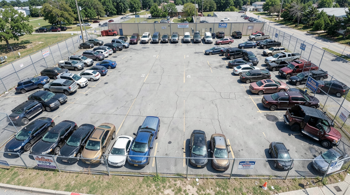
Police impound vehicle auctions are government-organized public sales events where seized, abandoned, or unclaimed vehicles are sold to the highest bidder. 1 These vehicles may have been towed from public roadways for reasons including traffic violations, expired registration, lack of insurance, involvement in criminal activity, or simple abandonment. 2 Once the legal holding period expires and the original owner fails to reclaim the vehicle, the agency initiates a statutory disposal process that culminates in a public auction. Ownership transfers to the government and then to the winning bidder following the completion of legal proceedings.
The inventory at these events spans a wide spectrum. A single Kansas City tow lot auction held in November 2025 listed 401 vehicles across categories including 214 cars, 114 SUVs, 41 trucks, 14 vans, 7 motorcycles and recreational vehicles, and 1 boat. 3 The Columbus Division of Police scheduled six impound lot auctions for 2026, with the June 6 event featuring approximately 120 vehicles that were forfeited, abandoned, involved in crimes, or involved in crashes. 4 Most vehicles at these events carry salvage titles and are sold on an as-is basis with no guarantees.
How the Registration and Bidding Process Works
Participation in a police impound auction typically requires advance registration with a valid government-issued photo ID. The Omaha Police Department requires all bidders to show a valid U.S. driver's license or photo ID and display a bidder number at the gate, with registration beginning at 8:00 a.m. before a 9:00 a.m. auction start. 5 The Columbus impound auction opens registration at 8:30 a.m. on auction day, with a public vehicle viewing window from 8:00 to 10:00 a.m. before bidding begins at 10:00 a.m. 4 Most jurisdictions set a minimum age of 18 or 19 for bidder registration; Omaha prohibits anyone under 19 from registering. 5
Kansas City's bi-weekly tow lot auctions, conducted by OAI Auctions at 7750 E Front St, operate on an online-only format with lots closing at 5:00 p.m. Central time. 6 Beginning in March 2026, these auctions introduced a mandatory $300 deposit charged to the card on file at registration, which is applied to winning bids and refunded within 5 to 10 business days for non-winners. 7 In-person vehicle viewing is available on auction day from 8:00 a.m. to 4:00 p.m. at the lot address. All bids placed are considered binding purchase agreements and cannot be retracted for any reason. 8
Fees, Payment Structures, and Removal Deadlines
Beyond the hammer price, buyers at government impound auctions face a layered cost structure that can materially increase the total acquisition cost. Kansas City tow lot auctions apply a $25 per lot administrative fee and a 10% buyer's premium on all sales, with payment due the day after auction close via cash or wire transfer. 7 Omaha's buyer's fee structure requires the greater of $175.00 or 15% of the purchase price per vehicle, paid directly to the auction company, with vehicles selling for $20 or less exempt from the buyer's fee. 5 Titles are not transferred on-site in Kansas City; the city impound lot mails the title to the buyer after the transaction is finalized. 9
Payment and removal deadlines are strictly enforced across jurisdictions. Columbus requires payment in cash by 1:00 p.m. on auction day, with all vehicles removed by noon four days later. 4 Omaha requires payment by 11:00 a.m. on auction day and full vehicle removal by 8:00 p.m. that same day; vehicles left after 8:00 p.m. incur a $35 relocation fee plus $20 per business day in storage charges. 5 Kansas City charges $30 per day for late vehicle pickups, with all vehicles required to be removed by the Saturday following the sale. 7 Non-payment results in forfeiture of the vehicle, loss of the $300 deposit, and a permanent ban from future auctions. 8
Platforms and Channels Where These Auctions Occur
Government impound auctions are distributed across multiple channels, ranging from direct municipal operations to contracted third-party platforms. GovDeals, a widely used government liquidation platform, lists vehicles across categories including automobiles, pickup trucks, SUVs, vans, motorcycles, boats, and specialized or restricted vehicles. 10 In 2025, the platform listed assets including a confiscated 2015 GMC Denali in Ocala, Florida, a confiscated 1971 Cessna in Woodward, Oklahoma, and a 2015 Chevrolet Tahoe PPV Police Package in Opelika, Alabama. 10 Other major third-party platforms used by law enforcement agencies include Copart, IAA (Insurance Auto Auctions), and PropertyRoom.com, which manages online sales for entities such as the Colorado Springs Police Department impound lot. 11
Many municipalities mandate that impound auctions be publicly advertised in local newspapers or official public notice portals before the sale date. 12 Boston's Police Department auctions off abandoned and impounded vehicles in coordination with the Transportation Department, requiring buyers to pay the full amount in cash to police at the time of sale. 13 Nashville contracts with Vehicle Management Solutions (VMS), a private operator bound by contract to comply with all local, state, and federal laws, as well as Metro Nashville Police Department policies governing impoundment and vehicle sales. 14
Title Processing, Vehicle Condition Risks, and Legal Considerations
One of the most significant risk factors in police impound purchases is vehicle condition uncertainty. Auction terms consistently note that buyers are bidding on abandoned vehicles at municipal facilities where most do not run, most do not have keys, and the buyer will not know whether the vehicle operates until after purchase. 8 All sales are final with no warranties expressed or implied. Condition ranges from drivable to severely damaged or inoperable, and vehicles may have been involved in accidents, criminal activity, or prolonged outdoor storage. 15 Depreciation of impound vehicles is influenced by age, mileage, overall condition, make and model, and whether maintenance records are present; premium brands generally retain value better than economy models. 16
Title processing timelines create additional complexity. In many U.S. states, title transfers for impounded vehicles can take several weeks after auction completion depending on state lien laws and whether the vehicle was held as evidence in an active investigation. 11 Vehicles held as evidence may have significantly longer release and title transfer timelines than those impounded for administrative reasons. 17 California's Vehicle Code and the California Highway Patrol's regulatory framework, for instance, govern towing and impound storage under specific statutory requirements including contractor compliance with Title 13 of the California Code of Regulations. 18 Pennsylvania, Florida, Washington State, and other jurisdictions each maintain separate statutory frameworks covering notice requirements, holding periods, and auction procedures. 19
Practical Considerations, Eligibility Requirements, and Known Friction Points
Buyers approaching impound auctions should account for several operational realities before bidding. Vehicle transport is the buyer's full responsibility, and towing costs for non-running vehicles add to the total cost. 11 In 2026, many auctions operate in a hybrid format combining online bidding with limited in-person preview windows, though some events remain in-person only with cash-preferred payment structures. 20 Setting a realistic total budget that includes the hammer price, buyer's premium, administrative fees, transport costs, potential repair expenses, taxes, and registration fees is essential to avoid cost overruns. 21
The table below summarizes key operational parameters observed across documented auction programs in 2025 and 2026:
| Jurisdiction | Frequency | Buyer's Fee | Deposit Required | Payment Deadline | Removal Deadline |
|---|---|---|---|---|---|
| Kansas City, MO | Bi-weekly | 10% + $25 admin fee | $300 | Day after auction close | Saturday following sale |
| Omaha, NE | Saturdays (inventory-based) | Greater of $175 or 15% | Not specified | 11:00 a.m. same day | 8:00 p.m. same day |
| Columbus, OH | 6 times per year | Not specified | Not specified | 1:00 p.m. same day | Noon, 4 days after sale |
| Boston, MA | Periodic | Not specified | Not specified | Day of sale (cash) | Not specified |
Permanent bans from future participation represent a serious consequence of non-payment or rule violations at these auctions. 5 Additionally, in the UK context, statutory impound release fees are set by law at £218 on day one, rising to approximately £374 after one week, and reaching around £556 by day 14, after which disposal proceedings begin and ownership is lost. 22 These international parallels illustrate that impound recovery costs follow structured regulatory schedules regardless of jurisdiction. Buyers across all markets should independently verify the most current statutory fee schedules and auction terms directly with the managing agency before placing any bid.
Sources
- wondermapped.com - Understanding Police Impound Vehicle Auctions: Pricing And Bidding Process
- shunauto.com - Understanding Police Impound Cars: What They Are And How They Work
- bids.oaikc.com - Kansas City Police Auction November 18, 2025
- dispatch.com - Columbus Police Hosting Auction of About 120 Impounded Vehicles June 6
- police.cityofomaha.org - Auction Rules, Omaha Police Department
- woolseyauction.com - Kansas City Police Tow Lot Auction (July 2026)
- bids.oaikc.com - Kansas City Police Auction March 3, 2026
- burgessauctions.com - Kansas City Police Tow Lot Auction Terms and Conditions (Updated January 2026)
- bids.oaikc.com - Kansas City Police Auction January 20, 2026 (Vehicle Title Lot)
- blog.govdeals.com - Where to Find Police Auctions Near Me
- autohaulerexchange.com - Colorado Springs Police Department Impound Lot via PropertyRoom.com
- apwa.org - American Public Works Association (Municipal Auction Notice Requirements)
- boston.gov - Abandoned and Impounded Vehicles
- nashville.gov - Police Vehicle Impound Section
- ficustolife.com - Understanding Police Impound Cars: Key Facts for 2026
- otopartshop.com - Understanding Depreciation of Police Impound Vehicles
- upstreamread.com - 2026 Seized Vehicle Information
- cleat.ai - Evidence Impound Tow and Storage Services IFB 26C670001, California Highway Patrol
- leginfo.legislature.ca.gov - California Vehicle Code, Division 8, Chapter 11.5 (Towing and Storage)
- remarketspace.com - How to Bid on Police and Government Surplus Vehicles in MN
- daily-stuff.com - Police Impound Car Sales: What You Need to Know
- cleangreencars.co.uk - Impound Insurance: Release Your Impounded Vehicle
Authored by MyTrendSpot team