Best hospitals in the world for treating Alzheimer's disease: An evidence-based international comparison
How the global comparison should be interpreted
There is no single universally accepted ranking of hospitals specifically for Alzheimer’s disease. The most appropriate center depends on the patient’s needs, including diagnostic complexity, longitudinal memory care, clinical-trial participation, or management of associated neurological symptoms. Newsweek and Statista’s 2026 specialized-hospital neurology ranking provides a broad comparison rather than an Alzheimer’s-specific league table. It places Mayo Clinic Rochester first, followed by Massachusetts General Hospital and Charité Universitätsmedizin Berlin. 1
| Rank | Hospital | City and country |
|---|---|---|
| 1 | Mayo Clinic Rochester | Rochester, United States |
| 2 | Massachusetts General Hospital | Boston, United States |
| 3 | Charité Universitätsmedizin Berlin | Berlin, Germany |
| 4 | The Johns Hopkins Hospital | Baltimore, United States |
| 5 | Cleveland Clinic | Cleveland, United States |
| 6 | Asan Medical Center | Seoul, South Korea |
| 7 | AP-HP Hôpital Universitaire Pitié Salpêtrière | Paris, France |
| 8 | National Hospital for Neurology and Neurosurgery | London, United Kingdom |
| 9 | UCSF Medical Center | San Francisco, United States |
| 10 | NewYork-Presbyterian Hospital | New York City, United States |
Leading United States centers for Alzheimer’s care
Several highly regarded United States programs combine specialist evaluation with research. Mayo Clinic’s Alzheimer’s Disease Research Center integrates clinical evaluation, education, research, and patient care. UCSF’s Memory and Aging Center focuses on memory and cognitive disorders and participates in dementia research. Massachusetts General Hospital supports specialized assessment, multidisciplinary care, and Alzheimer’s research. The Penn Memory Center evaluates and treats memory disorders while conducting clinical studies, and Washington University’s Knight Alzheimer Disease Research Center emphasizes early detection, biomarkers, prevention, and clinical research. 2 3 4 5 6
| Center | Reported emphasis |
|---|---|
| Mayo Clinic Alzheimer’s Disease Research Center | Clinical evaluation, care, education, and research |
| UCSF Memory and Aging Center | Specialist memory assessment, treatment, and research |
| Massachusetts General Hospital | Multidisciplinary diagnosis, care, and research |
| Penn Memory Center | Memory-disorder evaluation, treatment, and clinical studies |
| Knight Alzheimer Disease Research Center | Early detection, biomarkers, prevention, and studies |
Other major neurology and dementia research options
Cleveland Clinic’s Lou Ruvo Center for Brain Health provides neurological evaluation, cognitive care, research participation, and support services for Alzheimer’s disease and related disorders. Mount Sinai’s Alzheimer’s Disease Research Center conducts clinical and translational research involving disease mechanisms and biomarkers. The National Institute on Aging supports a network of Alzheimer’s Disease Research Centers across the United States, making its directory a useful way to identify academic institutions. In the United Kingdom, University College London’s Dementia Research Centre connects dementia research with clinical expertise. 7 8 9 10
- Cleveland Clinic: neurological and cognitive care with research participation.
- Mount Sinai: clinical and translational Alzheimer’s research.
- NIA network: federally supported academic research centers.
- University College London: international dementia research and clinical expertise.
Diagnostic capability and treatment infrastructure
For suspected Alzheimer’s disease, a hospital’s diagnostic infrastructure can be as important as its reputation. Hospital Clínic Barcelona reports access to neuropsychological evaluation, CT, MRI, FDG PET, amyloid PET, blood and cerebrospinal-fluid biomarkers, genetic testing, and pathological studies. Its unit assesses about 900 new patients and conducts about 2,500 follow-up visits annually. Ascires Hospital in Valencia describes a memory unit using neuropsychological testing, 3-Tesla MRI, amyloid PET-CT, lumbar puncture, and plasma biomarkers. 13 20
- Ask whether cognitive testing and neurological assessment are available.
- Check whether imaging and fluid or blood biomarkers are clinically indicated.
- Confirm whether the hospital evaluates early-onset or unusual dementias.
- Determine how follow-up, caregiver support, and interpretation of results are organized.
Clinical trials and newer disease-modifying therapies
Research access varies considerably between hospitals. Seoul St. Mary’s Hospital reported 200 antibody-therapy cases by May 2026, supported by amyloid PET for precision diagnosis, regular MRI safety monitoring, infusion facilities, and coordination between neurology and psychiatry. Reem Hospital in Abu Dhabi reported completion and database lock for a TauRx TRx-237-805 study of hydromethylthionine mesylate, including biomarker assessment in people with high genetic risk. The FDA’s regulatory information is relevant when comparing centers offering authorized disease-modifying treatments and monitoring. 14 16 12
International specialist programs and practical limitations
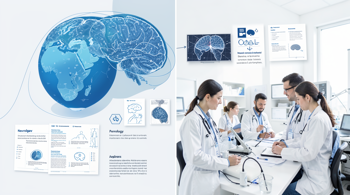
International options include Hospital Clínic Barcelona’s multidisciplinary Alzheimer’s and Other Cognitive Disorders Unit, Rumailah Hospital’s memory service in Qatar, and specialist programs in Spain, Germany, France, Italy, South Korea, Japan, and the United Kingdom represented in the neurology ranking. Rumailah received developmental accreditation from the UK Royal College of Psychiatrists’ Memory Services National Accreditation Programme and was also designated a WHO Collaborating Center for Healthy Ageing and Dementia. Travel does not remove the need for continuing local care, caregiver coordination, and repeated monitoring. 15 1
Selection should therefore focus on the clinical question rather than a headline rank. Maastricht University’s Alzheimer Centre Limburg describes research spanning risk and prevention, diagnostics and disease mechanisms, and psychosocial innovation. Ace Alzheimer Center Barcelona reports neuromodulation and the AMBAR plasma-exchange procedure, while its own description identifies these approaches as specialized interventions requiring medical judgment. Hospital choice should also account for evidence quality, regulatory status, travel burden, language, continuity, and whether a proposed intervention is established care or investigational. 17 18
Sources
- Newsweek and Statista, World’s Best Specialized Hospitals 2026, Neurology: https://rankings.newsweek.com/worlds-best-specialized-hospitals-2026/neurology
- Mayo Clinic, Alzheimer’s Disease Research Center: https://www.mayo.edu/research/centers-programs/alzheimers-disease-research-center
- UCSF Memory and Aging Center: https://memory.ucsf.edu/
- Massachusetts General Hospital Alzheimer’s Disease Research Center: https://www.massgeneral.org/neurology/alzheimers-disease-research-center
- Penn Memory Center: https://pennmemorycenter.org/
- Washington University Knight Alzheimer Disease Research Center: https://knightadrc.wustl.edu/
- Cleveland Clinic Lou Ruvo Center for Brain Health: https://my.clevelandclinic.org/departments/neurological/depts/center-for-brain-health
- Icahn School of Medicine at Mount Sinai Alzheimer’s Disease Research Center: https://icahn.mssm.edu/research/centers/alzheimers-disease-research-center
- National Institute on Aging, Alzheimer’s Disease Research Centers: https://www.nia.nih.gov/research/labs/aging-research-centers
- University College London Dementia Research Centre: https://www.ucl.ac.uk/brain-sciences/research/research-centres/dementia-research-centre
- Alzheimer’s Association clinical trials resource: https://www.alz.org/alzheimers-dementia/research_progress/clinical-trials
- U.S. Food and Drug Administration Alzheimer’s treatment information: https://www.fda.gov/drugs/news-events-human-drugs/fda-converts-novel-alzheimers-disease-treatment-traditional-approval
- Hospital Clínic Barcelona Alzheimer’s and Other Cognitive Disorders Unit: https://www.clinicbarcelona.org/en/unit/alzheimers-and-other-cognitive-disorders
- DongA Science, Seoul St. Mary’s Hospital antibody treatments: https://www.dongascience.com/en/news/78730
- The Peninsula Qatar, Rumailah Hospital memory-services accreditation: https://thepeninsulaqatar.com/article/24/12/2025/rumailah-hospital-achieves-landmark-international-recognition-for-memory-services
- MENAFN, Reem Hospital Alzheimer’s clinical trial: https://menafn.com/1110559834/Reem-Hospital-Successfully-Completes-Its-Inaugural-Alzheimers-Disease-Clinical-Trial
- Maastricht University Alzheimer Centre Limburg: https://www.maastrichtuniversity.nl/news/25-years-pioneering-dementia-research
- Ace Alzheimer Center Barcelona innovative therapies: https://www.acebarcelona.org/en/innovative-therapies/
- FDA and clinical-trial information should be reviewed alongside the Alzheimer’s Association resource when assessing research options.
- Ascires Hospital Memory and Cognitive Disorders Unit: https://www.ascires.com/hospital/en/services/memory-and-cognitive-disorders-unit/
| Issue | Why it matters |
|---|---|
| Eligibility | Research participation and disease-modifying therapy require clinical assessment. |
| Monitoring | Infusion-based antibody care may involve imaging and safety surveillance. |
| Trial status | A completed study does not mean a therapy is routinely authorized. |
| Regulation | Approval, labeling, and monitoring requirements differ by jurisdiction. |
Authored by MyTrendSpot team